
EDITORIAL
23-03-2026 by Freddie del Curatolo

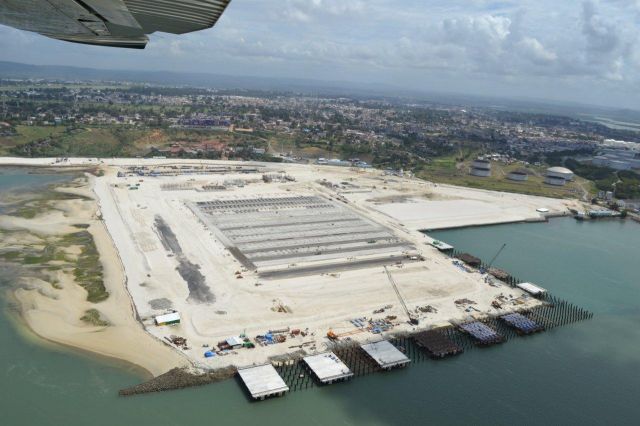
In the end, it was neither South Sudan’s oil nor Ethiopian trade, nor even the grand Sino-African strategic plans that gave the port of Lamu any purpose, threatening the unspoiled beauty of the UNESCO World Heritage Site (a designation as meaningless as a “Blue Flag” or “Smart City” certification). All it took was a distant blockade in the Strait of Hormuz for global traffic—the real kind—to decide to pass through here, almost by mistake, turning a promise into a reality.
It took a crisis unknown to the African continent—the kind marked on maps with red arrows and flowing oil—to actually make something work that here, in our own backyard, seemed born already exhausted.
The Strait of Hormuz is closing, or nearly so. Routes are shortening for some and lengthening for others. And so, suddenly, the port of Lamu—which for years was more of an idea than a port, more of a political promise than a reality—finds itself full. Seventy-four ships since the start of the year, says the Kenya Ports Authority. Last year, during the same period, there were two. Two. A difference that isn’t statistical; it’s narrative.
The port that was waiting for a story
The port of Lamu was born from a word that sounds like an acronym but is almost a prayer: LAPSSET, the Lamu Port-South Sudan-Ethiopia Transport Corridor. A massive project, designed to reshape East African trade, bringing oil, goods, roads, railways, and pipelines. And, of course, development. Always that—development—written in capital letters, only to get lost among the lowercase letters of reality.
For years, Lamu remained there, suspended. Too far from everything, too close to nothing. Mombasa kept doing its thing, with its traffic, its inefficiencies, its certainties. Lamu, on the other hand, was the port of the future—and therefore, of no one.
Until the future took a geopolitical shortcut.
The ships that took a wrong turn (and found Lamu)
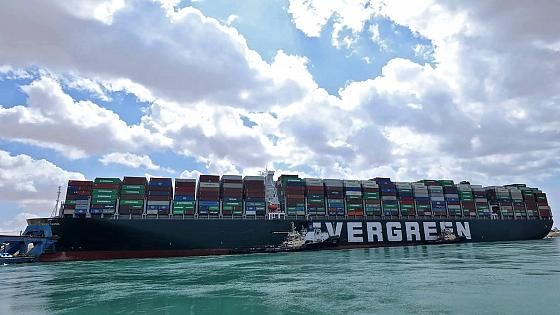
With the Persian Gulf narrowing and the port of Jebel Ali becoming difficult to reach, ships do what they always do: they look for alternatives. They avoid the Red Sea, circle around Africa, lengthen the journey but save the cargo.
And in the meantime, they find Lamu.
They unload here, they set sail from here. The forgotten port suddenly becomes a refuge. Not by design, but out of others’ necessity. Not because the project has finally found its own internal logic, but because the world, for a moment, needed it.
That’s how it often works around here: you’re not ready when you’re needed, but you become useful when someone else has no alternatives.
The mangroves, the activists, and the invisible cost
But Lamu isn’t just a story of containers and shipping routes. It’s also—and perhaps above all—a story of cut-down mangroves, dredged seabeds, and communities that have seen the sea change right on their doorstep.
Environmentalists were saying it years ago: this port comes at a cost that cannot be measured in tons of cargo. Fragile ecosystems, marine biodiversity, traditional fishing. All sacrificed on the altar of an economic corridor that was supposed to connect three countries but has, so far, connected mostly promises and delays.
The legal battles, the protests by local communities, the rulings demanding compensation and more rigorous impact studies. None of this has disappeared. It has simply fallen out of the frame now that the ships are actually arriving.
Because when the port is operational, even the criticism grows quieter. Not less true, just less heard.
The African paradox, port edition
Lamu is currently experiencing a small boom that is not the result of a strategy, but of a crisis. And this, ultimately, is the most African paradox of all: infrastructure built for a future that never arrives, and that only makes sense when the world enters a crisis.
The Kenya Ports Authority speaks of a “regional hub,” of reviving trade, of opportunities. And it’s true. It always is, when the ships arrive.
But one question remains, hanging here like the humidity on the coast: is this traffic the beginning of something, or just a blip?
Because if tomorrow the Strait of Hormuz truly reopens, if the routes return to what they were before, Lamu risks reverting to what it was: a modern port with an ancient loneliness.
And then what will remain are the cut mangroves, the promises written in official documents, and yet another illusion to add to the long list of those that, in these parts, always arrive by sea.


KENYA NEWS
by Freddie del Curatolo

Kenya breathes a sigh of relief, but not with much conviction. Fifty-five ships arriving at the ports of Mombasa...
EDITORIAL
by Freddie del Curatolo

Today, wars need drones more than rifles, and ports more than...
GULF WAR
by redazione

If the conflict in Iran, Israel, and the Middle East continues, Kenya could face difficult times, not only in terms...
NEWS
by redazione
Kenya's President Uhuru Kenyatta on Thursday 20 May officially opened the new port of Lamu for...

Another bridge built with the help of the Japanese, after that of Kilifi built on the creek in 1991...
NEWS
by redazione
Relief for dozens of importers and hundreds of companies in Kenya and Uganda who depend on...
TOO MANY GUESTS
by redazione

Lamu is grappling with an incredible tourism boom. The archipelago north of the Kenyan coast...

Troubled days for internet connections in East Africa. Since last Saturday, Kenya has...
NEWS
by redazione

Often the things done with "headlights off" are the ones that...
NEWS
by redazione

The construction of the port of Lamu is 20 percent.
He said yesterday the press the director of Lappset project (Lamu Port South Sudan Ethiopia) Silvester Kasuku.
According Kasuku have already been prepared three docking and the first will already...
NEWS
by redazione

The project was announced yesterday by Kenya's Minister of Transport James Macharia, who after signing the agreement with colleagues from South Sudan and Ethiopia, contracted two different
KENYA NEWS
by Freddie del Curatolo

Never before had a cruise ship decided to explore Kenya from south to north, docking not...


