
KENYA NEWS
02-04-2026 by Freddie del Curatolo

The major agreement with Saudi Arabia was supposed to bring gas to Kenyan homes at affordable prices.
Low-cost gas cylinders meant millions of families would be freed from coal—a domestic revolution funded through global climate finance mechanisms.
It was supposed to.
Because today that project is stalled, bogged down by taxes, delays, and broken promises. And so, while on paper Kenya talks about energy transition, in everyday reality it is preparing to take a step backward: from gas to charcoal.
The future in Kenya is symbolized by a blue flame: clean, modern, almost elegant. One of those things that make a country feel it’s in the right place in history, alongside the words “transition,” “sustainability,” “carbon credits.” Then reality sets in, which in Kenya often has the acrid smell of coal.
It’s back to the charcoal stove, without ever having truly been in the frying pan.
Not out of nostalgia, but out of necessity.
The failure of the agreement with the Saudis is not just economic news. It is a small geopolitical crack opening up in the kitchens of millions of families.
Because behind that promise lay a grander plan: to exchange carbon credits for domestic modernity, to transform black smoke into a controlled flame, to bring Kenya one step closer to that future where cooking is done without coughing.
But no.
The program, backed by Arab capital and tied to global climate finance mechanisms, has stalled. Bureaucracy, taxes, economic conditions: the result is that the cylinders don’t arrive, or they arrive too expensively. And when gas costs too much, the poor don’t engage in energy philosophy. They go back to burning wood and filling homes and shacks with smoke.
It’s always like this, really. The ecological transition is wonderful as long as someone else pays for it. When the bill lands on the table in the suburbs, sustainability becomes a luxury.
And Kenya, which on paper is a green powerhouse—nearly 90% of its electricity comes from renewables—discovers its cruelest paradox: you can have clean energy in the power plants, but if it doesn’t reach the kitchens, it remains theory.
So the country finds itself caught between two worlds. On one side, the big climate summits, carbon credits, and international partners. On the other, the daily reality of those who have to cook ugali with whatever they can afford.
And in the middle, a fragile system.
It’s not just the deal with the sheikhs. It’s a domino effect. First the slowdown in gas, then the collapse of alternatives like bioethanol—just think of the crisis at KOKO Networks, which had shifted over a million households away from coal before shutting down, leaving everyone back at square one.
When these solutions fail, a void isn’t left behind. The past remains.
And the past, in Africa, is never truly past.
It is there, piled up in sacks of coal sold on the roadside, in the forests that are slowly receding, in the motorcycles loaded with illegal logs that speed past police stations like witches riding broomsticks, in the homes where smoke clings to the walls and to the children’s lungs.
The truth is that the geopolitics of energy, as seen from Kisumu or Kibera, from the coast to Mount Kenya, is not made up of billion-dollar deals but of daily choices: gas or coal, health or savings, future or survival.
And when the future is out of reach, survival always wins.
There is also another, more subtle irony. Kenya has spent years defending itself against projects like the Lamu coal-fired power plant, a symbol of a fossil-fuel past it wanted to avoid.
And now it risks going back to square one… without even building the plant (let alone going to jail).
Not by strategic choice, but due to systemic failure.
This is the real story: not a return to coal, but the inability to truly move away from it.
A country racing toward the future with one hand, while with the other it continues to gather firewood.
And in the end, rather than a transition, it feels like dancing in place.


ENVIRONMENT
by Leni Frau
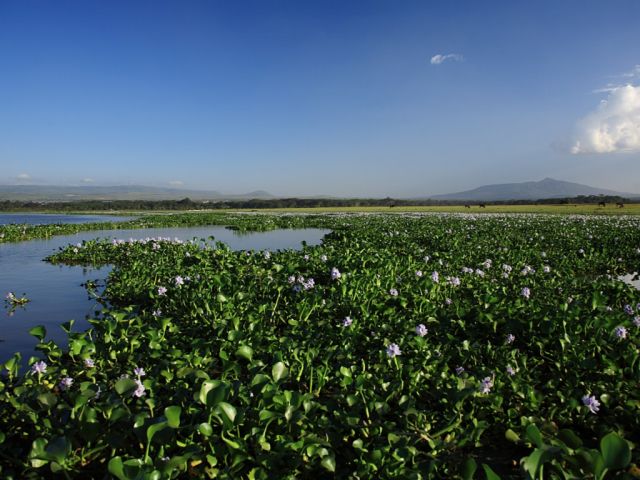
Freeing lakes from a weed that restricts fish reproduction and at the same time creating biofuel to limit...
by Freddie del Curatolo

Italy is in the front row for energy security in Africa. The participation of the Ministry of the...
PLACES
by redazione

On Saturday 31st October, the Ripasso di Casuarina opens the first of many events that have...
PLACES
by redazione

Every Saturday the Ripasso di Casuarina sets up its fixed appointment with the Aperidinner, which...
ENVIRONMENT
by Freddie del Curatolo

It is one of those rare news stories that does not smell of burning, even though it is about coal. The...
LOCALI
by redazione

The weekly appointment with the aperidinner buffet at Ripasso di Casuarina moves from...
HONOURS
by Freddie del Curatolo

The Ambassador of Italy to Kenya, Roberto Natali, awarded four honours of Cavaliere della Stella d'Italia...
NEWS
by Freddie del Curatolo

Yay, even in Kenya economic interests do not always prevail over common sense and the protection of the planet and its inhabitants, the ecosystem and future generations.
The ...
WILDLIFE
by Leni Frau

Though very difficult to spot, another wild animal is to be counted among the roster of those that...
ENVIRONMENT
by Giovanna Grampa

A symbol as simple as it is important: a "human" tree in the centre of the Plant Your Age logo: so...
INSIDE KENYA
by Freddie del Curatolo
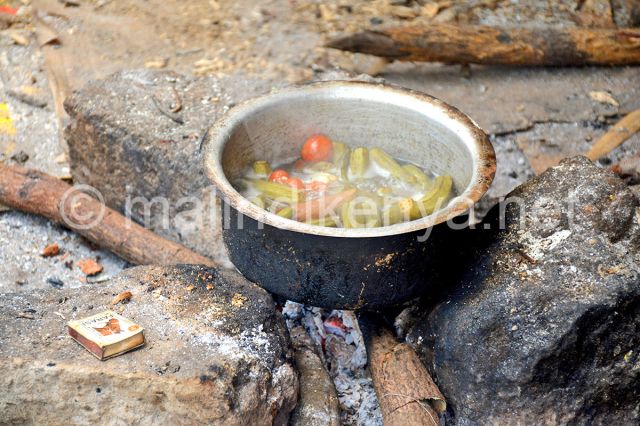
We can talk about the green transition at international summits, present ambitious plans and raise...
FREDDIE'S CORNER
by Freddie del Curatolo

If you ask someone who was born and raised in Ganze, in the hinterland of Kilifi, and...

The news had been in the air for a few days, and protests by the tourism sector in Kilifi...

Gas cylinders are like time bombs in Kenya.
This is the verdict of...
KENYA TODAY
by Freddie del Curatolo

Kenya has long been committed to alternative energy sources, and so, at a time when the fuel...
by redazione

An unusual Friday in the setting of the restaurant La Malindi. In addition to the weekly evenings with live...

