
KENYA NEWS
23-11-2026 by Freddie del Curatolo
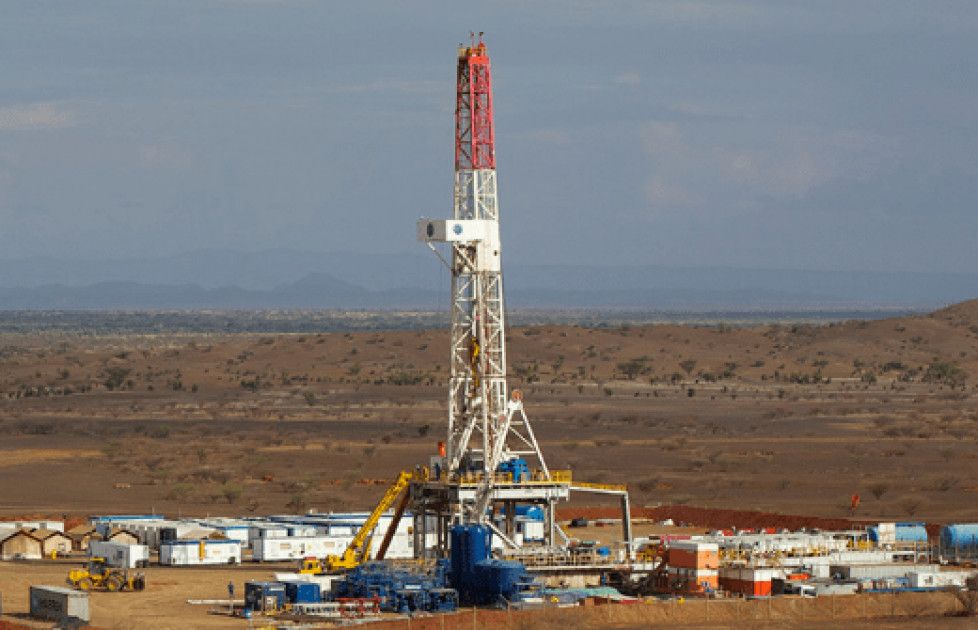
For years, Kenyan oil has been a promise buried beneath the sands of Turkana – a source of wealth that has been heralded, studied and drilled for, yet has never truly managed to change the country’s economic fortunes. Now Kenya is trying to get serious: new drilling operations, investments worth billions and an ambitious target of producing 20,000 barrels a day.
The news came from Turkana, where new drilling in the South Lokichar basin officially began on Friday 20 November. The operation was launched at the Amosing 1 well by the Minister for Energy, Opiyo Wandayi. It is no longer simply a matter of searching for hydrocarbons, but of preparing for the transition to commercial production, expected to begin on 1 December.
The project is being managed by Gulf Energy E&P BV SEZ, a company linked to the Kenyan Gulf Energy group, which has acquired Tullow Oil’s oil interests and taken control of the fields’ development. For the first phase, the aim is to extract over 20,000 barrels of crude oil per day from four fields: Ngamia, Amosing, Twiga and Ekales, grouped under the acronym NEAT.
The estimated recoverable reserves for the entire project, which comprises six discoveries in blocks T6 and T7, amount to approximately 326 million barrels. The Kenyan government anticipates potential revenues in excess of 2.9 billion dollars over the 25-year contract period. These projections are, of course, dependent on the trend in international prices and the actual volume extracted.
The second phase is expected to bring production up to 50,000 barrels per day. A figure which, if achieved, would significantly alter the oil sector’s weight within the national economy.
China in place of the former explorers
There is, however, one detail that clearly illustrates the changing landscape. Kenya is not simply resuming a project that had been left on hold: it is doing so with different players from those who originally discovered the oil.
The first major phase of the South Lokichar project had in fact been led by Tullow Oil, a British company, alongside Africa Oil and TotalEnergies. In 2012 came the Ngamia-1 discovery, which had fuelled expectations of a new oil frontier in East Africa. But amid financial difficulties, a lack of infrastructure, negotiations with the government and uncertainties over commercial viability, the project had accumulated years of delays.
In May 2023, Africa Oil and TotalEnergies withdrew from the project. Tullow remained the sole holder of the majority stake until it decided to sell all its Kenyan interests to Auron Energy, a subsidiary of Gulf Energy. The transaction was finalised in September 2025, marking the British company’s exit after fourteen years of operations in the country.
This is a significant turning point: the major international companies that had discovered the oil are no longer at the helm of the venture. In their place is a Kenyan group, tasked with transforming into commercial production a resource that for over a decade has remained largely on paper.
Chinese support, however, is far from marginal. The rig being used for the new drilling operations, a 1,500-horsepower GW70, has been leased from the Great Wall Drilling Company, a subsidiary of the China National Petroleum Corporation (CNPC). This is therefore neither Chinese funding of the entire project nor a concession of the oilfields to Beijing: it is a technical and industrial partnership that provides the new operator with essential equipment.
And this is not the only foreign presence. The American firm Baker Hughes has been brought in to provide integrated drilling services, whilst the multinational SLB – formerly Schlumberger – will supply the facilities required for the first phase of production. Kenya is therefore taking entrepreneurial control of the operation, but continues to rely on international expertise and technology.
From the oil discovered in 2012 to the first commercial barrel
To understand the significance of this transition, we must go back to March 2012, when the drilling of the Ngamia-1 well in the Lokichar Basin led to Kenya’s first commercial oil discovery. It was an announcement that sparked great expectations. The country seemed to have finally found a resource capable of changing its economic destiny, reducing its dependence on imports and opening up new prospects for development.
However, the path between the discovery and commercial-scale extraction proved to be a bumpy one. The companies required substantial investment, infrastructure to transport the crude oil, and assurances regarding the operation’s profitability. The original project also included an oil pipeline to the coast, but the costs and difficulties involved in its construction contributed to slowing the process down.
An initial production trial had, however, been carried out between 2019 and 2022 as part of the Early Oil Pilot Scheme: around 415,000 barrels were transported by lorry from Turkana to Mombasa and sold abroad. It was a trial, not yet the start of a fully-fledged national oil industry.
The turning point for the company came when Gulf Energy acquired Tullow’s assets, whilst Parliament examined and ratified the new development plan and production contracts. The joint report by the House of Representatives’ and Senate’s energy committees, published in February 2026, details precisely this transition and the conditions necessary to reach production.
The oil is there, but that does not yet mean Kenyan petrol
There is also one aspect that risks being overlooked amidst the enthusiasm surrounding the government’s announcements. Kenya will begin producing crude oil, but it will not automatically become self-sufficient in fuels.
The oil extracted in Turkana, at least in the initial phase, will be loaded onto tankers and transported to Mombasa, where it will be stored in the depots of Kenya Petroleum Refineries Limited, pending export. It will therefore not be immediately processed into petrol, diesel or kerosene for the domestic market.
The country will continue to purchase refined petroleum products from abroad, as it does today. The issue of domestic crude oil processing remains a separate matter, which will require further investment, infrastructure and assessments of economic viability.
Logistics are also a key consideration: the Turkana crude is paraffinic, contains a relatively high proportion of waxes and requires special measures to maintain the necessary temperature during transport. In the initial phase, with 20,000 barrels per day, a full fleet of tankers will be required. The project also envisages the subsequent use of rail transport.
An economic and geopolitical game
Kenya’s new oil strategy also tells a broader story. Major Western companies have gradually scaled back or withdrawn their direct involvement, whilst a national operator has taken on the responsibility of driving the project forward, relying on foreign suppliers and partners.
China, through its drilling company, is providing equipment and expertise. The American firm Baker Hughes and specialists from SLB are contributing the technological aspect. It is a model that is by no means self-sufficient, but which allows Kenya to retain the business and contractual leadership of the operation.
For Nairobi, it is also a matter of economic sovereignty: not merely owning underground resources, but being able to exploit them without being entirely dependent on the decisions and appetites of large multinationals.
It remains to be seen whether Gulf Energy will succeed where its predecessors encountered difficulties. The projections are significant, the planned investments enormous, and the expectations of the people of Turkana equally high. The oil wealth, however, must translate into jobs, infrastructure, services and tangible benefits for local communities, not merely into revenue for the state and profits for the operators.
For now, Kenya has started drilling. On 1 December, according to the timetable announced by the government, the first oil of the new commercial season is due to arrive.
And so, after searching for it for decades, discovering it in 2012 and waiting a further fourteen years, Kenya is finally trying to produce its own oil. With a bit of Chinese technology, a few American specialists and a pinch of national pragmatism. It may not yet be energy independence, but at least the tap is beginning to turn in the right direction.


Kenya has sold the first shipment of crude oil produced in its territory.
Yesterday...
ENVIRONMENT
by redazione

The three Lake Turkana national parks have been declared 'World Heritage in...
NEWS
by redazione

The fuel emergency in Kenya, which has created several inconveniences throughout the country, including...
KENYA NEWS
by Freddie del Curatolo

This coming December, Kenya will officially begin producing oil independently, from the Lake Turkana...

Fuel rationing in Kenya is causing shortages particularly of diesel and kerosene at gas stations across...

The semi-arid and troubled Kenyan region of Turkana could provide a livelihood for its communities by...
CRISIS
by redazione

Despite optimism from the National Petroleum Board, many petrol stations in Kenya have been closed as of today...

500 million shillings are coming from the German Bayer Foundation to deal with the food emergency...
KENYA NEWS
by Freddie del Curatolo

Kenya’s energy sector woke up with handcuffs on its wrists. This is no metaphor: it is a...
EVENTS
by Freddie del Curatolo

Prehistoric rock art is one of the least known but most fascinating cultural attractions of this country that...
PARKS AND RESERVES
by Leni Frau

In 1972, the Kenyan Government declared the area east of Lake Turkana, between the Tulor Bor...
NEWS
by redazione

Will it be a fueled Easter?
The fuel emergency that has...
KENYAN TRIBES
by redazione

The El Molo are one of Kenya's least populated tribes. It is believed that every year, as...

There is a huge deposit of gold underground in Kakamega County in Kenya.
The news...


