
REPORTAGE
26-11-2026 by Michele Senici
Atieno was born at night, as her name suggests.
And in the dead of every night, her biological alarm clock continues to ring, punctually, to take her to the market on Dunga beach, in time for the fishermen’s arrival from the lake.
The flashes of lightning and claps of thunder that shake the evenings on the lake have given way to the mud that covers the alleyways, waiting to dry in the rising sun.
With a brisk stride and a papyrus basket on her back, Atieno arrives at the jetty with her shoes still spotless: she knows exactly where to place each step.
Before her, the silhouettes of a hundred other Atienos stand out against the shapeless, dark mass that is the lake on moonless nights. When she was still a little girl, twenty, fifty or perhaps a hundred years ago, someone explained to her that her lake was named after a queen, and she had never quite bought into that story.
She, her mother before her, and her grandmother before that were the queens of the lake – the ones who know every subject and every invader, for generations upon generations.
She would have liked to call it Nam Atieno, not Lake Victoria, but in any case Nam Lolwe was fine, at least for the sake of clarity. As on every morning, these thoughts are soon interrupted by the faint glimmers appearing on the lake.
The men are bringing their boats back to the harbour and now it is time to get to work.
Some boats are unloading tilapia and Nile perch, whilst others are unloading baskets crammed with omena: small silvery fish which, like the mud in the alleyways, are just waiting for the morning sun to begin to dry out.
Atieno snatches up a perch as long as her son, who’s in Year 1, and, satisfied, sets off for her kibanda on the edge of Kibuye Market, where she’ll cut it into pieces and fry them to earn her daily wage.
Odhiambo buys the first piece before heading down to Kisumu harbour.
Fish and ugali for breakfast: today promises to be a gruelling day for those working at the harbour.
A high-ranking politician is due to visit the shipyard where Kenya is building its ferry – which is not just a vessel, but above all a piece of the future.
When you think about it today, Lake Victoria is made up of yesterday and tomorrow. From the thousands of wooden boats that set out every night to catch whatever fish remain in the lake to the promises of modern vessels that will open up the basin’s economy, with routes to other counties and other countries.
From the beaches where one cannot swim – in some areas reduced to the city’s latrines, with hippos and crocodiles ready to snap at unwary bathers – to the plans for a modern lakeside promenade that is set to stretch for 46 kilometres, redefining the city’s relationship with its shores.
From dreams of a tourism industry that is finally taking shape to the reality of visitors who, as they gaze upon Kisumu, are already leaving little pieces of their hearts floating on the lake’s waters and hanging from the trees in the city’s many parks.
At Atieno, four pieces of perch remain on the counter when yet another flight from Nairobi lands at Kisumu International Airport.
On board is Albert Omondi, who has returned home.
A taxi takes him to the large shopping centre on Jomo Kenyatta Road, where a super-chic branch of one of the capital’s most famous restaurant chains has recently opened.
He sips a concoction of milk, tea, pumpkin, spices and syrups and pays for it with the credit card from the finance company he works for in Nairobi.
That transaction will put Albert to rest and bring Omondi back to the fore, at least until he returns to the office. Omondi sends 1,000 shillings via M-Pesa to Atieno for the remaining perch.
The stall is finally cleared and she can return to her family.
He, with the fish under his arm, catches a matatu to take him to his family’s home in the plains surrounding the city, where rice is grown. They will have supper, chat to the rhythm of the rumba, and his parents will celebrate the return home of their third son. The next day, Omondi won’t have a moment to spare: he has returned to build his simba.
In Luo tradition, the simba is the house that a son may build on his father’s family land, next to his parents’ home. A space of his own, the first step towards an independent life, which may one day also welcome his own family.
But the simba is also something more: a way of keeping the path home open.
Because putting down roots doesn’t just mean building four walls, but securing a place in one’s family’s land and in the history of generations to come.
When you arrive at Kisumu airport, you’ll see the words Karibu Kisumu Dala. Dala, in Dholuo, is much more than a house.
It is the family home, the land of the ancestors, the place where you belong, where your roots lie.
Whilst Atieno returns home having made the most of her day and Odhiambo enjoys a Balozi by the lake to recover from the politics of the day, Omondi still has a house to build. And even if the lake continues to be called Lake Victoria on maps, for those who return, for those who stay, for those who build – and today, to some extent, for me too – this land will always have another name: Dala.
••• Michele Senici, 1993. Educator, teacher, project coordinator. I opened Casa Hera in Diani because I didn’t know where to take my life next. Have I figured it out now? Certainly not, but that’s all right; at least I observe, think and write. And today I thank Elisa and Ken, along with Adams and his family, for welcoming me and helping me discover Nyanza.


KENYA CITIES
by Leni Frau

Situated on the shores of the world's second largest freshwater lake, Lake Victoria, at an altitude of more...

He always proclaimed himself innocent, during a trial that lasted six months from his arrest on...
CORONAVIRUS
by redazione

The percentage of covid-19 positives from swabs in Kenya has started to rise again and this is mainly due...
CORONAVIRUS
by redazione

Many more healed than new positives and only 2 dead. So Kenya looks at its curve hoping that it...
ENVIRONMENT
by Leni Frau
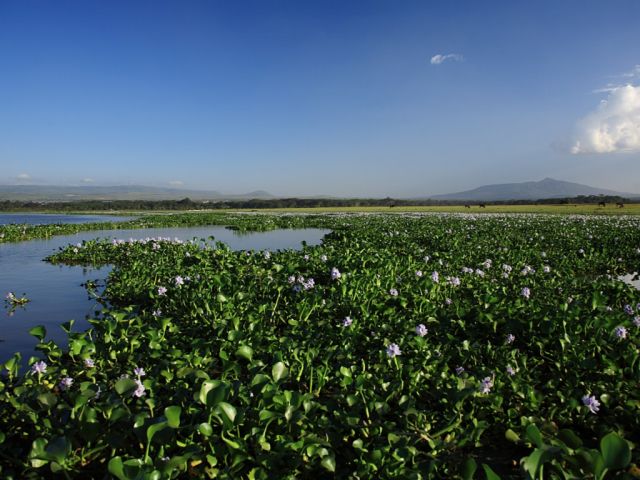
Freeing lakes from a weed that restricts fish reproduction and at the same time creating biofuel to limit...

The Chinese said yes.
After financing the standard gauge railway line from Mombasa to Nairobi, they will...
NEWS
by Freddie del Curatolo

From Embu to Malindi, from Kisumu to Garissa, the psychosis of running out of fuel possessed Kenyans like...

The Kenya Meterological Service has delivered its forecasts for 2020 or at least next month. The ...
PLACES
by redazione

In the Luo dialect it means "the sunken village", the "Simi Nyaima" is a wonderful little volcanic...
NEWS
by redazione

New life for the old, mythical "tusker baridi sani"!
After the meeting between Diageo liquor multinationals boss and Vice President William Ruto, Kenya's government announced the construction of the largest brewery in Kenya and all over Kenya, East Africa, in...
CORONAVIRUS
by redazione

Just when the Government of Kenya seems to have decided to reopen the country, next ...
FISHES
by Leni Frau

If you are a traveller in Kenya and you are used to wandering around markets or working-class...
LOCAL FOOD
by Freddie del Curatolo

Those familiar with Kenya, markets and 'street food' will already have come across the piles of dried...


