
KENYA TREES
27-03-2025 by Freddie del Curatolo

One of Nairobi's great green treasures, Karura Forest, is in danger of disappearing little by little, piece by piece, devoured by urbanisation and the attempt to deal with the heavy traffic in the Kenyan capital.
The alarm was raised months ago by environmental groups, led by the Green Blue Africa Foundation, which openly criticised the decision to cut down a series of historic eucalyptus trees in the areas of the forest closest to the road, especially on Kiambu Road, which according to a government project, should be doubled in lanes.
And to think that the current government itself, led by William Ruto who, with his wife Rachel, has presented himself not only nationally, but also pan-African and worldwide as a champion of environmental conservation, promised immediately after taking office that by 2030 it would plant no less than 15 billion new trees.
‘How can he expect to have that number of plants if hundreds are uprooted every day to make way for concrete and asphalt?’ ask the environmentalists.
As far as Nairobi is concerned, the finger is pointed at the Kenya Forest Service, guilty of not having opposed the deforestation proposed by the authorities, and even by the Karura associations, who accepted the cutting of the eucalyptus trees, because they are not native Kenyan species. Evidently, they would be happy with a smaller forest, but totally indigenous. However, to date only 25% of the forest is made up of African plants and allowing the cutting of the foreign plants would mean only a quarter of Karura would remain, a true green lung and marvellous place for walks and bike rides in an area of the city that is too polluted.
Not to mention the damage to the entire ecosystem of birds and other animal species and to the microclimate.
The problem of urbanisation in Kenya doesn't only concern those who live in Nairobi: uncontrolled building is visible and also threatens other natural paradises and areas of environmental importance in the country, such as the Maasai Mara, where the transfer of responsibilities to Narok County could even lead to the construction of multi-storey buildings inside the nature reserve, and the same thing could happen on the edge of Amboseli Park, if the state decides to hand over its management to the county of Kajado South.
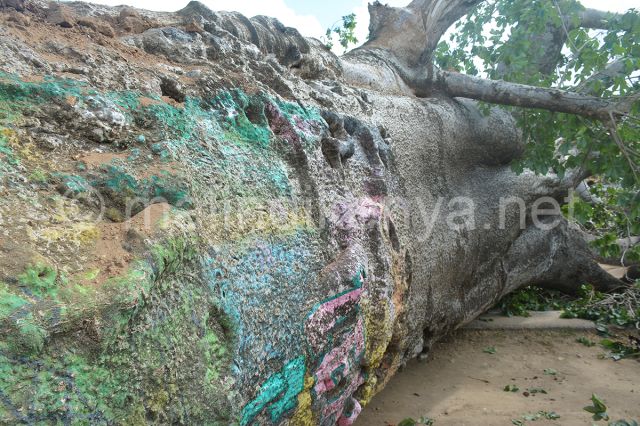
Finally, on the coast, there is no legislation to oversee the felling of ancient baobabs and other historical plants for those who decide to build, and this often happens even on land that has been granted in usufruct to local communities. The same goes for road construction, where there are no plans to change the location or route if a thousand-year-old baobab has to be cut down. Fortunately, this did happen in Nairobi years ago, during the construction of the elevated Chinese Expressway. The centuries-old ficus tree, once considered sacred by the Kikuyu community, remained standing after protests from civil society. But it is not yet known for how long, and above all how much its sacredness and history will be able to withstand smog and roots in concrete.


ENVIRONMENT
by Leni Frau

By the end of March, replant the trees uprooted to build the Nairobi elevated expressway. This is the diktat...
ENVIRONMENT
by Freddie del Curatolo

The story of the felling and subsequent export of eight thousand-year-old baobab trees from the Kenyan coast...
NEWS
by Freddie del Curatolo
Kenya's baobabs are inevitably destined to disappear unless the new government takes timely and necessary countermeasures...
ENVIRONMENT
by Leni Frau

Perhaps we have not struggled in vain. And we are not just talking about us, small and uninfluential foreign...
TALK
by redazione

The Arabuko Sokoke forest is one of the most important and extensive green lungs on the Kenyan...
ENVIRONMENT
by Leni Frau

During yesterday's day of national mourning in Kenya, to commemorate the more than 250 victims...
ENVIRONMENT
by Freddie del Curatolo

That we wouldn't make it was almost written.
Only a...
SAD STORY
by Freddie del Curatolo

If, as the Malian writer and philosopher Amadou Hampatè Ba said, 'In Africa, every old...
ENVIRONMENT
by redazione

From cooperation to business, but without ever forgetting environmental sustainability and aid to...
ENVIRONMENT
by Leni Frau

For us at Malindikenya.net it is now unthinkable not to combine the work of information and promotion...
FREDDIE'S CORNER
by Freddie del Curatolo

At first sight, the trees of Takaungu seem to project a 'fantasy' scenario to the...
NEWS
by redazione

We are confident that Kenya's baobabs and neems have also cried the disappearance of Maurice Méssegué, the "daddy of plants" as was universally appealed.
The great French naturalist, writer and phytotherapist turned 95 in France, but left a great legacy...

The baobabs of Sub-Saharan Africa are increasingly important for the present and future of the entire planet's...

STORIES
by Freddie del Curatolo
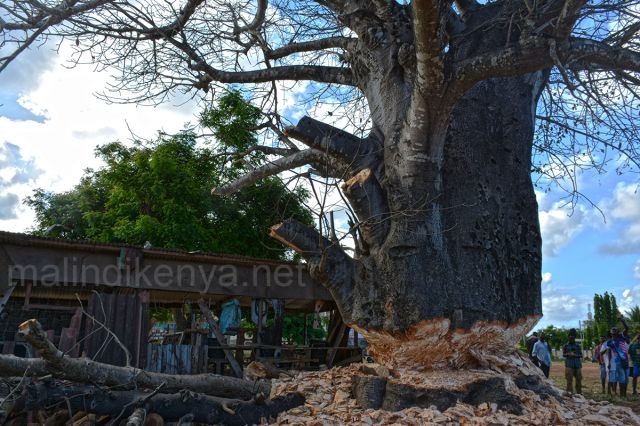
On the coast of Kenya there is a silent, daily crime that does not concern mankind and is not linked to any...


