
EDITORIAL
24-11-2025 by Freddie del Curatolo

What if the next war, because unfortunately as long as humans exist, wars will exist, were not about money, drugs, or superficial religious beliefs?
What if it were not about those who want to “break the earth into pieces”, as Gianni Rodari wrote, or those who want to remake all the pieces into a single empire, like Vladimir Putin?
What if the next war were that of women against those who still think they have rights over them, that they are superior, that they can express possession or unleash their animal instincts and frustrations on them?
The disturbing example, during the 16 days of campaigning against violence against women, in Africa as in the rest of the world, comes from one of the most violent countries on the continent: South Africa.
A growing number of women in that country are learning to use weapons to protect themselves from gender-based violence. On average, 15 women are killed every day in South Africa, an increase of almost 34% compared to last year. This weekend, South African women organised silent protests calling for a 15-minute halt to all economic activity, due to what they describe as the government's failure to address the problem, and demanding that it be declared a “national disaster”. Meanwhile, many others are training at the shooting range between Johannesburg and Durban.
So let's imagine this brand new war, as lopsided as only the truths we pretend not to see can be. A war without slick generals, without maps on tables or drones buzzing in the sky like high-tech mosquitoes.
A war fought by those who, until yesterday, were not even considered part of history: women. Not those in uniform, but those who wear the invisible armour of survival every day.
Because if there is one continent that does not need war metaphors to understand that women live in the trenches, it is Africa. A continent with one femicide every two hours, as if someone had decided to mark time not with an atomic clock, but with death.
And the governments? They stammer, they promise, they set up commissions, sometimes they change ministers, to dress up their promises with new suits and ties, and unfortunately sometimes new suits.
And then it starts all over again.
And so there they are, South African women, who instead of locking themselves in their homes as the herd mentality would dictate, are learning how to take apart and reassemble a gun. Not for pleasure, not for fun, not to show who is tougher, but for that ancient thing that men have always taken for granted: staying alive. And one wonders where humanity's common sense has gone, if in order to defend yourself from those who should love you or at least respect you, you have to learn to shoot.
On 21 November, for fifteen minutes, the country came to a standstill. Fifteen minutes of silence, of no work, no trade, no fake normality. Fifteen minutes to say: “We are no longer willing to be counted as if we were traffic accidents”.
As could also be the case in Kenya, Ghana and Nigeria, they have declared a state of “national disaster”, just as if violence were a flood, an earthquake or a cyclone.
But perhaps it is even worse, because it is a continuous, uninterrupted calamity that claims victims every day and against which no defences can be built.
And so one is led to think that this war, the war of women who are tired of waiting for their knight in shining armour or an enlightened minister, will not be fought on battlefields but in kitchens, offices, schools, streets and markets.
It will be a paradoxical war: not to conquer territories, but to reclaim their own bodies. Not to impose themselves on others, but to no longer be reduced to the role of targets.
And here, on the other side of Africa, where Kenya is celebrating its “16 days” with conferences and panels well attended by the usual suspects, we should listen to those women who have decided not to wait any longer. Not to take up arms – that is not the model – but to understand that the point of no return is near. And when an entire gender starts thinking as if it were at war, it means that peace is long gone, only we pretended not to notice.
Perhaps the real question is not whether the next war will be fought by women. The question, more bitter, more African, more sincere, is: how much longer can we ignore the fact that it has already begun?


EVENTI
by redazione

It's a group of Italian women, headed by Rita Valentini, to organize in Malindi each year the "Flash Mob" against violence against women, which takes place simultaneously in the streets around the world.
It is a choreography to the tune...
EVENTS
by redazione

Tomorrow evening, Friday, August 30 at the Mapango of Watamu will take place the...
NEWS
by redazione
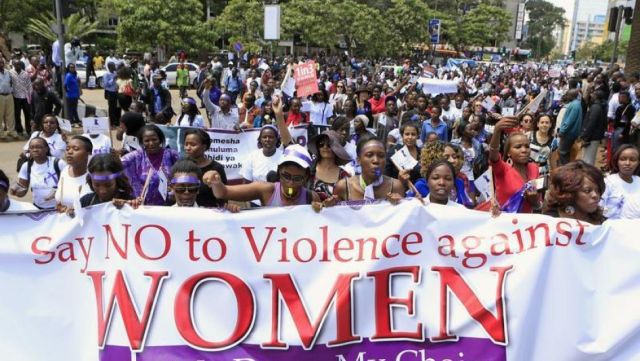
Italy will finance "Let it not happen again", a project against violence against women in Kenya, through the...
by Freddie del Curatolo

It is nice to think that there are still places, situations and communities where theatre still has...
KENYA NEWS
by Freddie del Curatolo

To celebrate the 16 Days of Activism Against Gender-Based Violence, in Nairobi, Italy and the Kenyan artists...
SOCIAL INITIATIVES
by Freddie del Curatolo

Gender-based violence. Women's status, discrimination. Equality. Patriarchy
These...

Even in an ancestrally male chauvinist country like Kenya, women are emancipating themselves and gaining...
KENYA NEWS
by Freddie del Curatolo

A serial killer is said to be behind the killing and dismemberment of as many as 42 women's bodies, whose...
EDITORIAL
by Freddie del Curatolo

Last Saturday, demonstrations in Nairobi, Mombasa and in the country's major county capitals, organised...
TOURISM
by redazione

Watamu is now the tourist resort of choice on the Kenyan coast, that is no mystery, but that
NEWS
by Leni Frau
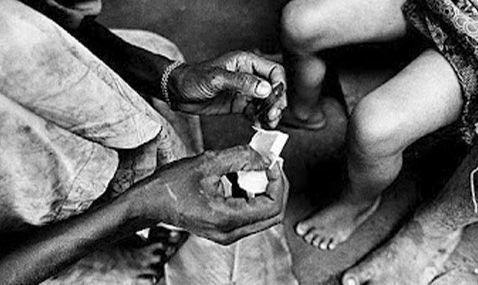
These are important days for the future of many young women from Kenya's Samburu tribes. Just before...

The Italian Agency for Development Cooperation (AICS) in Nairobi and the Italian Cultural Institute...
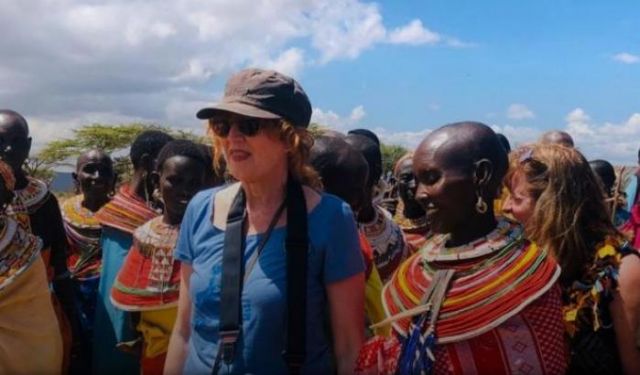
The singer Fiorella Mannoia and the spokesperson of I Sentinelli Paladini have chosen to follow ...


