
KENYA NEWS
07-10-2026 by Freddie del Curatolo

Fears over the spread of the Bundibugyo strain of the Ebola virus – which kills one in two of those infected and for which there is still no cure – have been circulating for the past 24 hours even in Kenya, a country that had never previously recorded a single case, and which now faces one death and at least 28 possible infections.
The Kenyan national who died from the virus, which he contracted in the Democratic Republic of the Congo, had arrived in Nairobi on Saturday afternoon, having travelled by plane whilst already unwell, then overland to Kampala and finally by plane to Jomo Kenyatta International Airport in Nairobi.
He did not know, or perhaps could not yet have known, that he was the first person to contract Ebola in Kenya’s history.
The Kenyan man had been living in the Democratic Republic of the Congo for about seven years. He had begun to feel unwell a month earlier and, during that time, had been treated in several Congolese hospitals. He then decided to return home.
His journey home became, unbeknownst to anyone at the time, the first trace of Ebola on Kenyan soil.
From the Congo to Kampala
The patient left the Democratic Republic of the Congo, travelling overland to Kampala, in Uganda. From there, on Saturday 3 October, he boarded Jambojet flight 8523 bound for Nairobi.
The aeroplane landed at Jomo Kenyatta International Airport at 1.10 pm.
As required by health protocols, the passenger passed through Port Health screening at the airport and completed immigration procedures.
However, he was not detained at the airport.
He had a fever, aching bones and nausea, but nobody noticed, and, worse still, he did not take it upon himself to tell anyone.
A relative and a friend collected him from JKIA and took him directly to Nairobi Hospital. According to the account provided by the Ministry of Health, the journey was made by car.
On his arrival at the hospital, the doctors immediately realised that something was amiss.
Fever, chills, weakness
The man exhibited all the symptoms of the virus: fever and chills, severe fatigue and weakness, muscle aches, a sore throat and painful difficulty swallowing.
There was also another sign that could not be ignored: bleeding under the skin, including at the sites where injections had been administered.
The doctor who examined him considered the possibility of a viral haemorrhagic fever, particularly in light of his travel history and the time he had spent in the Democratic Republic of the Congo.
The patient was therefore immediately isolated in a separate room in the A&E department and subsequently transferred to the East Wing Isolation Facility at Nairobi Hospital, a facility set up during the Covid-19 pandemic and equipped with intensive care capabilities.
A sample was taken.
The result came from the National Virology Reference Laboratory and was also confirmed by the laboratory at the Kenya Medical Research Institute (KEMRI).
Ebola Bundibugyo.
Kenya had its first case.
Last night
The patient received supportive care, whilst the health authorities began the process of tracing those who had been in contact with him.
But the virus had already done its work.
On Monday evening, at around 11.30 pm, Kenya’s first Ebola patient died at Nairobi Hospital. Health Minister Aden Duale expressed his condolences to the family, announcing that the funeral would be carried out in accordance with the safety protocols in place for Ebola-related deaths.
A death that occurred just three days after his arrival in Nairobi.
Now the contacts are being traced
The patient’s story has, in the meantime, become a map.
The Ministry of Health has identified 28 people who came into contact with him, including family members and healthcare workers who attended to him. These people are being monitored and subjected to the necessary procedures to prevent secondary transmission.
But these are not the only names the authorities are looking for.
There were another 23 people travelling on Jambojet flight 8523, in addition to four crew members. The Ministry is working to trace them so they can be subjected to the necessary surveillance measures and, for those deemed to be at risk, placed in quarantine.
This is now the race against time.
It is no longer simply a matter of treating a patient, because the patient is no longer with us. It is a matter of determining whether, during his final month of illness – whilst travelling through the Congo and Uganda, on the aeroplane, or during the hours spent in Nairobi before being placed in isolation – the virus found other people to infect.
Kenya had been preparing
The incident takes on particular significance because Kenya had spent months preparing for precisely this moment.
Since May, when the Bundibugyo Ebola outbreak erupted in the Democratic Republic of the Congo, the Kenyan authorities had stepped up checks at borders and airports.
As of 6 October, according to the Ministry of Health, 652,584 travellers had been screened, whilst 267 samples had been analysed in five laboratories. Around 4,971 healthcare workers, at national and county level, had been trained to deal with the emergency. So far, only the sample from the deceased patient has tested positive.
In short, the surveillance system was not just on paper.
It was already up and running.
But the first confirmed case also demonstrates just how difficult it is to stop a virus in a region where people, families, lorries, buses and aeroplanes cross borders daily – borders that are clear-cut on paper but far less so in real life.
The patient who arrived in Nairobi was not an anonymous traveller heading for a tourist destination.
He was a Kenyan returning home.
And now Kenya must piece together, person by person, the route he took before being placed in isolation.
Because the story of Kenya’s first Ebola patient, sadly, does not end with his death.
It is precisely from that death that the search begins for all the others who came into contact with him.


LATEST NEWS
by Freddie del Curatolo

For months, Kenya has been looking westwards, towards the Congo and Uganda, just as...
KENYA NEWS
by Freddie del Curatolo

All it took was one suspected case for Kenya to be added to the list of countries at high risk...
KENYA NEWS
by Freddie del Curatolo

Ebola has never been seen in these parts. Not a single case. And yet, on the slopes of Mount Kenya...
KENYA NEWS
by Freddie del Curatolo

Whilst confirmed cases of Ebola in the Democratic Republic of the Congo have exceeded a...
EDITORIAL
by Freddie del Curatolo

Ebola – or rather this strain of the virus, known as Bundibugyo (and not ‘boogie boogie’ as someone...
KENYA NEWS
by Freddie del Curatolo
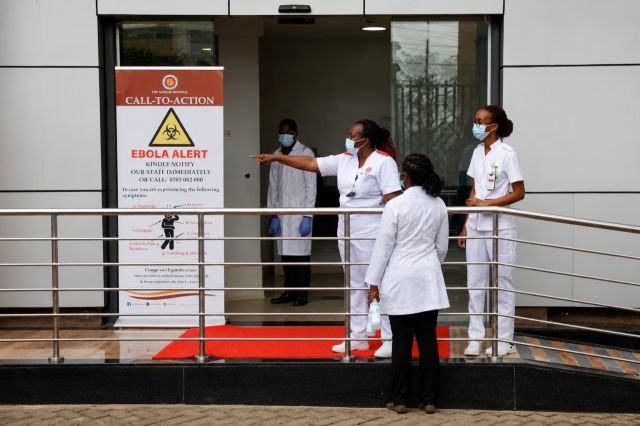
Second case of Ebola reported in Kenya, but according to the WHO there is no risk of an outbreak. The...
EPIDEMIC
by Freddie del Curatolo

Every time Ebola breaks out in Central Africa, someone on the other side of the world cancels a trip...
KENYA NEWS
by Freddie del Curatolo

It is not a new online visa, nor is it an entry fee; it is not compulsory, but it saves you from...
KENYA NEWS
by Freddie del Curatolo

For once, it seems that activists and human rights organisations have won. No...
KENYA NEWS
by Freddie del Curatolo

The number of people placed in quarantine in Kenya has risen to 10 following the confirmation of...
EDITORIAL
by Freddie del Curatolo
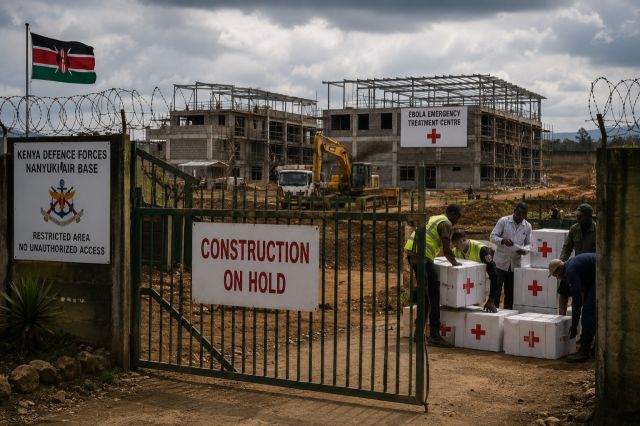
Kenya is safe enough to host a facility designed to assist American citizens potentially exposed to Ebola, but...
KENYA NEWS
by Freddie del Curatolo
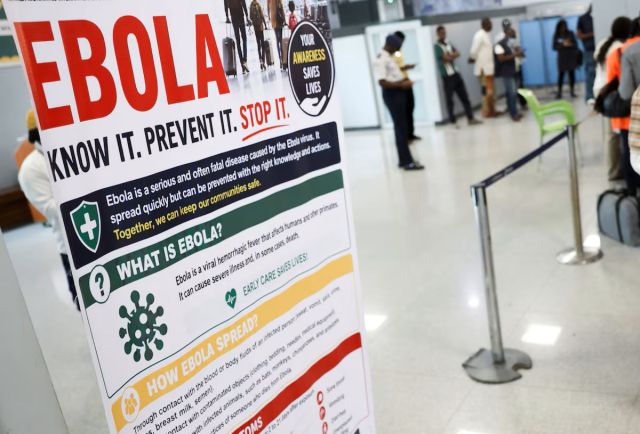
Kenya no longer has any patients undergoing treatment for Ebola or people in quarantine; it has begun...
KENYA NEWS
by redazione

Kenya's Ministry of Health has confirmed the second case of monkeypox (Mpox) in the...
KENYA NEWS
by Freddie del Curatolo
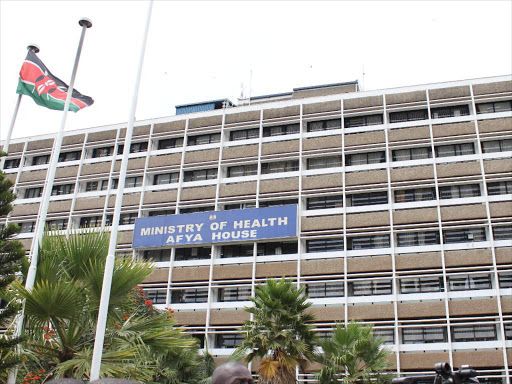
For once, the figures seem to offer cause for hope. Five hundred and fifty-one people were tested within...
HEALTH
by redazione

Holiday time. For those who are preparing to make a trip to Kenya is useful an update on the situation of prevention and treatment of ...

