
EDITORIAL
19-10-2026 by Freddie del Curatolo
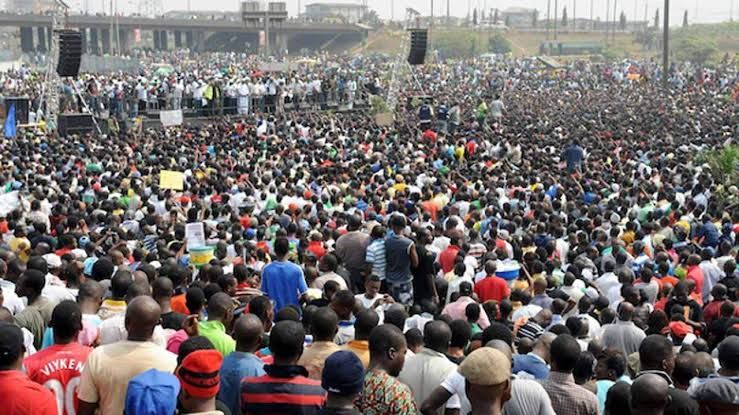
Should we take it seriously, ignore it because it isn’t fatal if caught in time, or worry because in Kenya almost nothing is ever taken either too seriously or dealt with in time?
The Ebola outbreak in Nairobi and the north of the country (the coast remains free of cases for now) is entering a phase where rapid diagnosis is no longer enough: we must prevent the virus from finding new routes of transmission. Africa CDC, the African Centre for Disease Control and Prevention, has reaffirmed its support for the Kenyan authorities, setting out the priorities for the response: tracing all contacts, strengthening epidemiological surveillance, protecting healthcare workers and coordinating measures with neighbouring countries.
From assistance to action on the ground
Africa CDC’s support for Kenya is not merely a declaration of solidarity. The African Union’s health organisation has been involved since the start of the emergency, mobilising a high-level multidisciplinary team, whilst its Director-General, Jean Kaseya, had announced his readiness to travel to the country to assess the response needs alongside the national authorities.
Following confirmation of four further cases, Africa CDC reaffirmed its commitment to working with the Kenyan government and international partners. The support focuses on epidemiological surveillance, technical coordination, risk communication and community engagement.
Anyone accustomed to navigating hospitals and institutional corridors in Africa knows this well: it is not enough simply to have facilities capable of treating the sick – and in this respect Kenya is certainly ahead of many other nations – one must rapidly identify those who may have been infected, ensure reliable testing, monitor exposed individuals and prevent any new cases from falling outside the monitoring system.
Kenya, as mentioned, already has a network of healthcare facilities and laboratories capable of contributing to the response. The challenge lies in coordinating them, strengthening them where necessary and ensuring that all relevant information reaches decision-makers swiftly.
The priority is to trace all contacts
The first line of defence is epidemiological tracing. The authorities must reconstruct patients’ movements, identify the people with whom they came into contact during the period relevant to transmission, and ensure that each of these individuals is actually reached.
It is a complex task, involving family members, healthcare staff, passengers and others who may have been exposed. It does not end with a phone call or the compilation of a list: it requires daily checks, updates to the information and constant liaison between teams on the ground and healthcare facilities.
Here, people mingle, move about, rub shoulders and couldn’t care less. It is precisely at this time of year that election rallies begin – which some, for their own self-interest, are already thinking of banning. There are the markets, the daily matatus, the churches with their singing and dancing, and the sweaty, alcohol-fuelled, anarchic nightlife.
Identifying contacts as soon as possible, who must then be monitored for 21 days with particular attention to the incubation period, which can indeed last as long as three weeks. And this is the other mess. Anyone who develops compatible symptoms following possible exposure must be assessed promptly and, if necessary, isolated and tested.
It is also essential to extend contact tracing to the contacts of new patients. A person who falls ill after being identified and placed under surveillance presents a different situation from a case discovered with no known link to previous ones. In the latter case, there is a greater suspicion that as yet unknown chains of transmission exist.
For this reason, the aim is not merely to reduce the number of infections, but to identify every possible link in the chain.
Protecting those who care for the sick
One of the most sensitive aspects of the emergency concerns healthcare workers. The fact that three of the new cases are people who had cared for the first patient makes it even more urgent to review the procedures adopted in the facilities involved.
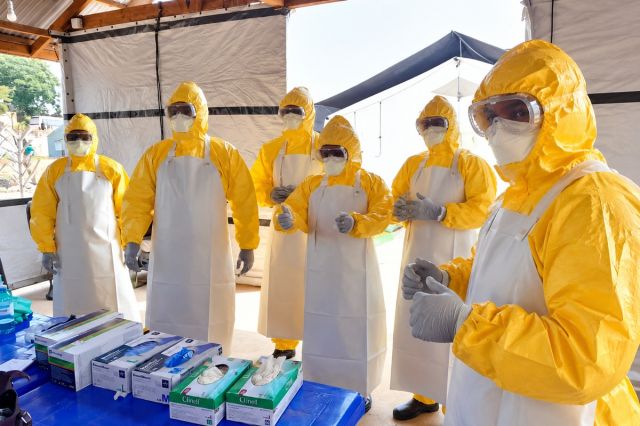
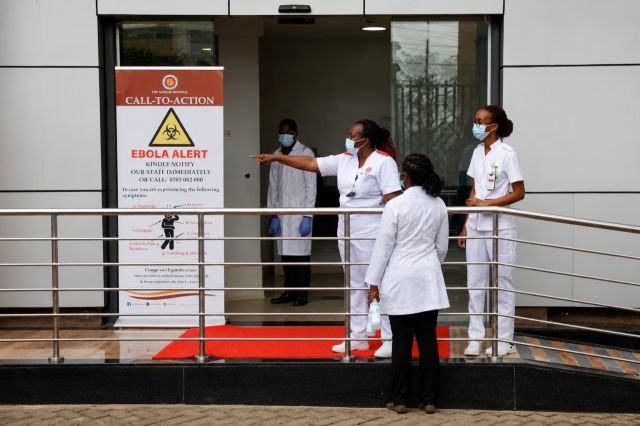
Staff protection must begin with the identification of high-risk areas, the provision of adequate personal protective equipment and practical training in its use. Putting on and removing gloves, face masks, eye protection and protective clothing correctly is essential to prevent contamination.
It is also necessary to separate the routes taken by suspected cases from those of other patients, restrict access to isolation areas and ensure rigorous procedures for disinfection, the management of clinical waste and the handling of biological samples.
The World Health Organisation has already provided Kenya with essential medical supplies worth approximately 70,000 dollars, intended primarily to protect frontline staff and to speed up the testing of suspected cases. The assistance also includes training for rapid response teams, drills, laboratory coordination and the strengthening of infection prevention measures.
The safety of healthcare workers is not merely a professional concern. If healthcare staff fall ill, the capacity to treat patients is reduced and the risk increases that the virus will spread to others through healthcare facilities.
Laboratories, isolation and treatment
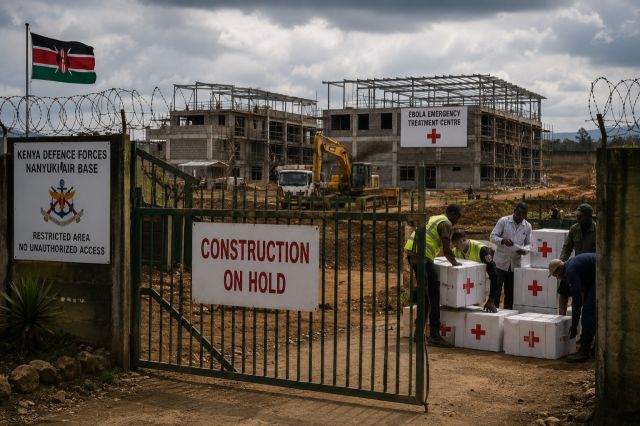
The second major challenge, in a healthcare system that is already riddled with shortcomings and rife with discontent over salaries – where those who can afford it go straight to private facilities, including skilled doctors – is to ensure that every suspected case is identified and diagnosed as quickly as possible. To achieve this, it takes more than just healthcare facilities; above all, it requires laboratories ready to carry out tests, the safe transport of samples, the rapid communication of results, and clear procedures for transferring patients to designated facilities. Isolation wards must also have trained staff, equipment and sufficient supplies to cope with a potential increase in demand.
For the Bundibugyo strain, responsible for the current emergency, there are no approved vaccines or specific treatments available. This does not mean that nothing can be done: supportive care, fluid management, symptom control and the treatment of complications can improve the chances of survival.
Timeliness remains crucial. The sooner a person is identified, assessed and cared for in appropriate conditions, the greater the chances of preventing further exposure and managing the disease as effectively as possible.
A public health frontier that does not stop at Kenya
The Kenyan emergency cannot be viewed in isolation from the one currently unfolding in the Democratic Republic of the Congo. The first case identified in Kenya was linked to a journey from the DRC via Uganda. The patient’s route highlighted just how important it is for information on potential contacts to cross borders swiftly.
The Africa CDC emphasises precisely the need to strengthen regional cooperation: surveillance at points of entry, sharing of epidemiological data, diagnostic capacity and response teams ready to intervene.
It is not just a matter of monitoring airports. Land border crossings, road links and communities living along borders also require attention. Screening must be risk-based and accompanied by procedures that enable the prompt identification of symptomatic individuals and the tracing of any contacts they may have had.
At the same time, the WHO does not recommend general restrictions on travel or trade with Kenya, the DRC or Uganda. The recommended strategy is to strengthen surveillance and targeted public health measures, without turning the emergency into indiscriminate isolation of the countries concerned.
Communication is part of the response
There is also a less visible, but equally important, aspect: that of public trust.
The authorities must provide regular updates, explain what is known and what remains to be verified, clarify how the virus is transmitted, and indicate where to turn in the event of suspected exposure. Institutional silence, contradictory information and unchecked rumours can undermine community cooperation precisely when it is most needed.
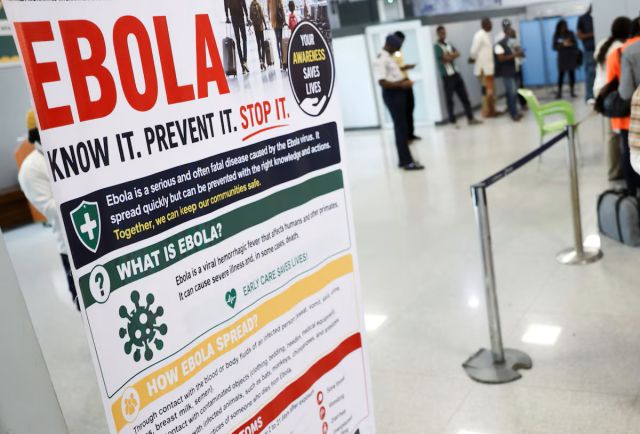
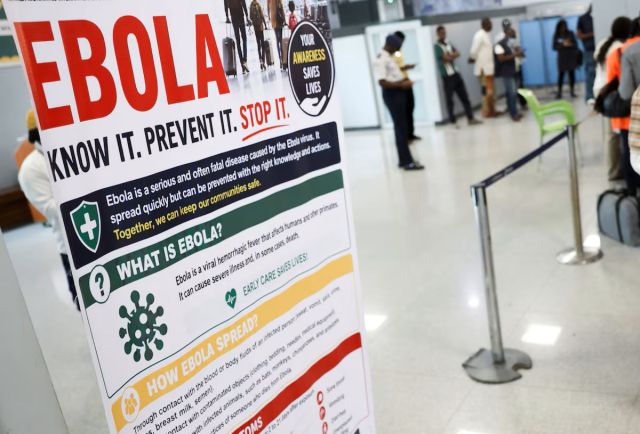
The public must be aware that Ebola is transmitted through direct contact with the blood and other bodily fluids of a symptomatic infected person, or with contaminated materials. It is not transmitted simply by sharing a public space with a healthy person who shows no symptoms.
Anyone who has had possible exposure and develops a fever, severe fatigue, headache, muscle aches or other compatible symptoms should seek guidance from the health authorities promptly, avoiding unnecessary contact and refraining from going to crowded places on their own. These symptoms can have many other causes and are not, on their own, sufficient to diagnose Ebola: it is the medical assessment that determines the next steps.
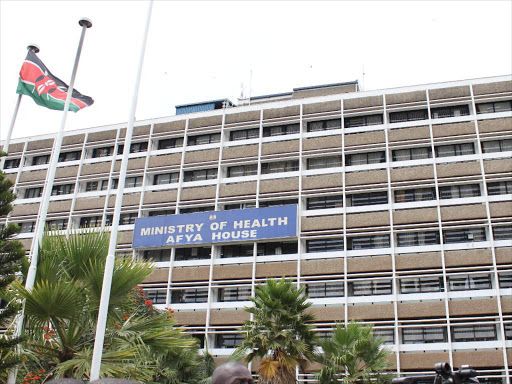
In Kenya, the Ministry of Health has set up a freephone helpline (719) for information and advice.
The decisive factor will be collective awareness
The recognition by the Africa CDC is important because it confirms that Kenya is not facing this emergency alone. But international support must translate into concrete results: every contact traced, every suspected case assessed promptly, every healthcare worker protected, every possible chain of transmission broken.
Now, those who usually think only of their own affairs – or do not think at all – must set aside their reassuring words and face the reality of a situation that is not yet dangerous but could become so only if all the negative factors we are well aware of are allowed to combine and contribute to creating an epidemic. Where the conditions were most favourable, this strain has already killed (officially) 4,500 people – one in every two infected. It is against this backdrop, and in light of these figures, that Kenya’s ability to contain the virus will be judged.


LATEST NEWS
by Freddie del Curatolo

For months, Kenya has been looking westwards, towards the Congo and Uganda, just as...
HEALTH
by redazione

After the first two suspected cases of Coronavirus in Kenya were isolated in Mombasa and Nairobi and...
KENYA NEWS
by Freddie del Curatolo
After three weeks of waiting and health checks, the first 20 close contacts of people infected with...
KENYA NEWS
by Freddie del Curatolo
Kenya has recorded its second fatality from the Ebola outbreak. A 65-year-old woman, who had tested...
KENYA NEWS
by Freddie del Curatolo

Ebola has never been seen in these parts. Not a single case. And yet, on the slopes of Mount Kenya...
EDITORIAL
by Freddie del Curatolo
Kenya is safe enough to host a facility designed to assist American citizens potentially exposed to Ebola, but...
EDITORIAL
by Freddie del Curatolo

Ebola – or rather this strain of the virus, known as Bundibugyo (and not ‘boogie boogie’ as someone...
KENYA NEWS
by Freddie del Curatolo
For once, the figures seem to offer cause for hope. Five hundred and fifty-one people were tested within...
CORONAVIRUS
by Freddie del Curatolo

The Coronavirus won't reach Sub-Saharan Africa because it can't withstand the heat? Or will it...
by Freddie del Curatolo

Sometimes the fear of a disease spreads faster than the disease itself. In Kenya, where not a single...
KENYA NEWS
by Freddie del Curatolo

Whilst confirmed cases of Ebola in the Democratic Republic of the Congo have exceeded a...
KENYA NEWS
by Freddie del Curatolo
Second case of Ebola reported in Kenya, but according to the WHO there is no risk of an outbreak. The...
KENYA NEWS
by Freddie del Curatolo

Fears over the spread of the Bundibugyo strain of the Ebola virus – which kills one in two of those infected...
KENYA NEWS
by Freddie del Curatolo
Kenya no longer has any patients undergoing treatment for Ebola or people in quarantine; it has begun...
KENYA NEWS
by Freddie del Curatolo

First came the warnings that Ebola was re-emerging in Central Africa. Then came...

