
KENYA NEWS
18-10-2026 by Freddie del Curatolo
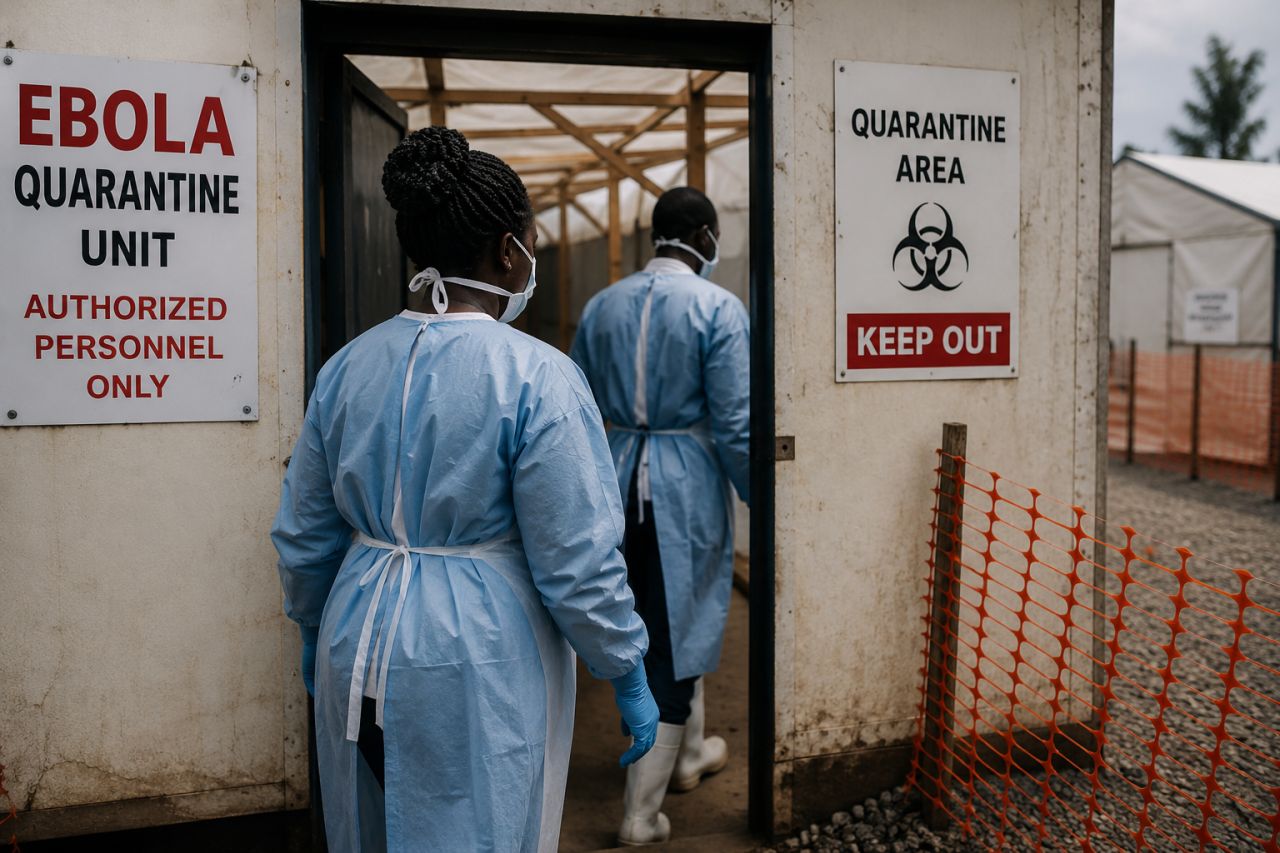
Seven official cases may seem like a small number in a country with a population of over fifty million.
But when it comes to Ebola, the figure quoted in health bulletins is merely the starting point for a far more complex task: tracing contacts, monitoring those who have been exposed, and preventing one chain of transmission from leading to others.
Moreover, the infection has also spread to the medical staff who treated the first patient, who died on 5 October. The authorities assure us that all those who have tested positive were already in quarantine, but the spread of the Bundibugyo virus confirms just how fragile the barrier is between an outbreak that is under control and a wider emergency.
Three healthcare workers have been infected, a relative of the first victim has tested positive, and there are a total of seven confirmed cases, including the initial death. Ebola is no longer merely a risk imported into Kenya from the Democratic Republic of the Congo: the Bundibugyo virus has caused the first confirmed infections within the country, raising the health emergency to a more critical level.
The news, released yesterday by the Kenyan Ministry of Health, necessitates an update on the epidemic’s status. The official figures remain modest, but they already point to a chain of transmission involving people who came into direct contact with the first patient, including those whose role it was to protect him and others from infection.
From the first case to hospital infections
The incident began with a Kenyan national returning from the Democratic Republic of the Congo, where he had been living and receiving treatment in various healthcare facilities. After travelling to Kampala by land, the patient flew to Nairobi on 3 October. Admitted to Nairobi Hospital, he was placed in isolation, but his condition deteriorated until he died on 5 October.
In the days that followed, two further cases were confirmed, both relatives of the first victim. Now there are four new confirmed cases: three involve healthcare workers – two men aged 29 and 35 and a 32-year-old woman – who had cared for the patient during his hospitalisation on 3 and 4 October. The fourth new case involves a close relative of the deceased man.
The three healthcare workers had been in quarantine since 9 October, whilst the family member had been placed under observation as early as 6 October. All developed a fever and underwent tests which confirmed the presence of the virus.
Official figures and those still missing
The Ministry of Health emphasises that 128 of the 130 identified contacts have been traced and placed in quarantine, representing 98.5 per cent. Two people remain to be located. The authorities believe that this coverage, which exceeds the 85 per cent threshold cited as a benchmark for containing transmission, is a positive sign.
However, monitoring is not yet complete. The incubation period for the Bundibugyo virus can be as long as 21 days, and further infections could emerge amongst those already identified and under surveillance. The fact that the new patients were in quarantine at the time of diagnosis is significant, as it reduces the risk that they may have had further unmonitored contacts.
One fundamental question remains, however: how many contacts have actually been traced, and how complete is the epidemiological picture? The seven confirmed cases are the figures available today; they are no guarantee that the outbreak has already been contained.
Bundibugyo, a highly contagious strain with no approved vaccine
The Bundibugyo virus belongs to the Ebola virus family and causes a severe form of the disease. Transmission occurs through direct contact with the blood, secretions and other bodily fluids of infected people, or with contaminated materials and surfaces. Healthcare settings can become sites of transmission when prevention and protection procedures fail to break the chain of infection.
At present, there are no authorised vaccines or approved specific treatments for this variant. Supportive care, early diagnosis, isolation of patients and contact tracing are therefore crucial measures. The World Health Organisation points out that the incubation period ranges from two to 21 days and that an infected person is not contagious before symptoms appear.
The problem is not only the disease’s fatality rate, but the difficulty in recognising it in its early stages: fever, fatigue, muscle aches and a sore throat can be mistaken for those of other common infections in the region. It is precisely during this period that the speed of the healthcare system makes all the difference.
Can Kenya still contain the outbreak?
The government continues to state that the risk to the general public remains low, emphasising that no evidence of community transmission has been found and that the new cases were already in quarantine. For the time being, no general restrictions have been imposed on travel, trade or public gatherings.
These are factors that should not be underestimated, just as the fact that the surveillance system has identified new positive cases should not be underestimated. However, the fact that three healthcare workers have been infected serves as a reminder of how difficult it is to protect even those on the front line, and how essential it is to verify the effectiveness of isolation procedures, personal protective equipment and the management of suspected cases.
The ongoing outbreak in the Democratic Republic of the Congo, the source of the initial Kenyan case, has already reached enormous proportions. Kenya, which had been stepping up border and airport controls for months, must now also contend with a chain of domestic transmission.
The figure, for now, stands at seven. But in an emergency such as this, it is not enough simply to count confirmed cases: we need to understand who has been exposed, who still needs to be traced, and whether the virus has already reached people outside the known network of contacts.
Ebola has arrived in Kenya. The real challenge now is to prevent it from evolving from a localised outbreak into an emergency that is more difficult to control.


LATEST NEWS
by Freddie del Curatolo

For months, Kenya has been looking westwards, towards the Congo and Uganda, just as...
EDITORIAL
by Freddie del Curatolo
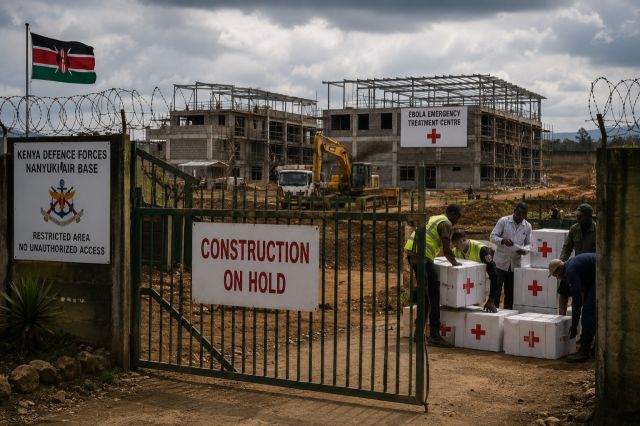
Kenya is safe enough to host a facility designed to assist American citizens potentially exposed to Ebola, but...
KENYA NEWS
by Freddie del Curatolo
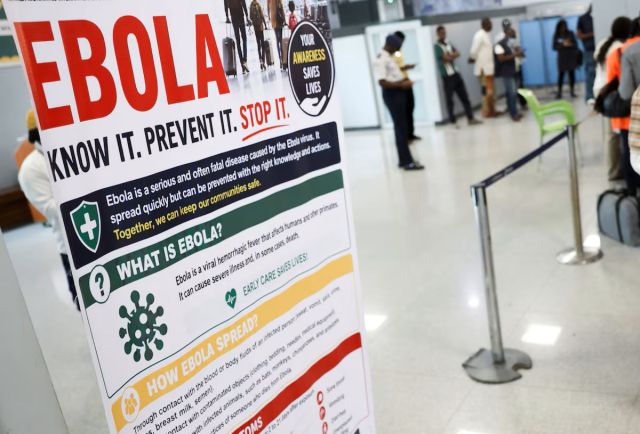
Kenya no longer has any patients undergoing treatment for Ebola or people in quarantine; it has begun...
KENYA NEWS
by Freddie del Curatolo

The number of people placed in quarantine in Kenya has risen to 10 following the confirmation of...
KENYA NEWS
by Freddie del Curatolo
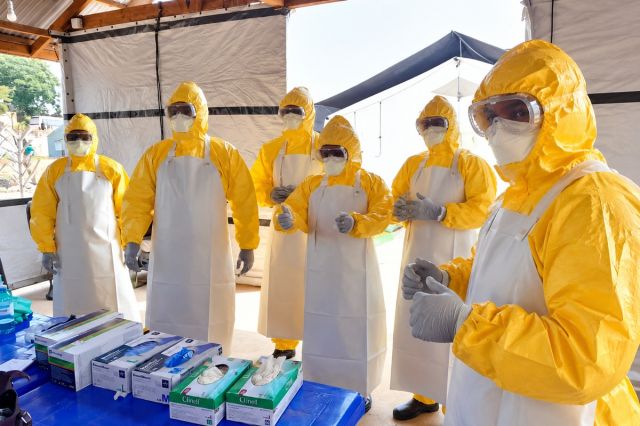
After three weeks of waiting and health checks, the first 20 close contacts of people infected with...
EDITORIAL
by Freddie del Curatolo

Ebola – or rather this strain of the virus, known as Bundibugyo (and not ‘boogie boogie’ as someone...
KENYA NEWS
by Freddie del Curatolo

All it took was one suspected case for Kenya to be added to the list of countries at high risk...
KENYA NEWS
by Freddie del Curatolo
Kenya has recorded its second fatality from the Ebola outbreak. A 65-year-old woman, who had tested...
KENYA NEWS
by Freddie del Curatolo
Second case of Ebola reported in Kenya, but according to the WHO there is no risk of an outbreak. The...
KENYA NEWS
by Freddie del Curatolo
For once, the figures seem to offer cause for hope. Five hundred and fifty-one people were tested within...
HEALTH
by redazione

After the first two suspected cases of Coronavirus in Kenya were isolated in Mombasa and Nairobi and...
KENYA NEWS
by Freddie del Curatolo

Fears over the spread of the Bundibugyo strain of the Ebola virus – which kills one in two of those infected...
EPIDEMIC
by Freddie del Curatolo

Every time Ebola breaks out in Central Africa, someone on the other side of the world cancels a trip...
NEWS
by redazione

A Chinese guy walks into a restaurant and sneezes. Customers flee the building in terror. It sounds like a joke ...
KENYA NEWS
by Freddie del Curatolo

If you’ve booked a holiday in Malindi, Watamu or Diani and are thinking of cancelling out of fear of Ebola, take...

