
KENYA NEWS
29-05-2026 by Freddie del Curatolo

Starting Monday, June 1—which, incidentally, is a national holiday in Kenya, marking Independence Day, which, as it happens, falls 24 hours before our Republic Day—could (with the necessary caveat pending any denials or injunctions from the High Court...) be a historic day for motorists. The local transportation authority, the National Transport and Safety Authority, has announced that starting that day, traffic fines can finally be paid online, rather than by appearing before a judge—which results in wasted time and “suggestions” from officers to settle the matter “aumma aumma” on the spot.
For years, the script has always been the same: a request to pull over, the stern face of the officer on duty, the threat of court, and then that phrase whispered somewhere between advice and a sales pitch: “We can settle this here.” Now Kenya promises to retire at least part of this roadside charade and is trying to resemble a country where technology serves to simplify life and not just to invent new passwords to forget.
Here’s the deal: according to an announcement by the NTSA in collaboration with the police and the Office of the Attorney General, drivers accused of minor infractions will be able to avoid court and pay the fine directly online.
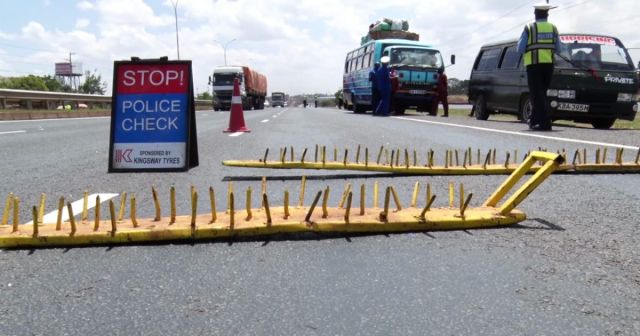
This news could significantly change daily life on Kenyan roads, especially for those who drive every day through checkpoints, sudden stops, and officers who often seem more interested in private deals than in the traffic code.
Under the new system, drivers will receive a “Police Notification of Traffic Offence,” i.e., an official notice of the violation. At that point, they will have two options: admit the violation and pay within the specified timeframe, or contest the charges in court. The huge difference compared to today is that court will no longer be a mandatory step for every minor traffic violation, and that the money won’t end up in the pockets of those trying to take advantage of the system. And that the actual fines will also be available online, not the inflated amounts made up by those in the business.
Violations can be detected both by officers during routine checks and by traffic cameras and digital monitoring systems that have been popping up everywhere on the country’s major roads in recent months. Once the evidence is gathered, the vehicle owner or driver will receive a notice with all the details: type of violation, location, date, time, fine amount, and payment methods.
And here comes another small Kenyan revolution: notifications can be sent via SMS, email, authorized digital platforms, or even left directly on the windshield. This is why the NTSA is urging everyone to update their information in the registration system, because the classic excuse “I never received anything” is likely to become harder to maintain.
Of course, Kenya is still Kenya, and caution remains a must. The instant-ticket system had already been announced in recent months and then suspended in March following protests, controversy, and court appeals. Many drivers and associations had objected primarily to the lack of clarity regarding procedures and the risk of abuse.
For this reason, the NTSA is keen to clarify that anyone who receives a fine will have the right to view the evidence of the violation, including photographs and videos recorded by the cameras. Furthermore, the courts will still retain the power to reduce or cancel fines in the presence of mitigating circumstances.
One other thing remains to be seen: to what extent this reform will actually limit that gray area of “spontaneous negotiation” that has long been a feature of many Kenyan traffic stops. Because if paying online becomes truly simple and fast, the temptation to settle things “on the spot” by the roadside could also decrease significantly.
And that would perhaps be the real revolution. Not digital. Cultural.


ANTICORRUPTION
by redazione
Kenya's Supreme Court has given the order to speed up paperwork for the introduction of...
KENYA NEWS
by Freddie del Curatolo

It's about time. After years of announcements, technical discussions, regulations published...
KENYA NEWS
by Freddie del Curatolo

Everything is on hold for now. The new “instant” fines on Kenya's roads cannot be...
NEWS
by Freddie del Curatolo

In these months of pandemic, many rules have been issued to try to contain or prevent the virus ...
TASSE
by redazione

The tax on private homes and the guest house in Kenya, already indicated in the "Tourism Act" of 2011 and "Tourism Regulatory Autorithy regulation of 2014" is now operative.

Among the many changes and adjustments that Kenya is trying to address in order to try to...
NEWS
by redazione

The misadventure of Paolo Brondi, the retired Italian frequent visitor to Watamu who was stopped at Mombasa...
KENYA NEWS
by Freddie del Curatolo

In a country where, until recently, a police officer’s warning and a quick chat at the roadside...
NOTICE
by redazione

When you approach a holiday destination, although it is a foreign country and in our...
NEWS
by redazione

There will be 150,000 employees of national law enforcement agencies called for peace in view of the upcoming government elections scheduled for August 8th. The agents will be used from the official start of the campaign, scheduled for May 29.
INFOS
by redazione

With the arrival of the high tourist season, traffic on Kenyan roads increases significantly: more hire...


