
KENYA NEWS
02-11-2026 by Freddie del Curatolo
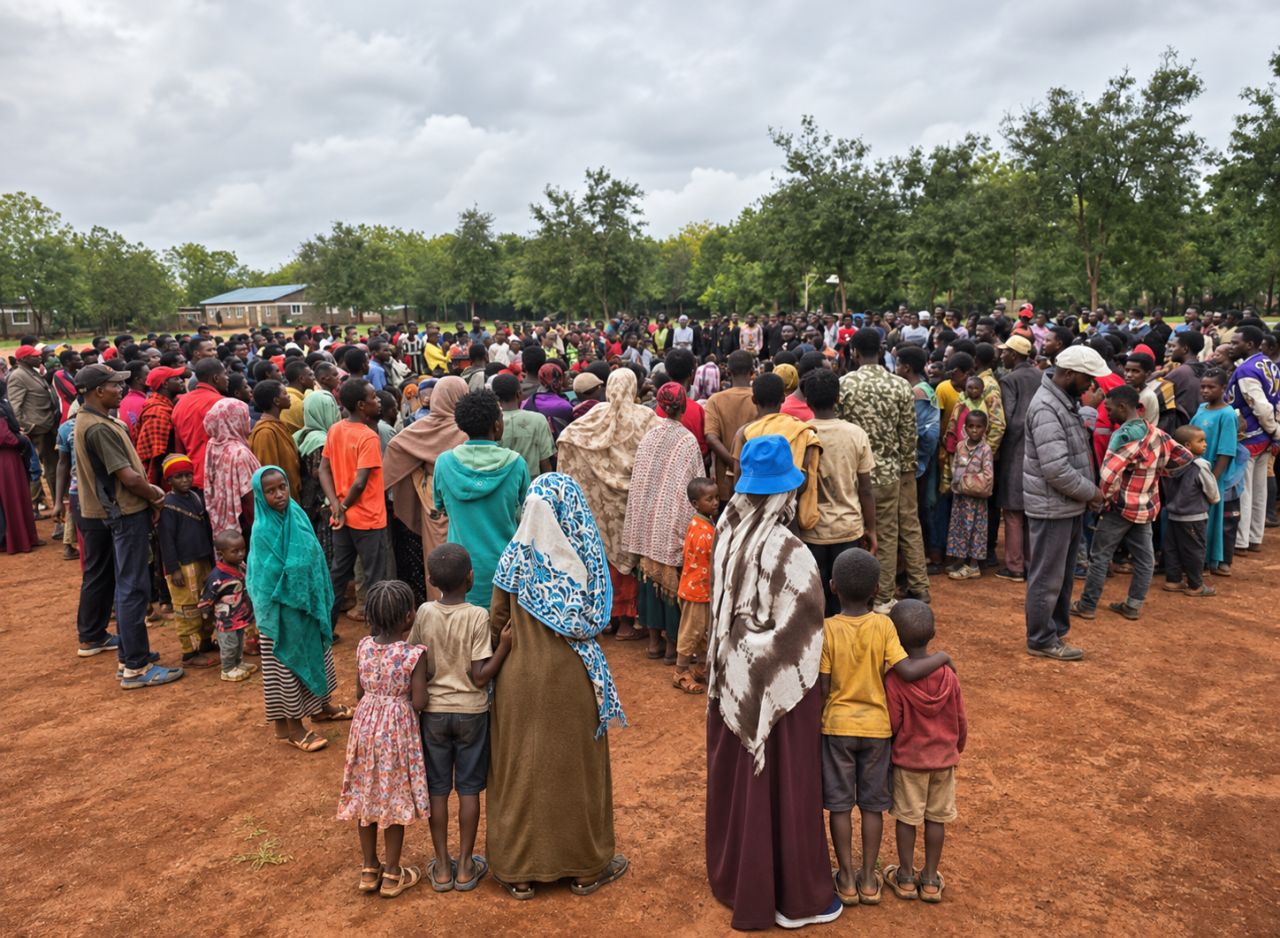
Fifty thousand people are fleeing a war that has not been declared, but which is being fought with firearms, ethnic rivalries and territorial claims. This is the latest front in Africa’s humanitarian crisis, this time along the border between Ethiopia and Kenya, where the town of Moyale has become the gathering point for an exodus of increasingly alarming proportions.
The exodus began on 22 October, following a fresh outbreak of violence in the Moyale area, an Ethiopian town administratively divided between two federal regions: Oromia and Somali.
At the root of the clashes lies a territorial dispute rooted in tensions between two communities: the Borana, who belong to the Oromo ethnic group, and the Garre, of Somali origin. This conflict centres on control of disputed territories, local administration and the recognition of their respective identities.
According to the analysis by ACLED, an organisation that monitors conflicts worldwide, the most recent trigger appears to have been the opening of a Somali regional administrative office in an area claimed by Oromia, accompanied by the display of the regional flag.
The incident, which took place on 18 October, triggered an initial escalation of violence in which a 13-year-old Oromo girl was killed. The circumstances of her death have not been unequivocally established. Since then, the clashes have spread to other communities, involving regional police forces and local militias.
The situation quickly took on alarming proportions. The Associated Press reported gunfire coming from the Ethiopian side even in the days that followed, whilst commercial lorries remained stranded on both sides of the border.
According to ACLED, last Wednesday the fighting appeared to have subsided, but tensions remained high.
Fifty thousand people seeking refuge
The scale of the emergency is illustrated by figures released by the UNHCR, the United Nations High Commissioner for Refugees.
As of 29 October, according to local authorities, around 50,000 people had entered Kenya. This figure is up from the 36,000 recorded in previous days and could still rise. The count is complicated by the fact that many refugees are not in organised camps but are being hosted by relatives, acquaintances or families in the local community.
The majority of those crossing the border are women and children. Other families have found temporary accommodation in schools, churches and community centres, whilst five temporary reception sites have been set up.
The Kenyan National Commission on Human Rights (KNCHR), in a statement dated 27 October, had already reported the presence of around 40,000 people in the Moyale area. Over 15,000 were being housed in eight temporary facilities, whilst more than 20,000 had found accommodation with friends and relatives.
The figures relating to the emergency illustrate a situation in which spontaneous shelter provided by the local population risks no longer being sufficient.
Among the reception centres are St Mary’s Catholic Church and an Islamic hospital.
Water, food and healthcare: the most urgent needs
The emergency is not just about having a roof over one’s head. Those who have arrived in Kenya need, above all, food, drinking water, sanitation facilities, medical care and protection.
The UNHCR has identified food as the most urgent need, followed by access to safe water, adequate shelter, sanitation facilities and medical care.
Weather conditions in the area, with rainfall also affecting the Moyale region, are further complicating the situation. Overcrowding and a lack of sanitation facilities are, in fact, increasing the risk of disease and the spread of infection.
In the Kenyan Red Cross camps, health workers are also monitoring children’s nutritional status by measuring their growth and assessing indicators of possible malnutrition.
UNHCR has sent an emergency team to Moyale and is working with the Kenyan government, the Department of Refugee Services, the International Organisation for Migration (IOM), UNICEF, the World Food Programme (WFP) and the Red Cross.
So far, the UN agency has mobilised essential supplies and temporary shelters for around 12,000 people, but is seeking to rapidly scale up its response.
Together with UNICEF, the IOM and the WFP, it has launched an appeal to raise $8.9 million, needed to support up to 50,000 people over the next three months.
Kenya, too, risks being drawn into the conflict
The crisis is not merely humanitarian. The proximity of the clashes to the border and the presence of communities belonging to the same ethnic groups on both sides of the border make the situation particularly sensitive.
The town of Moyale is, in fact, a border area where family, commercial and cultural ties have always crossed the line separating the two countries. Ethnic affiliations do not necessarily coincide with national borders, and the tensions arising in Ethiopia may therefore also have repercussions on the Kenyan side.
The Associated Press reported that the Kenyan police had confirmed that a woman had been wounded, having been hit in the neck by a bullet in Moyale. It was not possible to determine from which side of the border the shot had been fired.
Meanwhile, the blockage of commercial lorries and the disruption to normal cross-border movements pose a further problem for an area in which trade between the two communities is of fundamental importance.
Officials in Marsabit County have appealed to the national government for support, warning that the arrival of tens of thousands of people risks putting a strain on communities already grappling with food and water shortages.
The IOM and the Kenyan authorities are also preparing a humanitarian response that could cover up to 80,000 people, should further crossings take place.
A crisis within a larger crisis
The clashes in Moyale are not the only source of instability in Ethiopia. The country, Africa’s second most populous with around 130 million inhabitants, is experiencing a period of severe internal tension, marked by regional conflicts and political and identity-based divisions.
In the north, the Tigray region is once again affected by fighting following the devastating war of 2020–2022. Violence is also being reported in other districts of Oromia, with attacks on the civilian population and tensions between regional authorities and armed groups.
It is important to distinguish between these different scenarios: the crisis in Moyale stems from a specific territorial dispute between regional administrations and local communities, but it forms part of a much broader national context of instability.
Ethiopia is organised according to a federal system in which the administrative regions have a strong ethnic character. This model recognises territorial and cultural identities, but in some areas makes disputes over borders, administration and control of resources particularly sensitive.
Kenya’s appeal: reception and respect for rights
Faced with this emergency, the Kenyan National Commission on Human Rights (KNCHR) has called for a coordinated response, emphasising that the protection of human dignity cannot stop at a border.
The KNCHR has reiterated that all persons present on Kenyan territory, regardless of nationality or migration status, are entitled to the protection of the law, urgent medical care and protection from discrimination and violence.
It has also called for registration and identification procedures that respect the rights of refugees, alongside specific measures for women, unaccompanied minors, people with disabilities and the elderly.
Another aspect concerns the so-called principle of non-refoulement, which prohibits the return of a person to a country where they risk persecution, threats to their life or serious violations of their rights.
The Kenyan government and humanitarian organisations are working to identify safer accommodation, including away from the border, in order to reduce the refugees’ exposure to any further violence.
But the emergency also affects those offering shelter. The families in Moyale who have opened their homes, shared their food and accompanied new arrivals to hospitals cannot be left alone to bear the burden of an international crisis.
For Kenya, which already hosts a substantial refugee population from Somalia, South Sudan, the Democratic Republic of the Congo and other countries in the region, a new humanitarian challenge is therefore emerging. And this time, the tragedy is unfolding just a few metres from its own border, in a land where territorial rivalries can rapidly turn neighbours into enemies and families into refugees.


EVENTS
by redazione

Monday, June 20 marks International Refugee Day, and for Kenya it is a day of great significance. With the...
SOLIDARITY
by redazione

The Italian Onlus "Still I Rise" founded by the young Cremonese writer and...
EVENTS
by redazione

A special day in Malindi to learn about the reality of refugees in Kenya and compare it with those who...
BORDER STORIES
by Freddie del Curatolo
Moyale, a border town in northern Kenya, is becoming a powder keg that risks exploding under...
CORONAVIRUS
by redazione

In Kenya, Coronavirus is dying again and the contagion also arrives near the largest and most ...
METEO
by redazione

History repeats itself and for the poorest regions of Kenya it is always a drama.
After...
NEWS
by Freddie del Curatolo
The Ethiopian crisis is holding the international community in suspense and may also closely concern...
KENYA NEWS
by Freddie del Curatolo
A report on food security in East Africa estimates that over 3 million Kenyans are facing acute food...
by Freddie del Curatolo

An Italian theater director and author in the silent, remote daily tragedy of Africa's largest and...
NEWS
by redazione

Nairobi will be connected within three years to a highway that will also handle the traffic of trucks coming...
INITIATIVES
by Freddie del Curatolo

What can Italian "family films" shot in superotto and the memory of refugees in...
CORONAVIRUS
by redazione
In the last 24 hours Kenya has recorded another 25 cases of Covid-19 positive cases, bringing the total ...


