
KENYA NEWS
19-11-2026 by Freddie del Curatolo
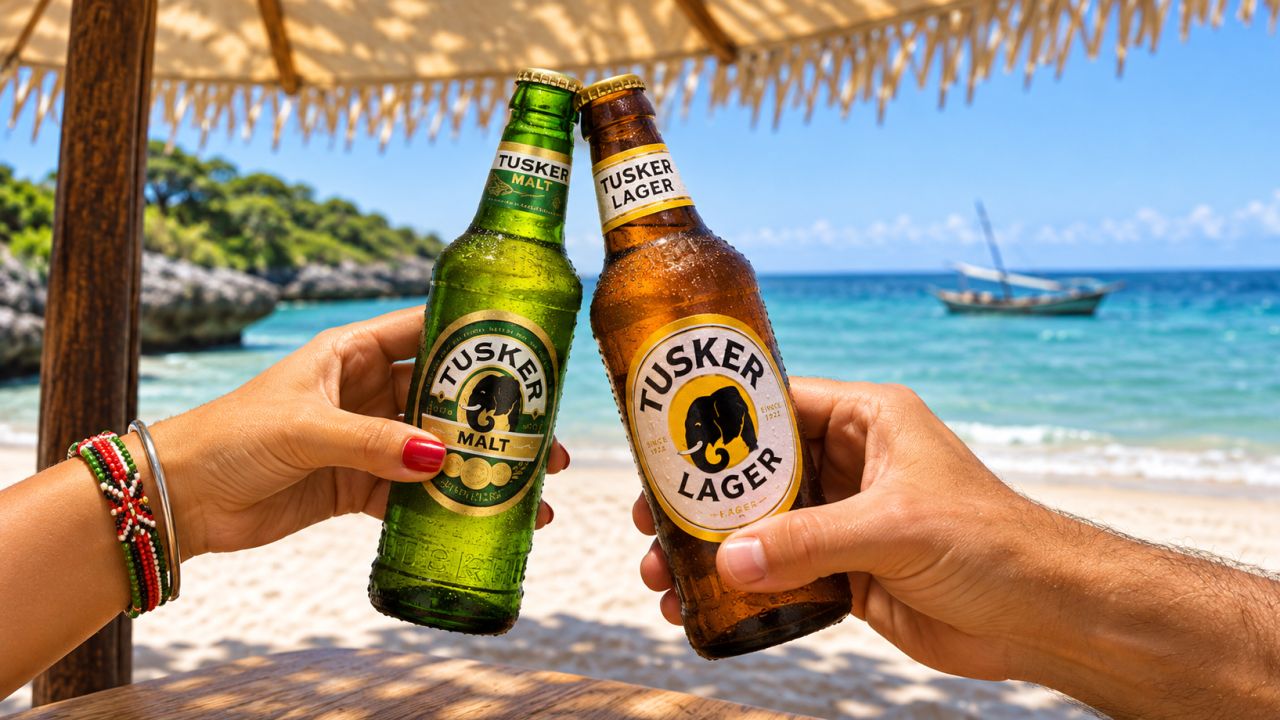
Kenya is giving it another go and is once again setting its sights on the glass – and this time it is not content merely to limit its contents. It wants to change where it is filled, the age of those who drink it and even the way it is advertised.
The Kenyan government has tabled a new bill in Parliament which, if passed, would radically reshape the country’s alcohol market.
The proposal, known as the Alcoholic Drinks and Drugs Control Laws (Amendment) Bill, 2026, backed by the leader of the parliamentary majority, Kimani Ichung’wah, would ban the sale of alcoholic drinks in supermarkets, restaurants, residential areas and numerous other public places.
It is not yet a law in force, but a draft bill that has already sparked a heated debate amongst institutions, producers, retailers and trade associations.
Supermarkets, beaches and restaurants: a map of the bans
The list of places where it will no longer be possible to obtain a licence to sell alcohol is particularly long. In addition to supermarkets, the measure affects restaurants, residential areas, petrol stations, parks, cinemas, healthcare facilities, sports centres, bus stops and railway stations.
The list also includes public beaches, piers, harbours and public transport. This measure could have significant consequences, particularly in tourist resorts along the Kenyan coast, where bars, restaurants and resorts are an essential part of the hospitality offering.
For businesses already holding valid licences in the affected areas, the draft bill provides for a transitional period of up to three months from the legislation coming into force, or until the licence expires, whichever comes first.
The restrictions do not apply solely to physical premises. Online sales, home deliveries, distribution via couriers, street trading and vending machines would also be prohibited.
You will only be allowed to drink from the age of 21
One of the most controversial aspects of the proposal is the raising of the minimum age for purchasing and consuming alcoholic drinks: from the current 18 to 21.
Licensed premises would not be permitted to admit anyone below this age, even if accompanied by an adult. Furthermore, retailers would not be permitted to sell alcohol to an adult accompanied by a person under the age of 21.
The measure forms part of the government’s strategy to tackle alcohol abuse amongst young people and curb the problem of illegal alcoholic drinks, which are often produced in unsafe and potentially lethal conditions.
Another aspect concerns advertising. The bill provides for stricter controls on promotional campaigns and a ban on online advertising of alcohol, including brand-related initiatives. Commercial distribution would also be subject to new rules: the transport of alcohol intended for sale would be permitted exclusively between 6 am and 6 pm.
The battle against illicit alcohol and the risk of harming businesses
The government defends the proposal as part of a broader strategy to tackle alcoholism and the illicit trade. In recent years, Kenya has faced numerous cases of poisoning caused by adulterated drinks, resulting in fatalities and people left permanently disabled.
Vice-President Kithure Kindiki has repeatedly emphasised that excessive consumption of alcohol and drugs poses a problem for public health and the country’s productivity.
The new bill also introduces a levy of 2 Kenyan shillings per litre of alcoholic beverage produced or imported. The proceeds are intended to fund monitoring bodies and programmes aimed at preventing and combating addiction.
Very severe penalties are envisaged: for certain breaches of the legislation, fines could reach up to 10 million shillings, accompanied by prison sentences of up to five years.
However, those working in the sector are far from convinced.
Michael Muthami, president of the Pubs, Entertainment and Restaurant Association of Kenya, has described the measures as excessively restrictive, arguing that they risk harming legitimate businesses without solving the problem of illicit alcohol.
Francis Mbogo, president of the Medium & Small Liquor Traders Association, has also criticised the ban on sales in supermarkets and the restrictions on online trade. According to industry representatives, overly strict regulation could fuel the black market, lead to job losses and reduce the state’s tax revenue.
An old battle returns to Parliament
This is not the first time Kenya has attempted to drastically limit the availability of alcohol.
In July 2025, the National Authority for the Campaign Against Alcohol and Drug Abuse (NACADA) had presented a national policy that included similar restrictions, such as a ban on online sales and the creation of alcohol-free zones near schools and institutions.
The reactions were strong, and the agency clarified that these were policy guidelines, not immediately enforceable bans.
Now the government is attempting to turn those guidelines into law.
The bill has been tabled in the National Assembly and will have to go through the parliamentary process, including a public consultation phase. It is precisely this dialogue with citizens, businesses and associations that will determine whether the measures are confirmed, amended or scaled back.
For Kenya, the dilemma remains the same as ever: tackling a real social problem without handing the market over to those operating illegally and without unduly penalising legitimate economic activities.
And for supermarkets, particularly those in tourist areas, a potential revolution is on the horizon. Customers may still be able to find milk, bread, water and soft drinks, but they may need to go elsewhere for a bottle of wine or whisky.
For now, however, the toast is merely postponed: the proposal has yet to become law.


NEWS
by redazione

The Kenyan government is thinking of limiting the sale of alcohol in the country and limiting consumption to private...
NEWS
by redazione

In an order dated 29 July 2021, Italian Health Minister Roberto Speranza confirmed almost in full the...
AMBIENTE
by redazione

There is no Covid-19 emergency that holds (luckily), the battle for the protection of the...
NEWS
by Freddie del Curatolo

There are many "divided hearts" between Italy and Kenya that are waiting today for the...
VOLI
by redazione

Kenya's answer to Dubai has officially arrived, which already before Christmas 2021 had closed its...

Not just plastics and by-products, Kilifi County has asked the highest government environmental authority, NEMA, to intervene to...
NEWS
by redazione

The statements of Sunday, November 21 by the Minister of Health Mutahi Kagwe, which proposes from...
NEWS
by redazione

In the jumble of emergency decrees that crowd the Official Gazette of Kenya during this period, there is also the...
NEWS
by Leni Frau

For the past two years, Kenya has had a law passed in parliament that is supposed to punish those who...
NEWS
by Freddie del Curatolo
There will be fears of a new lockdown in Italy and other European countries from where...
NEWS
by redazione

The national curfew, at least in some counties of Kenya, could end soon. This ...
by redazione

After the complete ban on polyethylene bags, Kenya's Ministry of the Environment is seriously considering banning plastic bottles throughout the country to protect the environment.
"It's a very long process - confirmed the combative minister Judy Wakhungu

The cases in Kenya are increasing compared to the swabs analysed, Nairobi remains a worrying hotspot
NEWS
by Freddie del Curatolo

The Government of Kenya has extended the closure of its borders for another thirty days starting tonight ...


