
KENYA NEWS
13-10-2026 by Freddie del Curatolo
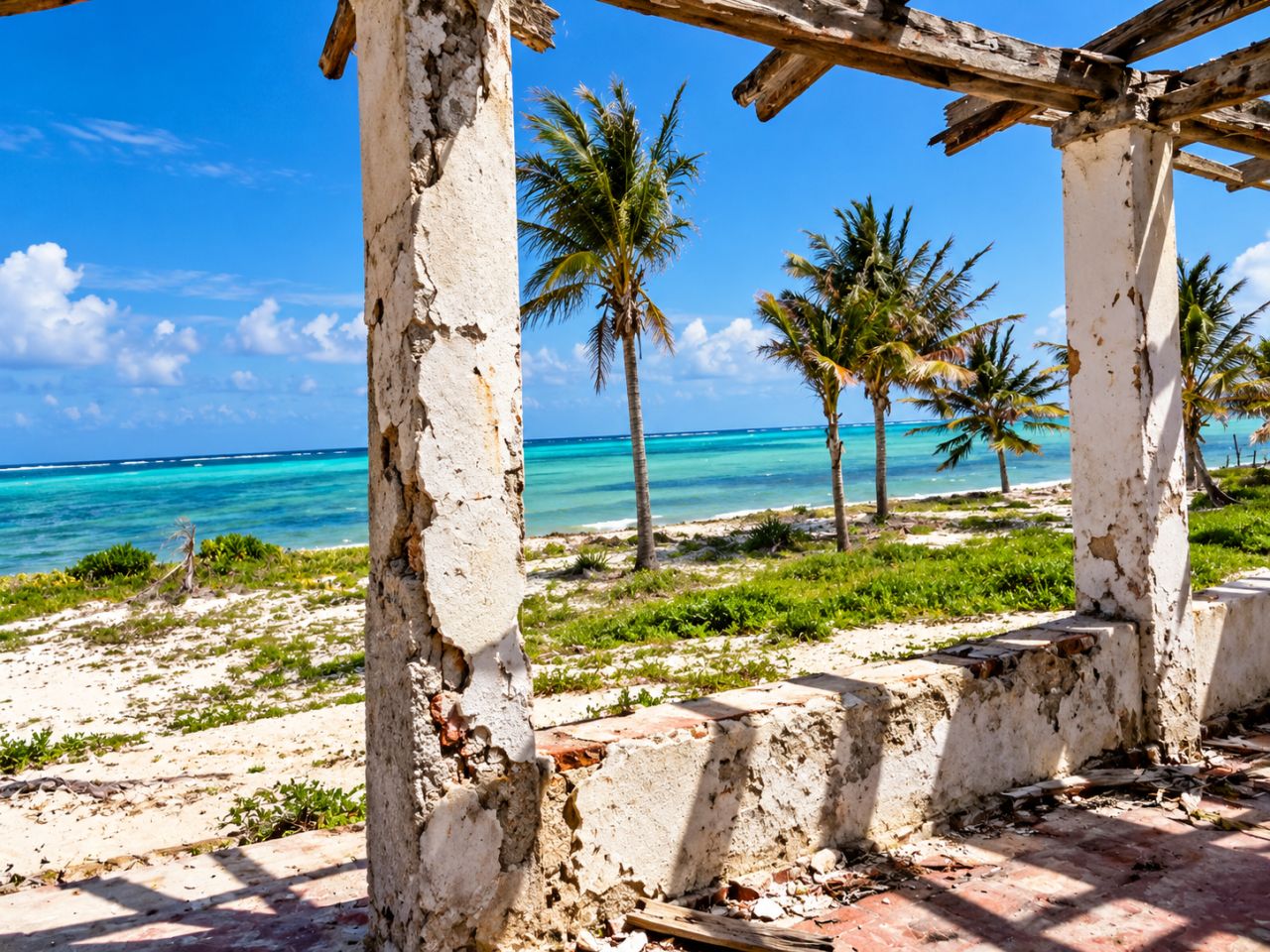
For generations, they have lived on land they considered their own, first in simple homes, then in concrete buildings, using the savings they had set aside from working in hotels, restaurants and on the beaches of Watamu. They have watched their children grow up, built new rooms, opened small businesses and transformed plots of land that were once rocky and uncultivated into places to live and work. Then, at dawn, the police, armed men and bulldozers arrived. In Jacaranda, the land they had never been able to register under their names with an official title suddenly became disputed property. And their homes, however solid, were not enough to protect them. Over 38 families are denouncing the demolition of their homes, some of which were built with a lifetime’s earnings from tourism. The dispute over land ownership has reignited protests and accusations of ‘land grabbing’. The opposition is calling for justice, whilst the failure to distribute title deeds continues to cast a shadow over the history of the Kenyan coast.
The bulldozer arrives before the court ruling
The footage and testimonies gathered by TV47 tell the story of another day of fear in the Jacaranda neighbourhood of Watamu. In the early hours of the morning, around four o’clock, the demolitions reportedly began whilst it was raining, in the presence of the police, privately hired armed men and a bulldozer. According to the account, the homes of dozens of families were targeted, including those of young mothers and children.
Residents claim they were taken by surprise, with no time to save their furniture, clothes and personal belongings. Some allege that household goods were also stolen during the operations. Their accusations implicate a businessman who claims ownership of an area of around 300 acres, on which homes and other buildings stand.
Hamisi Kombe, also known to Italian tourists and residents as Robby Rasta, stated that this is the third wave of demolitions in the area carried out under police supervision. Moki Katana, who claims to have lived in Jacaranda for over thirty years, said he had lost the home he had built with his life’s savings. Other residents are calling for urgent government intervention, reporting that some children have been left homeless and risk being unable to attend school.
The families are particularly critical of the way the operation was allegedly carried out: according to Jackson Tsuwi, the owner claiming the land had initiated legal proceedings, but the demolitions reportedly began before the proceedings had concluded. The matter will have to be clarified through the appropriate channels: the residents’ complaints do not amount to a court ruling on land ownership, but they do raise questions about the protection of those involved and compliance with legal procedures.
These are no longer shacks: they are homes built on the back of tourism
It is here that the story of Jacaranda takes on particular significance for Watamu and for the entire coast.
The area is not home solely to makeshift dwellings, which are easily dismissed in the minds of those observing from afar. Over time, many families have built permanent structures – sometimes multi-storey – by investing the earnings they have made working in the tourism sector. They are bricklayers, hotel staff, beach attendants, traders and small business owners who have transformed their labour into bricks, concrete and roofs.
In some cases, these buildings also serve as accommodation or commercial premises. Tourism, which has fuelled Watamu’s growth and created economic opportunities for generations of residents, has enabled many families to improve their living conditions. Yet it is precisely the rise in the value of coastal land that is now making the dispute over ownership all the more bitter.
A patch of land that yesterday seemed marginal, stony and unproductive can today become an attractive investment, especially if it is located near the sea, tourist facilities and infrastructure. When economic value changes, so do the interests at stake.
The families of Jacaranda claim to have lived on this land for decades, in some cases for several generations. Their long-standing presence, however, does not necessarily correspond to holding a registered title: and it is precisely this gap between lived history and formally recognised ownership that leaves them vulnerable.
Their issue is not merely one of demolished walls. It is the problem of those who have invested for years in a home without managing to obtain that document which, in a land tenure system based on official registration, can make the difference between recognised rights and the status of an occupant.
On the other hand, those plots of land are now worth infinitely more than they were twenty or thirty years ago, and the tourism boom in Watamu has increased demand for plots as close to the sea as possible. That very tourism which lifted the original families out of their mud huts into concrete homes, from rural poverty to a better life, now threatens to force them to start from scratch.
The great paradox of title deeds
The distribution of title deeds – the official proof of ownership – is one of the oldest and most unresolved issues on the Kenyan coast. In Kilifi, as in other coastal areas, land disputes are rooted in colonial history, land allocations, customary rights and the difficulties faced by many communities in obtaining legal recognition of the land they have inhabited and cultivated for generations.
After independence, the issue was not resolved in a uniform manner. In several cases, residents have continued to live and work on plots lacking clear documentation, whilst other parties have claimed ownership rights based on official records. Not all disputes have the same origin, and not every claim to ownership is illegitimate: this is precisely why transparent checks, access to archives and procedures are needed to distinguish valid rights from any cases of misappropriation.
For the families of Jacaranda, the problem has meant a long wait. Residents say they have been asking the authorities for years for the documents needed to regularise their status, without obtaining a definitive solution. In the meantime, they have built and extended their homes and invested money, often without the legal safeguards needed to protect those assets.
There is also a more difficult responsibility to address: that of a culture of precariousness in which people continue to build and invest, relying on permanence, custom and political promises. This fatalism cannot be dismissed as mere individual carelessness, because it also stems from the conviction – forged over decades of waiting – that sooner or later the state will recognise a situation that everyone is aware of.
But when a competing claim arises, that trust proves fragile. And a family’s savings can end up crushed between a missing document, a disputed right and a car that won’t wait.
Ruto distributes title deeds, but the issue remains unresolved
The coincidence with the government’s recent initiatives makes the case all the more significant.
On 29 September, President William Ruto presided over the handover of 36,826 land titles in Kilifi, as part of a programme aiming to distribute 500,000 land titles along the coast. The initiative covers several county constituencies, including Kilifi South and Malindi, and is presented by the government as a response to historical injustices and the plight of thousands of families lacking land security.
The government has also stated its intention to tackle the issue of land occupied by residents without title deeds, including through regularisation measures and, where appropriate, agreements with the holders of registered rights.
However, the handover of thousands of title deeds does not mean that all disputes have been resolved. A few days later, on 6 October, some residents of the neighbouring Kwale County reportedly contested the size of the plots allocated to them, claiming they had received smaller plots than those they had traditionally occupied. The distribution of documents, therefore, is not sufficient if questions remain unresolved regarding the size of the plots, the identity of the beneficiaries and the legitimacy of the allocations.
In Jacaranda, the question is a practical one: do the families who have lost their homes fall within the category that the government programme aims to protect? What checks have been carried out on competing claims? And why, after decades of requests, does the problem still manifest itself in the form of demolitions and protests?
These are questions that cannot be adequately answered simply by citing the number of documents distributed. It is necessary to verify, on a case-by-case basis, who is entitled to ownership, what rights may be recognised for residents, and what remedies are available when a demolition operation causes damage before the dispute has been resolved.
The opposition denounces land grabbing
The case in the Jacaranda area comes as the political opposition is once again focusing attention on land disputes along the coast.
On 10 October, during the opening of the Democratic Party of Kenya’s offices in Kilifi, former Attorney-General Justin Muturi denounced the risk of unlawful land seizures and the eviction of resident communities. Standing alongside him was Kalonzo Musyoka, leader of the Wiper Party.
Muturi called for greater safeguards for residents’ rights and transparent procedures for resolving disputes, arguing that no one should risk losing their land due to a lack of political influence or financial resources. In his speech, however, he did not name any specific landowners or plots of land implicated in the allegations. His remarks therefore represent a broader political stance, rather than a conclusion regarding the Jacaranda case.
Nevertheless, these statements have brought back to the forefront of the debate an issue that has been a recurring theme in election campaigns for many years: the promise to restore to coastal residents the security of living on their own land.
The risk is that the plight of these families will once again become the subject of campaign rallies, statements and official visits, without any solidarity being followed up by documentary checks, administrative decisions and lasting legal solutions.
A promise that spans generations
In Watamu, tourism is often portrayed in terms of international visitors, hotels, new facilities and job opportunities. But there is also another, less visible story: that of the families who have contributed to the destination’s growth, working for decades and investing their earnings in their own homes.
For them, a home is not merely a piece of property. It is the culmination of a lifetime’s work, the place where children grow up and where the possibility of a different future is built. To see it demolished means losing savings, security and family continuity all at once.
It cannot be claimed that the time spent on a plot of land automatically confers ownership, nor that anyone claiming a registered title is committing an abuse. Nor, however, can it be ignored that decades of residence, investment and unanswered requests make a serious examination of the rights at stake essential.
The State must ensure that disputes are resolved through legal and verifiable procedures, that court orders are respected and that families are not left without protection. If the demolitions took place before the conclusion of legal proceedings, as the residents claim, it will be necessary to clarify the circumstances and establish who, if anyone, is responsible.
Title deeds are promised at every election as if they were a simple solution to a long-standing problem. Yet behind every document lie lands, family histories, investments, disputed rights and, at times, injustices that have never been redressed.
In Jacaranda today, there are people trying to save what remains of their homes. For them, the future is not an abstract matter of land policy: it is knowing where their children will sleep tonight.
And the question that the coast continues to pose to its leaders is always the same: how much longer must the wait continue before a family can call the place where they have lived for generations their own home?


NEWS
by redazione

Doing research for the title deeds (title deed) from now on will not cost anything.
As you will soon be speeded practices to know if a title deed is vacant or has an owner, if it is locked or what...
DOCUMENTS
by redazione
In Kenya, losing the title deed – the certificate attesting to ownership of land or a property – can...
INVESTMENTS
by redazione

Mayungu will be the next frontier of coastal tourism. The fishermen's village between Malindi and Watamu is evolving, among the latest land and property sales (even Nairobi's prominent figures have purchased plots or existing homes) and the resolution of many...

Jacaranda Bay won the best beach in Watamu, they say hundreds of fans of Africa, tourists and Italian residents who love the coast of Kenya.
READ THE ARTICLE AND WATCH THE FINAL ON WATAMUKENYA.NET HERE

In Malindi back to buy and sell real estate.
It's because of the expansion of a town that is now only a tourist phenomenon but a residential center where the quality of life moves the bar no longer fixed on...
NEWS
by redazione
The process of digitisation of Kenyan bureaucracy, which has already affected various sectors...
PROMOTION
by redazione

The white beaches of the Jacaranda Bay, between Watamu and Mayungu right in front of the sandy paradise, ocean and coral reef that for years now is known as "Sardegna 2", have made a fine display for three days in...
ROADS
by redazione

Those who will return to Malindi and Watamu in November or for Christmas will certainly find...
PLACES
by redazione

From this Sunday, Jacaranda Beach Resort opens to external guests of Watamu and Malindi with ...
NEWS
by redazione

Everything is ready in Casuarina to asphalt the first kilometre of the road that will take you to the fishing village of Mayungu and from there, shortly afterwards, through the Malaika Beach resort, Jacaranda Bay and finally Watamu.
For the...
ENVIRONMENT
by redazione

The tourism sector is continuing its efforts to make the coast of Kilifi County...
HOSPITALITY
by redazione

The Jacaranda Resort, which after the restrictions of the pandemic by popular demand reopened its doors...


