
REPORTAGE
16-02-2026 by Freddie del Curatolo

No, I haven't been thrown onto another planet.
In fact, I am on Earth, as Earth as it gets.
I am in the mouth of its stomach and I am rising with its vomit.
Everything here is vomit, a hundred thousand square meters of society's vomit.
Everything except human beings, who collect our indifference, greed, and avarice.
The Dandora landfill is the largest in Africa, and six thousand people live amid these valleys of garbage.
On either side, tens of thousands more survive on waste.
We walk for hours in a landscape that cannot be described as unreal, because you find everything you have used and thrown away in your life, plus that of the people you have known and loved.
We are all here, on the hills of Dandora.
In front of those who feed on our vomit, we tire and we get sick.
Human beings who, if you try to say “poor things” to them, spit at your feet and go back to work.
Who work hard to choose, separate, sell, and keep for themselves what they find.
Bags and bags of vomit.
For years, while the world of solidarity and indignation has failed to do much for their dignity. The institutions... let's not even talk about them.
Many have even taken advantage of them and continue to do so.
It's not easy to understand; you had to be here, amid the bile and retching. Breathing impossible miasmas, unable to distinguish tears of desolation from those of toxic fumes.
Talking to them, to those who were born and raised here, who did this for a living and now (thanks to the Comboni Fathers) have founded an organization that thinks about their present and their future.
Because it seems absurd to say it, but they, the “waste pickers,” have more hope, more future, and more desire to succeed than we do.
I think I will have a lot to write about this place and the harsh reality of workers in every sense of the word who, in addition to doing a shitty job and being told they are “poor,” “the lowest of the low,” ‘outcasts’, are underpaid by the chain that starts with the vultures who buy what they collect every day and ends with those who make themselves look good with recycled objects and perhaps sell them for their weight in gold. They have no health coverage and no other help from those who continue to spew their venom.
"Six thousand people work in the landfill every day, three-quarters of whom live there or were born and raised in the surrounding area. This is their habitat, their world. They are specialized in the hard work they do, they only ask that it be recognized. Even prostitutes have union representation, so why can't waste pickers have it? We are not ghosts; on the contrary, we are useful to many. It is time to face reality."
Dandora, despite its name reminiscent of a fantasy saga or a heroine from Greek mythology, is more real than ever.
It is located northeast of Nairobi, beyond the populous neighborhood of Kariobangi and the slum of Korogocho, and can be reached by three main entrances. The first is the institutional one, consisting of a large square behind the Total gas station, where municipal trucks loaded with tons of garbage gather. Along their route from collection to unloading, driving like madmen, the drivers dump part of the waste on the streets of the suburbs, already littered with all kinds of rubbish. Upon arrival, they queue for hours under the sun before dumping everything into the huge institutional section of the landfill.
The second entrance, in Phase 2 of Dandora, behind the elementary school, has been contracted out to a private company that is supposed to take care of disposal. In reality, nothing different happens there than in the municipal square. Men and women dressed in rags that also cover their faces and heads, wearing heavy boots and carrying shovels and rakes, rummage through the rubbish looking for what may still be valuable to others (scraps of all kinds of metal, technological waste) and what may be edible for themselves. Some clean cabbage leaves, others check the remains of liquid in a fruit juice carton. Everything ends up in the wide folds of what they wear, half dress and half sack.
The third gate of hell is the one through which Didi and I enter. It is the entrance for everyone, a natural inclination of a neighborhood that, from the main road, could resemble a thousand others seen on the outskirts of cities and towns in Kenya. Mitumba shacks, second-hand clothes, kiosks selling Chinese tools and electronics, hardware stores and warehouses selling bags of flour and cement indiscriminately, foundations and columns of unfinished houses, a few arable fields and a few soccer fields. Where there is a wall, there is a sign for a school or a religious congregation. Where there is a clearing, there are motorcycle taxis, matatus, and peanut sellers. Like a swamp fish, behind the backbone, irregular alleys unravel and unplastered buildings and shacks alternate, divided by narrow, slippery, and uneven walkways. We approach the fish's foul-smelling head. From a small square where children play soccer and girls invent games between the steps of a house and the clothes hanging out to dry, we descend into the communal dump, the only large fishing reserve for those who were born and raised there...
We walk towards the shacks of the residents, who live literally submerged by mountains of scraps of fabric, plastic bottles, remains of bags, backpacks and sandals, toy skeletons, stuffed animal scalps and various packaging. The most industrious freelancers in Dandora have accumulated sorted rubble outside their shacks.
There is a corner dedicated to glass bottles. A corpulent woman and a young man, perhaps her son, check for any remaining spirits and pour them into another bottle, then pile them up in a small mountain, cover everything with sheets also recovered from the valley, and smash the glass with large sticks.
Four euros for a day's work amid filth, toxic fumes, rat piss, and every disease imaginable. With no water to drink, they have to go back and forth from the spine, washing their clothes in the Mathare River, the most polluted river in Kenya. Sometimes eating and drinking whatever they found in the rubbish. Until a few years ago, airlines landing at Jomo Kenyatta International Airport, about 15 kilometers from Dandora, dumped the remains of passengers' meals at the facility, which ended up in bags transported by trucks to the landfill. Many waste pickers also fed on the leftovers from the boxes, until widespread outrage put a stop to this much-publicized disgraceful practice. International solidarity says: better to fast or, at worst, have bread and milk once in a while for those who dance and rap...
This is the great paradox of Dandora: the situation of those who survive thanks to the landfill does not seem to have any room for improvement, not only because of the inefficiency of the institutions, but also because of those who grieve, are moved, resent and would like to do something for the ‘lowest of the low’. Here, life goes on. Those who collect garbage have their own lives, raise children, and would like to send them to school and give them a more decent future than their present, which is not easy with the fruits of their daily labor. Five hundred shillings a day to supply, through a cartel of industrious vultures, companies that often proudly proclaim their environmental friendliness and respect for the environment, illuminating their aura of sanctity to sell their goods at a higher price. Often without asking or caring about the origin and original price of what they reuse.
(Excerpts from the book “Nairobi” by Freddie del Curatolo and Leni Frau (Edizioni OgZero)
Winner of the “Volterrani - Narrare il Mondo 2023” literary prize
Translated into English with the title “Nairobi, The Visible City.”


PHOTOGRAPHY
by redazione

There is also the gaze of our Italian photographer Leni Frau within the interesting contemporary art...
SOLIDARITY
by Leni Frau

The future of many girls from the slums of Dandora and Korogocho in Nairobi, thanks to the...
PERSONS
by redazione

She landed in Kenya years ago from Italy with a passion for Africa and photography and now tells the...
EDITORIAL
by Freddie del Curatolo

It is a sea of rubbish that does not reject you, rather it is ready to swallow you up to make you...
KENYA NEWS
by Freddie del Curatolo

Africa's largest landfill, which is as big as a country and home to hundreds of human waste...
SOLIDARITY
by redazione
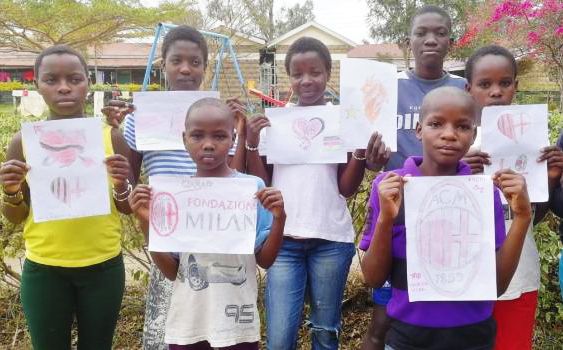
A shelter for 24 slum orphans from Korogocho and Dandora, two of the most populated and...

In the days when we learn to live with English words like "lockdown", in Kenya one more...
PHOTOGRAPHY
by Freddie del Curatolo

There is not only "our" Leni Frau, in the interesting group photo exhibition 'Ubuntu, Humanity and...

On Thursday, Nov. 1, at 7 p.m., entomologist and writer Roberto Czeppel, a leading expert on Africa, will...

Rosada Beach is one of the landmarks of Malindi 'by day' and 'by night', as well as being the...
TESTIMONIES
by Freddie del Curatolo

ART & CULTURE
by redazione

The exhibition "Nairobi, the visible city" by photographer Leni Frau, stage name of Maddalena Stefanelli, soul...


