
OPINIONS
18-03-2026 by Michele Senici

I arrived in Kenya in time to see the old Waiyaki Way in Nairobi.
A week later, it was razed to the ground.
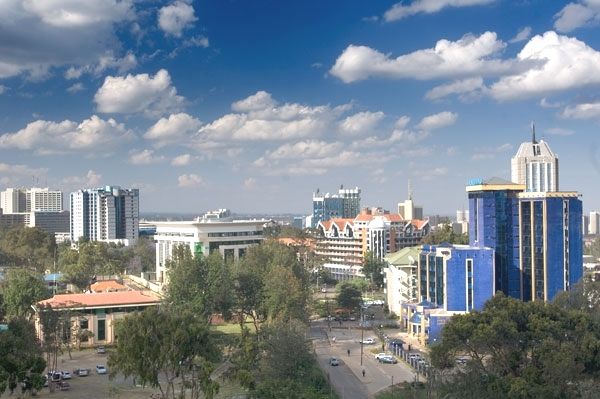
Back then, arriving in Westlands was like entering a forest.
The road lay beneath a blanket of tree canopy, grown like bouquets of flowers, both at the sides and in the center, in the large space between the two carriageways. It didn't feel like arriving in the city but rather in the suburbs.
But no: that small urban forest already concealed bright skyscrapers, luxury hotels, well-stocked supermarkets, and cottages from another era.
Then, in one night, the forest was razed to the ground, the sky returned to the road, and, at least for me, that part of Nairobi ceased to be amazing.
It became like a hundred thousand other avenues, an anonymous road in the pile of thousands of highways that hold together the metropolises scattered around the world. At that moment, I was busy and my heart had no room for grief over the felled trees.
I had just arrived in Kenya, ready to build, start over, plan. There was no room for mourning.
Today, four years on in Diani, having left Nairobi behind, I often find time to mourn the sliced trunks of Waiyaki Way.
In recent weeks, in particular, mourning has turned to anguish.
In Diani, after inaugurating a large shopping center almost a month ago that welcomes you with a bright gas station at the entrance, there is talk of building a new gas station on the beach road, 500 meters from the one they just inaugurated.
My heart has returned to those neatly arranged trees in Nairobi, to the sawdust covering the road the next morning, to the thought of those monkeys orphaned from their green highway. Who knows where they have gone!
The beauty and tragedy of coastal towns is that they are made up of plots, neatly squared pieces of land. The pieces of land do not know they are cadastral parcels, they do not understand that they have a title that names them, they do not know the man who has crowned himself their owner. The plot of land lies there and lets the trees grow while its emperor ignores it. The land stands there, accepting that someone dumps rubbish on it, that someone else hides in it to relieve themselves, that goats nibble on its bristly shrubs. The plot is even generous in my eyes: it lets me walk past it, sometimes on my motorbike, and admire its stubborn determination to grow green.
Then, suddenly, man wakes up with a green nest egg in the bank and decides that this land should cease to be self-determined and that the time has come to dominate it with bulldozers, wheelbarrows, bricks, and concrete. The tragedy of the coast is that you notice these choices immediately. Where yesterday there was a shapeless forest, today the trees have disappeared, leaving a geometric square clearing.
Tomorrow, metal sheets will arrive to mark its boundaries, and in a few months, a building will appear, above a blinding white boundary wall. Or worse still, a gas station will appear with its fluorescent yellow lights.
I am not opposed to progress. I live in a house that is not mine but which undoubtedly required trees to be cut down in order to exist, even before I was born.
I ride motorcycles that guzzle gas and buy pasta at the supermarket, which is wrapped in useless plastic bags, 400 grams at a time. But I wonder: what will this land be like tomorrow?
I am afraid of the future because I fear I will have to leave. I fell in love with this place because of its fertile soil, and if one day it is all covered in concrete, my love will be orphaned, and I will have no reason to stay. I started hanging out with some groups of residents and reading county documents. But everything is so much bigger than me that I feel like a tree on Waiyaki Way, at the mercy of class struggles and chainsaws. How much longer will we have to wait for a serious, genuine, and balanced development plan? Will it come when the colobus monkeys are gone, the bushbabies cry elsewhere at night, and the yellow weavers watch us from afar? It is not only my future in Kenya that is at stake, but the very idea that this country can grow without erasing what makes it unique. We still have time. But the solution will not come on its own: it must be chosen now.
••• Michele Senici, 1993. Educator, teacher, project coordinator. I opened Casa Hera in Diani because I didn't know where to continue my life. Do I understand it now? Certainly not, but that's okay, at least I observe, think, write


This morning at 11 am in the office of the Governor of Kilifi Amason Kingi will be given the...
DEVELOPMENT
by redazione

The Italian Agency for Development Cooperation (AICS) will also participate in the ninth edition of the...

Official, Italy is now also among the countries accepted by Kenya for the...
NEWS
by redazione

Despite the period of great crisis that, as well as the entire Western sphere, is affecting the already proven...
COOPERATION
by redazione

The 11.5-kilometer asphalt road from Malindi-Lamu to the Luigi Broglio Italian Space Center in Ngomeni, an...
NEWS
by redazione

Upgrading the infrastructure around the international airport is one of the priorities of the new governor...
NEWS
by redazione

First official meeting between Kenyan President William Ruto and the new Italian Ambassador...

The works on the Malindi waterfront is part of a much more complex aid plan for Malindi thanks ...
INFRASTRUCTURES
by redazione

Kenya, is revolution in the highways, with funding already approved and others coming to connect large cities and cross the country with ...
BUSINESS
by redazione
Six months of campaigning and three months of post-election have slowed down Kenya's plans for economic growth, but they do not seem (luckily) to be able to stop the country's development in terms of infrastructure and foreign capital investment in...
COOPERATION
by Freddie del Curatolo

The Italian Agency for Development Cooperation (AICS) is one of those that will coordinate a ...
NEWS
by redazione

From Italy comes another grant to Kenya for the climate emergency. Rome and Nairobi...


