
INSIDE KENYA
21-09-2026 by Freddie del Curatolo

Sooner or later in Kenya, especially in Nairobi, you’re bound to come across one. The matatu pulls up, accelerates, swerves abruptly from one side of the carriageway to the other, seems almost to lose control, and then gets back on track as if nothing had happened. In Kenya, this style of driving has a name: manyoka. A sort of snake dance which, when it goes wrong, can turn into a tragedy.
The term comes from the Swahili word nyoka, meaning ‘snake’, and manyoka is its plural form. The name describes the sinuous movement that some drivers impart to their matatus, with abrupt changes of direction and sudden sideways swerves, often at high speed. A practice that, over time, has become one of the most reckless expressions of the culture of the nganya – the customised matatus that, particularly in Nairobi, have transformed public transport into a sort of travelling spectacle.
Manyoka has returned to the spotlight in recent days following the arrest of a driver accused of causing an accident in which five people died. According to reports in the Kenyan newspaper The Star, the man was arrested after going into hiding following the accident and is said to have used the manyoka technique just before the crash.
The incident has reignited the debate over a practice which, for some drivers, has become a display of skill, but which, on Kenya’s busy roads, can become a risk to everyone.
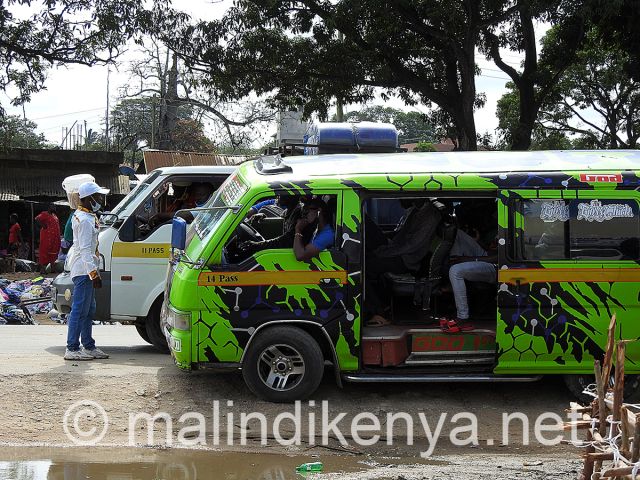
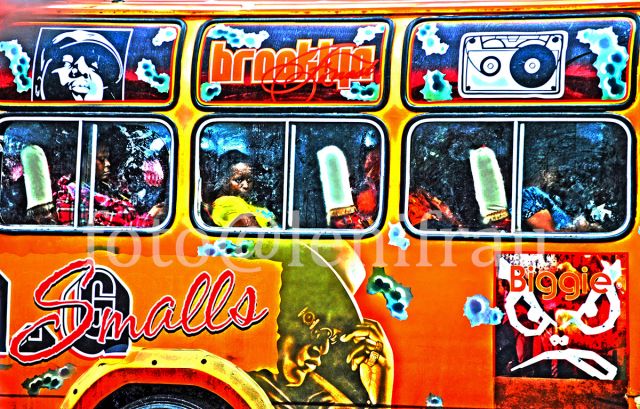
Matatus are much more than just minibuses. From Nairobi to Mombasa, from Kisumu to Malindi, they are a recognisable part of Kenyan urban and popular culture. Colourful bodywork, powerful sound systems, lights, graffiti, modified seats and personalised decorations have made the nganya a cultural phenomenon as well as a means of transport.
It is in this context that the manyoka also emerged. The driver steers the vehicle from one side of the carriageway to the other with a series of rapid turns, creating the impression that the matatu is slithering along the road like a snake. Sometimes the display is accompanied by loud music and the shouts of passengers, turning the journey into a sort of improvised merry-go-round.
The problem is that a matatu is not a show vehicle. It carries passengers – often large numbers of them – and shares the road with cars, motorbikes, pedestrians and other public transport. A wrong manoeuvre at high speed can therefore have far more serious consequences than a simple breach of the Highway Code.
The phenomenon is particularly evident in Nairobi, where competition between different routes and among individual crews has helped to turn driving itself into a mark of distinction. The noisiest, most colourful, most personalised or most spectacular matatu can become a small symbol of its route.
And so the driver, too, can become a performer. The manyoka becomes a display of skill in front of passengers and, increasingly, in front of a smartphone camera. Videos of these stunts end up on social media and help to popularise a practice which, outside the context of entertainment, remains an extremely risky form of driving.
In the case reported by The Star, the police attributed a series of reckless manoeuvres to the driver prior to the accident. It will now be up to the legal proceedings to determine the man’s liability and the exact circumstances of the crash. The charge, of course, does not amount to a conviction.
The manyoka, however, illustrates one of the many contradictions of matatu culture. On the one hand, there is extraordinary grassroots creativity, comprising music, colours, languages and identities; on the other, a street culture in which driving skill can sometimes be confused with the ability to defy danger.
After all, the snake is famous for never moving in a straight line. On the road, however, a straight line is not merely a matter of aesthetics. It can be the difference between reaching your destination and not reaching it at all.


by redazione

Only yesterday, the Deputy Minister of Transport, Paul Maringa, announced that within two weeks the government would withdraw the nightly ban on public transport on Kenya's roads.
In the evening...
LATEST NEWS
by redazione

Matatu versus bus at 2 a.m., all the occupants of the local 14-seater bus plus the...
NEWS
by redazione

Accidents in Kenya, as well as Uganda, do not subside during the peak period for public transport in East...
NEWS
by Freddie del Curatolo

One of the most evocative images of Africa "on the road" sees a matatu, the classic 14-seater minibuses that take...
NEWS
by redazione
A matatu unleashed at high speed inexplicably into the lane opposite the one of its relevance crashed into an ...
NEWS
by Freddie del Curatolo
The holidays are approaching in Kenya, which for local residents also coincide with the summer...
FREDDIE'S CORNER
by Freddie del Curatolo
Nairobi's anarchy is a form of self-management in constant motion. The matatu are certainly the...
NEWS
by redazione
The Coronavirus emergency, partial lockdowns in counties and night curfews in Kenya do not curb the...


