
STORIES
28-01-2026 by Freddie del Curatolo

In Siaya, gold does not glitter. Rather, it scratches. It scratches the skin, dignity, memory. And when it shines, it does so only for those at the top, with clean hands and distant consciences.
In the subsoil of Abimbo, where the Lake Victoria Greenstone Belt promises wealth and maintains misery, gold is paid for in flesh. And this is not a metaphor: for many women, especially widows of miners who died in cave-ins, access to gold nuggets comes through the bedroom, or more often from the bottom of a 200-foot hole dug with bare hands.
They call it “Apinde.” A word you won't find in dictionaries, but one that circulates naturally among the shacks and pits: sex in exchange for stones. Sex as currency, as a pass, as a last resort when there is no money and hunger is a habit. If you refuse, you are left out. Out of gold, out of the market, out of the possibility of eating.
All this was revealed by an investigation by Africa Uncensored, complete with interviews with local women. Siaya County has just over a million inhabitants and nearly fifty thousand widows. One in every twenty-five people. A silent army, many of whom ended up here, in the illegal mines, after losing their husbands in one of the many collapses that no one really counts.
The mine is their only inheritance, survival their sentence.
The ‘real’ work, digging and pulling out the best stones, is reserved for young men. It takes strength, they say. And in fact, that is where the power lies, in the arms that decide who eats and who does not. The women come later, they don't choose, they wait. And if they want the good stones, they have to pay. In cash or with their bodies.
One woman says that this is normal. So normal that those who say no make more noise. Another, a 51-year-old widow, recounts the humiliation of being approached by boys who could be her sons. “It's very painful,” she says. Not many more words are needed.
The potholes become makeshift bedrooms. While someone goes down to dig, someone else consumes quickly, between earth and sweat. Protection is an option that almost no one accepts. And the bill, as always, is paid by women. In Siaya, HIV affects more than three times the national average. Among widows, more than one in four is HIV-positive. These are cold numbers, but here they have a name, a face, and often children.
The Kenya National Human Rights Commission puts it in black and white: sexual exploitation, drugs, marijuana that removes inhibitions and shame, explicit requests, normalized violence. A toxic chain that starts underground and reaches the gold markets, where gold suddenly becomes clean, legal, respectable.
Some try to rebel by going directly into the pits. But there is no redemption underground. On March 3, 2023, in Lumba Village, five women died crushed by the collapse of an illegal mine. No monument, no widows to remember them. Just another hole to be filled in quickly.
So Siaya's gold continues to emerge from the mud, while the women remain below, invisible. Widows twice over: of their husbands and of their dignity. And meanwhile, the world wonders why Africa is not taking off, without ever really looking at how heavy this gold is when you carry it like a burden.


There is a huge deposit of gold underground in Kakamega County in Kenya.
The news...
CORONAVIRUS
by redazione

Decrease tests, decrease the cases.
With
NEWS
by redazione

A laudable initiative for Kenya comes from Italy, and more precisely from the AS Roma...

A year ago, one of the most unique and rare events in Kenyan history took place, because it was...

Five new confirmed positive cases of Covid-19 virus in the last 24 hours in Kenya and one death, which...
CORONAVIRUS
by redazione

And the day came when Malindi recorded the first case of Covid-19.
The...
NEWS
by redazione
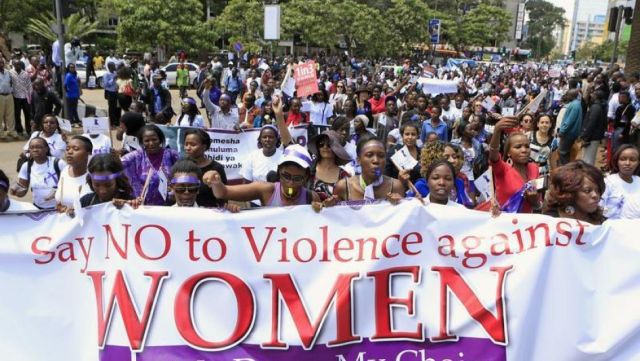
Italy will finance "Let it not happen again", a project against violence against women in Kenya, through the...
CORONAVIRUS
by redazione

The numbers of every day are now just numbers, and it is useless exercise to shell them out like ...
KENYA COAST
by Freddie del Curatolo

Kilifi County continues to grapple with a painful reality: teenage pregnancies remain one of the...

Increasingly full health care facilities with risk of collapse if a significant percentage of ...
NEWS
by redazione

Fewer tampons, many more positive cases, now Kenya is really starting to...
COVID-19
by redazione

Another 51 cases in Kenya in the last 24 hours bring the number of infections in the country to...
CORONAVIRUS
by redazione

Another 25 cases of Covid-19 positive in Kenya in the last 24 hours brings the total number of infected ...
KENYA NEWS
by Freddie del Curatolo

They call them “informal mines,” because saying “illegal”—when the people profiting from them are above...


