
EDITORIAL
01-10-2026 by Freddie del Curatolo

Africa is slowly realising that even a woman can take the highest office in the land without the continent collapsing, the stock market crashing or the lions of the Samburu ceasing to roar. Liberia, Tanzania, Namibia and other countries have already seen women rise to the top. Now Morocco, too, has a woman at the helm of the government.
Fatima Ezzahra El Mansouri has become the country’s first female prime minister, another door flung wide open on the African stage of women in politics. So one naturally wonders: when will the day come when a woman can truly stand for the State House in Nairobi – not as a supporting player, a deputy or a token candidate, but as the main contender?
Thirty-five years after the introduction of a multi-party system and sixteen years after the 2010 Constitution which officially enshrined it, the country has yet to produce a woman capable of mounting a genuine challenge for the presidency of the Republic. Martha Karua broke new ground; Wangari Maathai could have represented a different possibility; whilst figures such as Rebecca Miano have demonstrated that women can hold prominent government roles. But the State House remains, for now, an exclusively male club.
Morocco, it must be said straight away, has not elected a female president. It is a monarchy and the head of state remains Mohammed VI. But on 29 September 2026, the king appointed Fatima Ezzahra El Mansouri as the first female head of government in Moroccan history. A lawyer, former Minister for Housing and Mayor of Marrakesh, El Mansouri takes up the post of Prime Minister after her Authenticity and Modernity Party emerged as the largest party in the parliamentary elections on 23 September.
This is a development that holds particular significance for Kenya.
Because the continent is no longer so unfamiliar with the idea of a woman at the helm. Ellen Johnson Sirleaf of Liberia was the first woman to be elected president of an African state in 2005, taking office in 2006. In 2024, Namibia elected Netumbo Nandi-Ndaitwah, who became the second woman to be directly elected as president of an African country. Other states have had women at the helm through succession or appointment.
What about Tanzania’s neighbours? Samia Suluhu Hassan is serving her second term, following a spell as vice-president and a period as acting president following the sudden illness of the then leader, John Pombe Magufuli. And she is, in fact, governing with the iron fist and blind intransigence usually attributed to men.
According to a CSIS analysis, Africa as a whole has already had 24 women at the helm of state or government in 18 countries. But only Johnson Sirleaf and Nandi-Ndaitwah had been directly elected to the presidency.
In short, this is no longer African political fiction.
It is Kenya that seems to have reached this chapter with a few pages still blank.
Martha, Wangari and the others
The name that inevitably springs to mind is Martha Karua.
Karua is not merely a woman who has been involved in politics: she has served as Minister of Justice, as a Member of Parliament, as one of the opposition’s most recognisable figures and, in 2013, she even stood as a presidential candidate herself. However, she secured just 43,881 votes.
In 2022, however, her big national opportunity arrived: Raila Odinga chose her as his running mate. For the first time, a woman took on a central role in one of the two main presidential coalitions. The campaign was described by the international press as a potential ‘Karua wave’, but the Odinga–Karua ticket did not win the election; indeed, on the slopes of Mount Kenya – where the most powerful lobby within the Kikuyu electorate lives and votes – the fact that she was a woman and allied with the long-standing opponent of the ‘enemy’ tribe, the Luo, caused her to plummet in the polls.
Since then, the queue outside the gates of State House has not grown any longer – quite the opposite, in fact.
Rebecca Miano is one of the women who have demonstrated their ability to hold important positions in the executive. And her name continues to feature in the government team. But being a good minister is one thing; building a national political machine capable of propelling a woman to the presidency is quite another.
Then there is the figure Kenya could have had, at least symbolically, many years earlier.
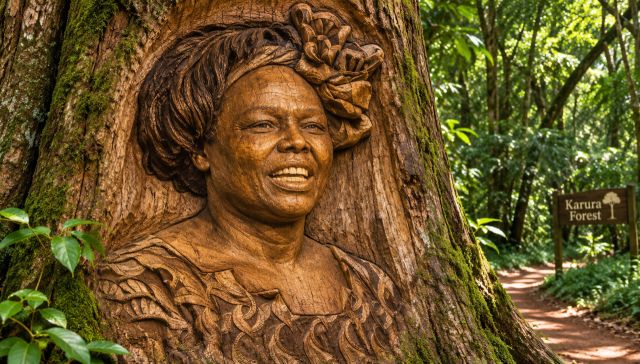
Wangari Maathai.
A Nobel Peace Prize laureate, founder of the Green Belt Movement, dissident, environmentalist and intellectual, Maathai was by no means a stranger to politics: in 2002 she was elected to Parliament with 98 per cent of the vote in the Tetu constituency and became Deputy Minister for the Environment in Mwai Kibaki’s government. She died in 2011, aged 71.
We do not know whether she would ever have wanted to mount a bid for the State House.
Perhaps not. For her, ‘getting her hands dirty’ always smelled of the earth, of Nature.
And that is precisely the point: Kenya has not yet had a woman with that rare combination of authority, national popularity, political machinery and presidential ambition needed to tackle such a campaign.
But is it really just a question of personalities?
Probably not.
The problem runs much deeper.
The 2010 Constitution was extraordinarily ambitious on the issue of equality. Article 27 establishes the right to equal treatment and requires the State to take measures to redress disadvantages arising from discrimination. Paragraph 8 further establishes the principle that no more than two-thirds of the members of elected or appointed bodies may be of the same sex.
What has become known in Kenya as the two-thirds gender rule was supposed to radically change the face of politics.
It has not done so.
According to IPU data, following the 2022 elections there were 82 women in the National Assembly, compared with 267 men. By the end of 2025, this figure had fallen to 80.
In 2025, a report by the relevant ministry indicated that there were 82 women out of 346 seats in the National Assembly and 21 out of 67 in the Senate: 23.7 per cent and 31.3 per cent respectively. Overall, women accounted for around a quarter of Parliament.
The Constitution says one thing.
Politics does another.
A law that never comes
The story of the two-thirds rule is almost like a short legal thriller.
The Supreme Court ruled as early as 2012 on gender representation. In 2017, the High Court ruled that Parliament’s failure to act to implement the constitutional provision constituted a breach of the Constitution.
Yet the implementing legislation continues to be the great spectre of Kenyan politics.
Even in 2026, the IPU notes that there is no law on gender electoral quotas capable of fully implementing the constitutional principle.
In July this year, a new attempt emerged: the draft Election Laws (Amendment) Bill 2026 proposes to shift the responsibility onto the political parties themselves, requiring them not to field more than two-thirds of candidates of the same sex in parliamentary elections. But, of course, this is merely a proposal, not yet a definitive solution.
And what about women? Have they protested enough?
Here we must be careful not to build another injustice on top of the first.
To say that “Kenyan women have never made too much noise” would simply be false.
There have been campaigns, organisations, associations, parliamentarians and women’s movements working on this issue for years. In 2026, AMWIK, the Association of Media Women in Kenya, raised the issue of the law’s failure to be implemented, emphasising that Kenya’s female parliamentary representation remains stuck at around 24 per cent.
KEWOPA, the association of female parliamentarians, also continues to work on women’s political participation and, in July 2026, identified women’s political leadership and the fight against violence against women in politics as key priorities.
So perhaps the question needs to be phrased differently.
Not ‘why don’t women protest?’
But “why have protests, court rulings, constitutional provisions and civil society campaigns still failed to translate into sufficient political power to compel Parliament to uphold that Constitution?”
Money could also be part of the problem
Politics in Kenya is expensive.
And it is extremely expensive.
Studies on women’s political participation identify campaign funding as one of the main obstacles for female candidates. Campaigns require transport, security, posters, advertising, staff, events and, within the Kenyan political system, a considerable ability to mobilise resources on the ground.
Added to this are party structures, often dominated by men; political networks built around clientelism and territorial alliances; violence against female candidates; and even openly sexist disinformation campaigns. Studies on the 2017 and 2022 elections have documented online attacks, threats and forms of disinformation specifically based on gender.
And this is where the paradox lies.
Kenya is one of the African countries that has most celebrated its progressive Constitution.
Yet real-world politics remains far more conservative than the Constitution.
It is not necessarily the case that Kenya ‘is not ready’.
Perhaps the initial question, then, already contains a slight pitfall.
Is Kenya not ready to have a female president?
Or: is the Kenyan political system not yet ready to produce a female president?
These are two different things.
Kenyan women vote, work, administer counties, sit in Parliament, and lead ministries, businesses, universities and social movements. In 2022, according to UN Women, women won 201 of the 1,882 total elected positions, compared with 179 in 2017; female vice-presidential candidates were fielded by three of the four main parties identified by the organisation.
So it does not seem that there is a lack of a society capable of producing female leadership.
Rather, what is lacking is the transformation of that leadership into a national presidential coalition.
And perhaps there is also a lack of something even simpler and more cruel: the possibility for a woman to be considered, even before being considered as a woman, as a presidential candidate.
A man may be mediocre, old, arrogant, tainted by scandal, unpopular in half the country, and yet still be presented as a ‘statesman’.
A woman, far more often, must prove herself to be competent, strong but not aggressive, authoritative but not authoritarian, popular but not populist, ambitious but not too ambitious.
It is a race with a burden that male candidates do not normally have to bear.
What now?
Martha Karua has already shown that a woman can come very close to the main door of national politics. Wangari Maathai demonstrated that a woman can achieve immense moral authority, right up to winning the Nobel Prize. Rebecca Miano and other female ministers have shown that there is no lack of female competence at the highest levels of government.
What is still missing is a woman who says: ‘I want the State House, and I will do whatever it takes to get there.’ And above all, what is missing is a political system willing to regard that statement as normal.
Morocco, under El Mansouri, has not yet elected a woman as head of state. Namibia has done so. Liberia has done so. Tanzania currently has a female president. Other African countries have brought women to the helm of government or state through various means.
Kenya, which in 2010 enshrined in its Constitution one of the continent’s clearest promises of political equality, continues instead to count the number of women in Parliament as one might count the empty seats on a bus.
The question, then, is not merely how long it will take to have a female president.
It is perhaps a more uncomfortable one: how long will it take before Kenya stops asking itself whether it is ready for a female president and starts asking itself which woman is ready to be president?
Because the difference between these two questions lies in the difference between a concession and a conquest.


I AM NOT YET A WOMAN...

ITALIAN PODCAST
by Freddie del Curatolo
A happy childhood, studies in the US, a return to Kenya marked by her career and many hardships...
OUR NEIGHBOURS
by Freddie del Curatolo

It's election day again in Tanzania. It's Wednesday, the ballot boxes open...

Now it will be possible to travel to Arusha in Tanzania and to the foothills of Kilimanjaro from the Kenyan side, as...
EVENTI
by redazione

After the success in terms of attendance (and with great joy also in terms of book sales...) of the...
EVENTS
by redazione

For next Tuesday, Jan. 17, at "The Sands at Nomad" in Diani, the Italian Cultural Institute in Nairobi has...
NEWS
by Freddie del Curatolo

Kenya has been confirmed as an international film set, with the possibility in its incredibly...

At a time when barbarism and man's worst instincts, thanks also to the media and social limelight, have...
LATEST NEWS
by redazione

A 71-year-old Italian woman, Maria Laura Satta, was killed during a robbery in a private home, a very secluded villa in Kikambala, not far from Mombasa. During the robbery that occurred yesterday morning, the elderly woman, Luigi Scassellati, was also...
KENYA NEWS
by Freddie del Curatolo

A head-on collision on the stretch of road between Mombasa and Malindi, involving a lorry and the...
NEWS
by redazione

The director of the portal of Italians in Kenya, Alfredo "Freddie" del Curatolo, will receive the...
EVENTI
by redazione

A unique and very successful event to promote the beauty of Kenya in all its forms, from...

Kenya's two leading presidential candidates have finally chosen, taking advantage until the last of the...


