
KENYA NEWS
22-01-2026 by Freddie del Curatolo

After months of announcements, delays, legal paperwork, and the typical Kenyan suspension of things that always remain “almost done,” TUI tour operator charters are finally flying directly to Mombasa again. This is not a metaphor: these are real, large, white planes, full of cold Europeans who have no desire to stop over in Nairobi or get lost in Middle Eastern hubs and nighttime connections.
At the end of December 2025, the Kenya Civil Aviation Authority granted TUI an annual license to operate Inclusive Tour Charters between Amsterdam and Mombasa, with some rotations continuing on to Zanzibar. This green light comes after a rejection in June and a second application that remained pending throughout the summer, like a tourist at the gate without a boarding pass.
With its Boeing 787 Dreamliners, TUI will now be able to fly passengers directly to the Kenyan coast. Translated: less waiting, less stress, more sunscreen. But above all, for hoteliers in Diani, Watamu, Malindi, and North Coast, more beds occupied during the period when the coast either works or sinks.
The KCAA speaks openly about international competitiveness and the revival of tourist volumes. In other words, Kenya is trying to get back on the map of major European package deals, where destinations are all on the same digital shelf: the Maldives, the Caribbean, Mexico. And now, once again, Mombasa.
TUI is not just any operator. It is a vertical giant that controls planes, hotels, cruises, agencies, and online platforms. It decides where millions of Europeans go on vacation with a click. When it adds a destination, that destination exists. When it removes it, it disappears.
Mohamed Hersi, COO of Pollmans Tours & Safaris, puts it bluntly: the European winter is when the coast puts everything on the line. Direct flights keep hotels open, pay salaries, and sustain entire communities. Without planes, the sea remains there, beautiful and useless.
But not everyone is celebrating without reservation. There are those who fear that the big package model leaves Kenya with only crumbs, while the real value remains in Europe. Flights, hotels, excursions, everything sold and decided elsewhere. It's an old African story: the party is here, but the cash is far away.
The official response is always the same: better small margins on many tourists than large margins on nothing. More arrivals mean work for hotels, guides, restaurants, artisans, and transport. Even if part of the profits go back, something remains. At least enough to keep going.
For years, those working in tourism have repeated that the problem with the coast is not demand, but access. Håvar Bauck of HotelOnline sees the green light for TUI, together with the new Flydubai routes and the return of Turkish Airlines to Mombasa, as a change of pace. More competition, more direct flights, more affordable fares. This is how you relaunch a destination, at least on paper.
However, the issue of infrastructure remains. Everyone knows that Nairobi and Mombasa are not built for the volumes that Kenya says it wants to attract. Terminals are worn out, runways are stretched to the limit, and management is struggling. Bauck cites Zanzibar and its Terminal 3, managed by DNATA, as an example of how an airport can change its face and reputation with modern management.
Meanwhile, on the coast, the mood is improving. Roberto Marini, owner of the Ocean Beach Resort in Malindi and long-time advisor to the Ministry of Tourism, talks about capacity finally returning. With TUI in Mombasa and Emirates adding a third flight to Nairobi, something is happening. It is not yet the open sky promised for years, but at least it is no longer at a standstill.
One thing remains clear: if Kenya wants to play in the global tourism league, airports and roads must stop looking like a footnote. Malindi, Mombasa, and Nairobi must live up to the ambition that the country proclaims.
If the route works, analysts expect new frequencies and new cities, perhaps Brussels and London. For now, however, this is enough. A plane landing directly in Mombasa during high season is worth more than a thousand conferences on the revival of tourism.
And on the coast, which has been living on expectations and promises for years, even this seems like a small miracle.


VOLI
by redazione
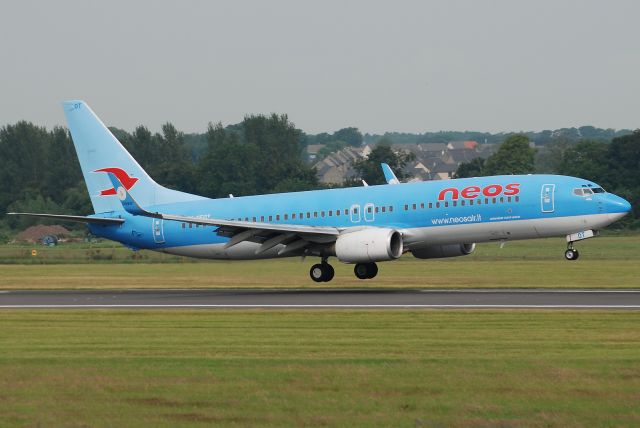
Today came the response of the charter airline Neos to the suspension of direct flights from Milan and...

Everyone is flying back to Kenya.
Airlines, driven by the great demand for business travel and the reborn tourist interest for one of the most sought after safari destinations in the Continent, have resumed their destination in Nairobi, as well...
FLIGHTS
by redazione

A good news for those who fly from Italy to Kenya, with a preference for the coast, and want to...
FLIGHTS
by redazione

Italians are already hunting for tickets after learning of the reopening of NEOS charter flights from...
VOLI
by redazione

No direct flight from Milan to Nairobi, via Rome by the Kenyan national airline Kenya Airways. The...
LATEST NEWS
by redazione

From Italy there will be no stop for the three Neos charter flights whose departure is scheduled respectively for...
NEWS
by redazione

Charter flights from Milan all full from last week.
So the Blue Panorama company flies back to Mombasa after six years.
The route (coming flight on Monday morning) is Malpensa-Zanzibar-Mombasa, with half of the tourists who have chosen Kenya (112 out...
FLIGHTS
by redazione

The charter company TUI Nederlands, an affiliate of the great German tour operator, announced that it will resume charter flights from Amsterdam for years to Mombasa for next season.
Flights are already scheduled and bookable from next November and should...
by redazione

Qatar Airways is betting more and more on Kenya and in December will increase to five weekly...
NEWS
by redazione

Every day that passes the connections between Kenya and Italy become more and more difficult, between ...


