
KENYA NEWS
28-01-2026 by Freddie del Curatolo

When the clock strikes midnight, it doesn't always mean a new day begins. Sometimes it means patience runs out. And in Nairobi tonight, the Kenyan aviation industry's patience is officially running out.
The countdown began a week ago, but now we are down to the last fifteen hours. At the stroke of midnight between today and tomorrow, Tuesday, January 28, 2026, the ultimatum issued by the Kenya Aviation Workers Union will expire. If nothing changes—and so far nothing has changed—a strike will be called that is set to paralyze all air traffic in the country, turning what is already shaping up to be the worst crisis in regional aviation since Covid.
The heart of the problem lies beneath the runways of Jomo Kenyatta International Airport, the busiest hub in East Africa, but the shockwaves will be felt everywhere: Moi International Airport, Kisumu, Eldoret. In other words, everything that flies is at risk of being grounded.
According to data released by the union, more than 8,000 airport workers—including ground staff, technicians, security and service personnel—are ready to down tools. With them, more than 50,000 passengers a day could be stranded in Nairobi alone. This number weighs heavily on an economy that thrives on tourism, safaris, connecting flights, and “high” seasons that wait for no one.
The crux of the dispute is as simple as it is embarrassing: eleven years of wage freezes, from 2015 to today. Eleven years without adjustments for thousands of workers employed by Kenya Airways, the Kenya Airports Authority, and ground handling companies. Meanwhile, the cost of living has continued to rise, flights have multiplied, and responsibilities have increased. Salaries, however, have not.
The government, so far, has not responded. No talks have been scheduled, no concrete signals have been given. Silence. And silence, at the airport, is always bad news.
Union leaders are no longer mincing their words: “If there are no answers, we will close the airspace and stop everything.” Not a metaphor. A plan.
The timeline is as straight as a runway:
– January 21: KAWU issues a seven-day strike notice
– January 22–27: no official response
– January 28, today: ultimatum expires at midnight
– January 29, tomorrow: indefinite strike if no agreement is reached in the next few hours
The probability of this happening? According to the union, 85%. The most recurring word: inevitable.
Meanwhile, airport departure boards are beginning to tell stories of the future: cancellations, delays, connections that will never be made. Tourists with binoculars already in hand and safaris booked months in advance. Residents stranded. Tired workers. And a country that, once again, discovers that when you ignore those who make things work for too long, sooner or later things really do come to a standstill.
The skies above Kenya remain open, for now. But tonight they could close without warning. And when that happens, no takeoff will be possible.
What to really expect in Nairobi if the strike starts
If past experience teaches us anything, it is that in Nairobi, airport strikes do not all start at the same time and never end ‘on time’. Here's what to realistically expect in the first 24–72 hours.
– International flights: The first cancellations will mainly affect night and morning flights. Airlines tend to suspend operations as a precaution, often before midnight. Intercontinental flights are most at risk because they require full ground operations.
– Regional and domestic flights: These are the ones that are most likely to be canceled. Even when some planes could theoretically take off, there is a lack of complete crews, handling, security, or authorizations. The result: flights “on hold” that become cancellations.
– Airport physically open but blocked: terminals remain accessible but with reduced services. Check-in is sporadic, baggage is stuck, and there are queues without clear information. It is not an immediate total closure, but a progressive breakdown.
– Fragmented information: contradictory announcements, unreachable call centers, staff who often find out the news at the same time as passengers. In Nairobi, official communications arrive late, if they arrive at all.
– Stranded passengers: those already at the airport risk being stuck there for hours. Those who need to depart would be wise not to show up without written confirmation that their flight is operational. Sleeping in the terminal is not uncommon, but it is not comfortable.
– Slow recovery even after an agreement: when (and if) the strike is suspended, traffic does not resume immediately. It takes a day or two to clear the backlog of grounded planes, off-duty crews, and accumulated passengers.
In summary: in Nairobi, a strike is not a switch, it is a dam that closes slowly. And when it reopens, the water does not immediately return to its normal level.


LATEST NEWS
by Freddie del Curatolo

Workers belonging to the Kenya Airline Workers Union (KAWU) have officially begun...
LATEST NEWS
by redazione

Ethiopia has temporarily closed the Bole International Airport to civilian aircraft due...
KENYA NEWS
by Freddie del Curatolo

Scheduled flights or paralysed airports? Barring an unlikely last-minute agreement, Kenya is bracing itself for...
KENYA NEWS
by Freddie del Curatolo

Long queues, inconvenience and angry travellers in the land of real buffaloes. This is what happened...
KENYA NEWS
by Freddie del Curatolo

The threat of a strike by Kenyan civil aviation employees looms over the Christmas holidays...
KENYA NEWS
by Freddie del Curatolo

Since yesterday, the strike by Kenyan airport workers belonging to the main national union...
LATEST NEWS
by Freddie del Curatolo

Airport workers belonging to the KAWU union have announced that they have reached an...
HEALTH
by redazione

After one hundred days long, especially for patients in all of Kenya, the doctors decided to retract their protest and return to the hospitals.
The strike created to assert their rights, enshrined in a category by some ready-year contract and...
KENYA NEWS
by Freddie del Curatolo

Yet again. And perhaps this is precisely the most worrying aspect of the situation. The strike by airport...
FLIGHTS
by redazione
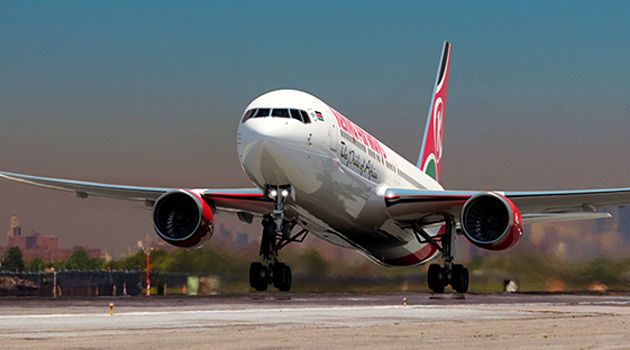
Kenya's flag carrier, Kenya Airways announced yesterday that it will resume direct flights from...

After a night spent freezing in the car park outside Nairobi's JKIA international airport due to the...

The parliamentary committee created to monitor the funds allocated to the work of Kenya's airports has launched a serious alarm about the
KENYA NEWS
by Freddie del Curatolo

After a problematic day, with many inconveniences for local and foreign travellers at the Jomo...
VIDEO AND MUSIC
by Freddie del Curatolo

In the never-ending story of the upgrading of Malindi international airport, each instalment
NEWS
by redazione

It is no coincidence that in these days the data of the Covid-19 emergency concern very...


