
KENYA NEWS
23-09-2026 by Freddie del Curatolo

Kenya is once again turning its attention to the United States, and vice versa. The meeting in New York between President William Ruto and US Secretary of State Marco Rubio, on the sidelines of the UN General Assembly, has brought back to the forefront of bilateral relations not only security – a traditional area of cooperation between the two countries – but above all trade, artificial intelligence, critical minerals, energy and investment.
For Nairobi, this rapprochement has clear economic significance. Kenya is seeking capital and technology to accelerate its industrial transformation, whilst the United States is looking for reliable partners to diversify its supply chains, particularly in the strategic minerals sector, which is currently dominated by China at many stages of processing.
Minerals: the Mrima Hill opportunity
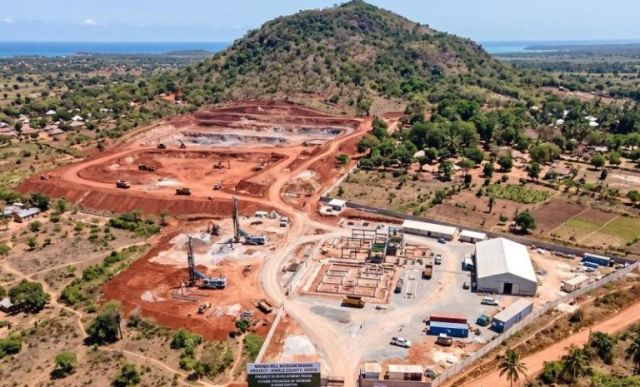
The most concrete area of focus is that of critical minerals, starting with the Mrima Hill deposit in the coastal county of Kwale. The area contains niobium and rare earth elements, materials used in sectors ranging from electronics to aerospace, and from energy technologies to electric vehicles.
The Kenyan government wishes to avoid the traditional African model of extracting and exporting raw materials. Ruto’s stated policy is one of value addition, that is, processing at least part of the mineral wealth within the country, thereby creating facilities, skilled jobs and industrial supply chains.
Washington has shown interest in supporting precisely this model. The United States has spoken of investments in processing, technology transfer and workforce training. According to Reuters, two American consortia are among the groups interested in developing Mrima Hill, alongside other international competitors.
For Kenya, this would be a significant opportunity: not merely to sell a mineral extracted from the ground, but to attempt to build part of an industry around it. The government has, in fact, set the objective of transforming the country into a regional hub for the processing of critical minerals.
But this is precisely where the uncertainties begin.
An agreement with Washington does not automatically guarantee that the added value will remain in Kenya. It remains to be seen who will finance the facilities, who will control them, what share the state and local communities will hold, how much technology will actually be transferred, and what conditions will apply to the mining concessions. The Mrima Hill project is still at the tender stage and the details of any potential agreement with the United States have not yet been definitively made public.
The new race for rare earths
This issue must also be viewed within a broader context. Washington regards critical minerals as a strategic priority, not least to reduce its dependence on supply chains controlled by China. Kenya, therefore, is not simply facing a new commercial opportunity: it finds itself at the centre of growing international competition for access to the resources needed for the technologies of the future.
This position may increase Nairobi’s negotiating power, but it may also expose the country to pressure from the major powers.
The paradox is clear: to avoid remaining merely a source of raw materials, Kenya must succeed in negotiating with those who hold capital, technology and markets without simply becoming the latest link in a new extractive chain.
AI: Kenya aims to play a leading role in technology
The other major topic discussed by Ruto and Rubio is artificial intelligence. Nairobi has stated ambitions to become one of Africa’s AI hubs and aims to utilise the technology in the sectors of healthcare, education and financial services. The two governments also discussed the need for responsible governance of artificial intelligence technologies.
For Kenya, collaboration with the United States could mean access to expertise, investment, digital infrastructure and technology firms. But even in this case, the benefit is not automatic.
The question will be whether Nairobi manages to develop local skills and businesses, rather than merely becoming a market for foreign platforms and technologies. AI could become a tool for modernising the Kenyan economy, but it could also exacerbate technological dependence on foreign countries if the nation fails to build its own capacity for research, training and development.
AGOA and trade
On the trade front, Ruto welcomed the extension of the African Growth and Opportunity Act (AGOA), the scheme that facilitates access to the US market for numerous African products. According to Kenyan officials, its extension should help to expand trade opportunities between Africa and the United States.
For Nairobi, this means, above all, keeping one of its main export markets open. But the challenge lies in moving beyond the traditional model based on agricultural products and low value-added manufactured goods.
The real opportunity would be to use access to the US market to further industrialise Kenya, linking minerals, agriculture, technology and manufacturing to supply chains capable of exporting finished or semi-finished products.
And then there is security
The rapprochement is not merely economic. Kenya and the United States remain key partners on regional security issues. In New York, Ruto and Rubio also discussed the security mission in Somalia, the situation in Haiti and the crisis in Sudan.
It is a relationship in which Nairobi brings diplomatic capital that Washington considers important in East Africa. Kenya, for its part, can use this role to strengthen its international standing and attract investment.
The risk is that the various dimensions of the relationship may end up overlapping: minerals, technology, trade and security become parts of a single strategic relationship, in which American and Kenyan interests do not necessarily coincide.
An opportunity, not yet a result
The Ruto–Rubio meeting therefore marks a strengthening of dialogue, but does not amount to the signing of a major economic agreement. On critical minerals, in particular, the partnership is still taking shape.
For Kenya, the stakes are high. If Nairobi manages to translate American interest into industrial facilities, training, technology transfer, skilled employment and greater value retained within the country, the new relationship with Washington could become one of the tools for the economic transformation pursued by Ruto.
If, on the other hand, Kenya merely provides natural resources and market access, changing only the name of its major foreign partner, the problem that Nairobi claims to want to solve will remain essentially the same.
In short, the game is not simply Kenya versus China or Kenya alongside the United States. Above all, it is about Kenya seeking to understand how much it is worth, and how much it can retain, when the world once again needs its resources.


by Freddie del Curatolo

The total freeze on foreign aid announced and implemented overnight by Donald Trump for the...
HEALTH
by redazione

A study from the University of Los Angeles confirms years of studies and centuries of rumors and local legends: the Indian ocean raw fish (sailfish, red snapper, cernia, dorado) is especially good for people in old age, more than other...
NEWS
by Freddie del Curatolo

Roberto Natali is the new Italian Ambassador to Kenya. The diplomat, born in L'Aquila in 1958, arrived...
HEALTH
by Freddie del Curatolo

Kenya has signed a five-year, $2.5 billion agreement with the United States to strengthen...
KENYA NEWS
by Freddie del Curatolo
Kenya’s subsoil may harbour one of East Africa’s most significant mineral treasures. At Mrima Hill, in...
VEGETABLES
by redazione

Among the many leafy vegetables that Kenyans usually eat (and are often forced to eat due to their...

Kenya is increasingly ideal tamarind environment, present in the Swahili coast since it was brought and planted by India, a thousand years ago.
The Tamarindus Indica is a majestic evergreen, long life, belonging to the legume family.
PRODUCTS
by Leni Frau

Dragon Fruit or Pitaya is a tropical fruit belonging to the family of Cactacaceae, such as prickly...
TALK
by redazione

The Arabuko Sokoke forest is one of the most important and extensive green lungs on the Kenyan...
POLITICS
by Freddie del Curatolo

Yesterday, Kenyan President William Ruto concluded his official visit to the United States and especially...
EDITORIAL
by Freddie del Curatolo

When I arrived in Malindi, more than thirty years ago, water, like so many other goods that were taken...
EDITORIAL
by Freddie del Curatolo
The US elections are not as far from Nairobi as one might think. Thousands of kilometres from the...
OUR NEIGHBOURS
by Freddie del Curatolo

In Africa, when the world's powerful don't know where to put their problems, they send them south of the...


