
KENYA NEWS
12-03-2026 by Freddie del Curatolo

Every time a war breaks out in the Middle East, something curious happens in Africa: animals continue to migrate, lodges remain where they have always been, but tourists suddenly remember that the world is big and complicated. And so they hesitate, postpone, cancel.
That is what is happening right now.
Air traffic disruptions related to the ongoing conflict in the Gulf region are causing a series of side effects that are reaching African parks, including Kenya. Not because missiles could fall on the savannahs or beaches of the Indian Ocean, but because the skies of the Middle East are one of the major hubs of global aviation.
For years, the major Gulf airlines—Emirates, Qatar Airways, and Etihad—have transformed Dubai, Doha, and Abu Dhabi into giant hubs for global tourism. For many travelers from the United States, Asia, and Europe, arriving in Africa almost always means stopping there.
And Kenya knows this well.
A large proportion of American tourists who come on safari to Masai Mara, Amboseli, and Laikipia pass through these hubs. Over time, the Emirates have become a sort of antechamber to the savannah: you leave from New York, Los Angeles, or Chicago, land in Dubai or Doha, change planes, and a few hours later you are in Nairobi.
It's a system that has been working for years, thanks to competitive prices, convenient schedules, and extensive connections.
However, when air traffic in the region becomes complicated—due to temporary airspace closures, cancellations, or diversions—this entire global architecture creaks. Travel agencies in Kenya and other African countries are already reporting a slowdown in bookings and growing uncertainty among travelers.
The problem is not so much the safety of flights to Africa as the domino effect.
Airlines are forced to change flight corridors, lengthen routes, or cancel some routes. This means more fuel, higher operating costs, and therefore, almost inevitably, more expensive tickets.
And in international tourism, it doesn't take much to trigger caution.
The Kenya Association of Travel Agents has already sounded the alarm: almost half of the air traffic connecting Africa to the rest of the world passes through the Middle East. When such a hub slows down, it inevitably creates a global traffic jam.
The consequences are immediately visible in the busiest African airports—Nairobi, Addis Ababa, Dar es Salaam, Johannesburg—where dozens of flights from the Gulf arrive every day.
But there is also another phenomenon, more psychological than logistical.
A sort of déjà vu of global tourism: psychosis.
It has been happening cyclically for twenty-five years, more or less since the September 11 attacks changed the perception of air travel forever. Every international crisis, every geopolitical tension, every war in the wrong region generates the same reaction: the widespread feeling that the world has suddenly become dangerous everywhere.
And so, while some American or Asian tourists really have to rethink their routes because they travel via Dubai or Doha, other travelers—especially Europeans—end up getting scared for no reason.
This is the case for many Italians.
A significant portion of Italian tourists traveling to Kenya fly with airlines such as Turkish Airlines or Ethiopian Airlines, passing through Istanbul or Addis Ababa. These routes are completely different from those in the Gulf and far from the areas affected by tensions.
Yet the perception of risk often does not follow geography.
Just hearing the words “Middle East” on the news is enough to trigger a conditioned reflex in some people, who imagine missiles crossing continents and skies full of danger. In reality, however, in modern civil aviation, flight corridors are modified extremely quickly and safely.
Meanwhile, in Kenya, lions continue to sleep in the shade of acacia trees, elephants cross rivers, and rangers count arrivals at lodges with some apprehension.
Because tourism, more than many other industries, thrives on an invisible and fragile commodity: trust.
And when fear—even if thousands of miles away—begins to travel faster than airplanes, even a safari can suddenly seem more distant.


LATEST NEWS
by redazione

Ethiopia has temporarily closed the Bole International Airport to civilian aircraft due...

At least 15 days of inconvenience and disruption are expected for travellers who have booked...
FLIGHTS
by redazione

Every high season history seems to be repeating itself: the places on the planes that...
VOLI
by redazione
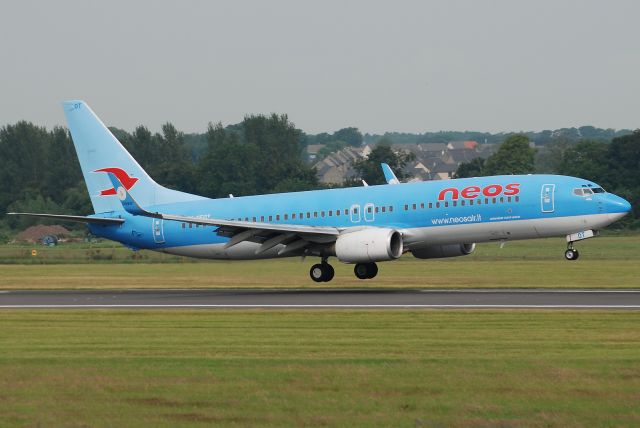
Today came the response of the charter airline Neos to the suspension of direct flights from Milan and...
FLIGHTS
by redazione
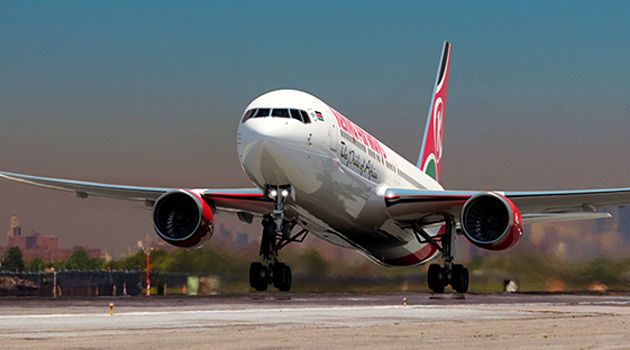
Kenya's flag carrier, Kenya Airways announced yesterday that it will resume direct flights from...

The parliamentary committee created to monitor the funds allocated to the work of Kenya's airports has launched a serious alarm about the
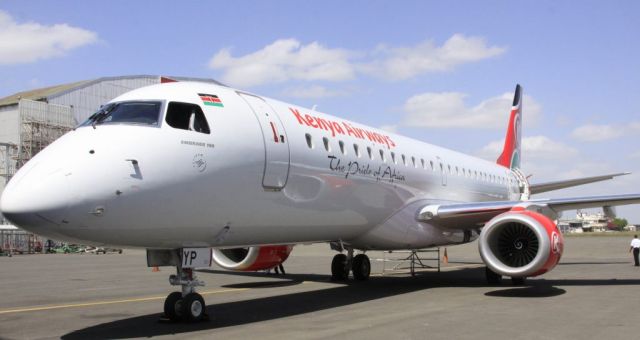
The emergency of Kenya's national airline, Kenya Airways, which a few days ago, as our website had...
FLIGHTS
by redazione

As is well known and already reported in the main press, the shareholders' meeting of Air Italy, i.e. Alisarda...
FLIGHTS
by redazione

The possibility and the hope of having a flight more per week from Italy to Kenya, in a few days it has gone not to be for three weeks, including Easter, even the existing one.
The charter airline Meridiana Fly...
VOLI
by redazione

Kenya's answer to Dubai has officially arrived, which already before Christmas 2021 had closed its...
NEWS
by redazione

The Kenyan flag carrier Kenya Airways announced yesterday that it has temporarily suspended flights...
FLIGHTS
by Leni Frau

Low-cost airline Silverston Air, which operates domestic flights in Kenya, has announced the suspension until...
VIDEO AND MUSIC
by Freddie del Curatolo

In the never-ending story of the upgrading of Malindi international airport, each instalment


