
INSIDE KENYA
10-09-2026 by Freddie del Curatolo

The directives announced by Kenyan President William Ruto against small-scale foreign traders, which this writer immediately described as one of the opening moves of his campaign ahead of next August's general election, have gone far beyond Kenya’s borders and are now sparking widespread debate, triggering fierce controversy both at home and abroad. While the government is now attempting to soften its stance by granting a 90-day window for foreign traders to regularize their work permits and business licenses, analysts, business leaders and international observers warn that the damage to Kenya's reputation may already have been done.
The controversy began a few days ago when Ruto, speaking at a public event, ordered the closure of retail businesses operated by foreigners, arguing that such activities should be reserved exclusively for Kenyan citizens.
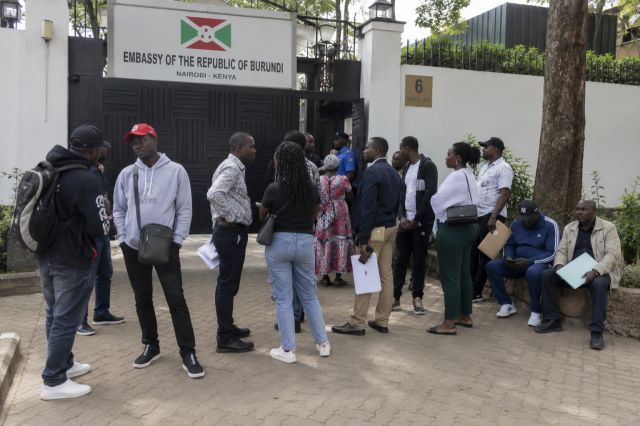
The announcement had an immediate impact. Citizens from Burundi, the Democratic Republic of Congo and several other East African countries quickly began fearing deportation, violence and retaliation. Hundreds of Burundians gathered outside their embassy in Nairobi seeking travel documents that would allow them to return home.
Faced with mounting criticism, the government later clarified that no immediate deportations would take place and that foreign business operators would be given 90 days to regularize their legal status by obtaining residence permits, business licenses and work authorizations. Authorities also reaffirmed a policy of "zero tolerance" towards acts of xenophobia.
It is worth remembering that the continent is still reeling from the cold—and violent—shock of South Africa's recent hardline measures, which effectively amounted to a remigration campaign targeting undocumented African migrants while encouraging resentment among impoverished local communities. The kind of policies that would make Nelson Mandela turn in his grave.
As for Ruto, who has often portrayed himself as a committed Pan-Africanist, an analysis published by The Standard argues that the real issue lies not only in the substance of the decision but also in the manner in which it was announced. We take distance from those words, but some of international media are wondering if that can be the new kind of communication of the leader.
Increasingly, major government decisions are being communicated by Ruto during roadside rallies, impromptu visits or public gatherings, without prior consultation with the relevant ministries or any clearly defined administrative process. This approach—widely referred to by observers as "roadside directives"—creates uncertainty among investors, businesses and international partners because it makes Kenya's regulatory environment difficult to predict.
The crackdown also comes at a particularly delicate moment for Kenya's economy.
Since 2024, Ruto's government has been confronted with widespread protests over the rising cost of living, higher taxes and the increasing cost of essential services. The demonstrations forced the administration to withdraw the controversial Finance Bill and have contributed to a steady decline in public confidence in the president.
Many observers believe the move against foreign traders also responds to pressure from associations representing small local businesses, which accuse traders from neighboring countries of unfair competition in informal markets and urban commercial districts. However, several economists warn that blaming foreigners for Kenya's economic difficulties risks fueling social tensions without addressing the structural causes of the country's economic crisis.
The reassurances subsequently issued by both the Presidency and the Ministry of Foreign Affairs have, at least for now, prevented a diplomatic escalation with the countries most directly affected.
The government has clarified that foreign nationals who are legally registered will continue to enjoy the protections guaranteed under Kenyan law and that the regularization process will be carried out in cooperation with the relevant embassies. Nevertheless, many foreign residents say they now feel unwelcome and have decided to leave Kenya regardless.
According to analysts quoted by The Standard, incidents of this kind risk undermining Kenya's reputation as one of Africa's most open economies for foreign investment and as East Africa's principal commercial hub. An image built over decades could be damaged by abrupt decisions that project an impression of regulatory and political instability.
The episode also carries significant political implications. In recent months, Ruto's administration has come under criticism for a series of decisions viewed as improvised, as well as for its growing tendency to make major public announcements before formal government measures have been drafted or approved.
The handling of the foreign traders' issue has therefore become a crucial test not only of Kenya's economic policy but also of its institutional credibility. The 90-day grace period will reveal whether the government can turn a controversial announcement into a clear, coherent and broadly accepted regulatory framework—or whether the lasting impression will be that of a country where the rules can change overnight, with inevitable consequences for investor confidence and relations with neighboring states.


NEWS
by redazione

He had said this during the election campaign referring especially to the Chinese and all foreigners...
EVENTS
by Leni Frau

A beautiful celebration of Kenya in Milan, next 30 September, to celebrate with Freddie del Curatolo...
NEWS
by redazione

Kenya's new President William Ruto has released the full list of ministers in his...
NEWS
by redazione

Journalists for passion, with a desire to tell and the need to do so freely.
Today it...

Tomorrow evening, Friday 30 September from 6pm, the Kenya Festival in Milan, organised...
ITALIAN EMBASSY
by redazione

The new Italian ambassador to Kenya, Vincenzo Del Monaco, arrived in Nairobi today, replacing...
KENYA NEWS
by Freddie del Curatolo

It was Kenyan President William Ruto himself who publicly announced his upcoming visit to Italy at...
LATEST NEWS
by Freddie del Curatolo
After days of anxiety and some tense incidents, including xenophobic reactions and protests...

The difficult period for the Kenyan economy may have reached its climax and now begin its downward...
EVENTI
by Leni Frau

The date of the Kenya Festival in Milan organised by Africa magazine is approaching, Friday...

William Ruto is Kenya's fifth president. The vice-president of Kenyatta's government for the past ten...
NEWS
by redazione

As of tomorrow, Kenya officially turns over a new leaf. The ten years of the Kenyatta administration...


