
EDITORIAL
22-09-2026 by Freddie del Curatolo

In Kenya, even today, a woman may arrive at hospital with her baby bump, having travelled on the back of a boda boda or on a crowded matatu that jolts over every pothole and takes hairpin bends, after travelling along a dirt track in the dark, dodging snakes, with one hand clinging to her husband and the other on her bump. She may have crawled, waited, prayed. She may finally have reached a place where someone should be able to save her.
And yet, every day, sixteen women do not return home after a pregnancy or childbirth.
Sixteen. It is a number that becomes a statistic in ministry reports, a percentage at conferences, and a target to be reduced in health programmes. But behind every figure there is a woman who may well have already chosen her baby’s name, a mother waiting to meet him, a family that had prepared a cot.
Kenya is a country racing towards the future, building roads, hospitals, airports, data centres and technological dreams. But every now and then, the future ought to pause for a moment at the door of a delivery room and ask itself why, in 2026, a woman should still have to risk her life to bring a child into the world. Because many of those sixteen deaths are not inevitable.
The paradox of the delivery room
And yet, in recent years, Kenya has made some progress.
Almost nine out of ten women now give birth in a healthcare facility, assisted by qualified staff. This is one of the outcomes of policies that have sought to move childbirth from the isolation of the home to the safety of a hospital or health centre.
But here lies the paradox.
Arriving at hospital does not necessarily mean being saved.
The World Health Organisation has recently highlighted this very shift: in Kenya, more and more women are managing to reach healthcare facilities, but a significant proportion of deaths still occur due to the inadequate quality of care received once they arrive.
It is a seemingly technical distinction, but behind those words lie lives.
A mother may arrive at hospital and find there is no blood available for a transfusion. She may need an emergency caesarean section only to find the operating theatre is occupied or that a doctor has to be brought in from another facility. She may be transferred from a peripheral hospital to a higher-level one and lose precious hours on a journey that stands between her diagnosis and the chance of her survival.
And often, it doesn’t even take a rare condition.
One of the leading causes of maternal death is postpartum haemorrhage, accounting for around 40 per cent of maternal deaths. This is followed by hypertensive disorders of pregnancy, infections, unsafe abortions and complications related to difficult deliveries. These are emergencies recognised by the medical profession and, in many cases, treatable. This is what makes the figures even harder to accept.
These deaths are not necessarily inevitable.
When time is of the essence
Medicine, particularly obstetrics, has an enemy that does not feature in the statistics: time.
A haemorrhage does not wait for the ambulance. An eclampsic seizure does not wait for the doctor. A baby in distress does not wait for the operating theatre to become available.
And so even a seemingly short distance can become enormous.
Kenya has 26 counties considered to have a high burden of maternal and neonatal mortality. These include Nairobi, Mombasa, Kilifi, Kwale, Kisumu, Homa Bay, Garissa, Turkana and Mandera.
It is not just a matter of remote villages and unpaved roads.
It is a problem that can also exist in cities, within healthcare facilities that may have a building but lack sufficient staff, medicines, blood supplies, equipment or the capacity to deal with multiple emergencies simultaneously.
Perhaps the most sobering reality is this: Kenya has made enormous strides in getting mothers into hospitals, but now it must do the same to ensure that those hospitals are truly ready to save them.
But things are changing
And this is where a bleak story can, at least for once, allow itself a glimmer of hope.
In May, the Kenyan government launched the Every Woman, Every Newborn, Everywhere (EWENE) 2026–2028 plan, a national strategy specifically dedicated to reducing preventable maternal and neonatal deaths. The programme focuses its efforts primarily on the 26 counties at greatest risk.
There is funding, at least on paper.
The government has earmarked a further 4 billion shillings through the Social Health Authority to expand maternity care coverage, 1 billion for essential medicines and supplies, 2.5 billion for family planning products, and the recruitment of 5,000 nurses and midwives.
And it is not merely a plan drawn up in offices in Nairobi.
In September, construction began in Bomet on the first of ten specialist hospitals for mothers and children, as part of a 4.5 billion shilling programme funded by a grant from the Amsons Group. The facility will have 250 beds, delivery theatres, operating theatres and neonatal intensive care units. Further hospitals are planned for locations including Nairobi, Kwale, Mombasa, Garissa, Kisumu, Embu, Nakuru, Uasin Gishu and West Pokot. These are figures which, this time, can represent something more than just a statistic.
Because a mother is not a statistic
There is one thing that Kenya’s modernisation should learn not to forget.
Behind every number there is a name.
Behind those sixteen mothers there are sixteen different women, with different stories, children who were perhaps waiting for them, husbands, partners, sisters, elderly mothers, and children who, from that day on, will grow up without that voice.
And behind every child born there is a possibility.
This is perhaps the hardest part of progress to explain: it is not measured solely in kilometres of new motorways, skyscrapers, megawatts generated or billions invested.
Sometimes progress is a blood bag that arrives in time.
A midwife who does not have to choose which patient to attend to.
An ambulance that sets off immediately.
An available operating theatre.
A medicine that hasn’t run out.
A hospital of an adequate standard that isn’t four hours away.
A power generator.
A paid water bill.
This is what helps create the image of a woman entering the delivery room and leaving with her baby in her arms.
Sixteen is still too many
Kenya has ambitious goals. The EWENE plan aims for a rapid reduction in preventable deaths and, more generally, to bring maternal mortality much closer to international standards.
But in the meantime, those sixteen remain.
Sixteen women a day are too many in a country that aspires to be one of Africa’s most dynamic economies. They are too many in a country that has excellent doctors, modern hospitals, universities, technology and expertise. Above all, they are too many because many of those deaths can be prevented.
And perhaps that is precisely where hope lies.
Not in pretending the problem does not exist. Not in announcing yet another plan as if a press release were enough to change reality.
Hope lies in the fact that today Kenya has a clearer understanding of where the problem lies: not only in access to care, but in its quality, in the timeliness of that care, in the resources and in the people who must ensure that quality.
Now we must ensure that these promises reach every single delivery room.
Right down to the woman who is afraid.
Right down to the one who arrives with her baby bump on a boda boda.
Right down to the one who lives hundreds of kilometres from Nairobi and has never seen a modern hospital.
Right down to the one who, quite simply, should have the most basic right of all: to give birth without risking her life.
Because a country may well become a hub for artificial intelligence.
But true intelligence, sometimes, simply lies in being able to save a mother.


It was a TV programme in the style of 'Le Iene' that uncovered an unfortunate trafficking of...
NEWS
by redazione

One of the serious problems of Kenya and its coastal regions is decreasing positively from...
KENYA NEWS
by Freddie del Curatolo

The situation in Kenya is alarming, and even more so since Donald Trump's American government...
SOCIAL ACTIVITIES
by redazione

Italy is actively involved in improving healthcare in Malindi, one of Governor Gideon Mung'aro's...
INSIDE KENYA
by Freddie del Curatolo

Kenya is on alert with the Covid-19 emergency due to an increase in underage girls'...
NEWS
by redazione

In Kenya, as in many Western countries, women are also having fewer children than...

Johanna, a hairdresser in a suburb of Nairobi, the mother of a beautiful chubby creature under six...
CORONAVIRUS
by redazione

Cases and especially percentages in Kenya continue to fall, and even the Ministry of Health, while...
NEWS
by redazione
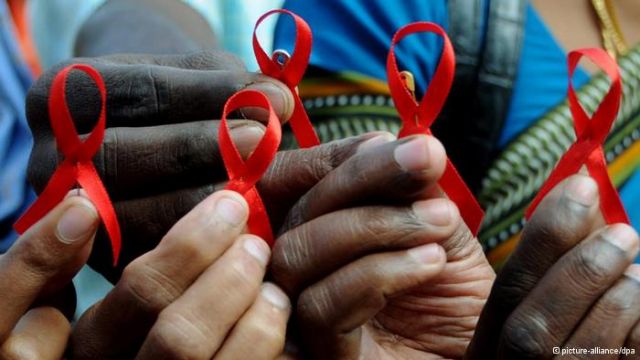
HIV-infected patients significantly decrease in Kenya, according to data submitted by the Ministry of Health.
Most importantly, the official percentages regarding the "natural" transmission of AIDS between mother and son.
NEWS
by Freddie del Curatolo

In Kenya children are sold (and bought) for less than 150 euros.
In the...
KENYA COAST
by Freddie del Curatolo

Kilifi County continues to grapple with a painful reality: teenage pregnancies remain one of the...
KENYA STORIES
by Freddie del Curatolo

Maya wakes up, see the dry grass outside her shack and goes to her camels. A gentle breeze...
WILDLIFE
by Leni Frau

From one of the most remote and fascinating national reserves of Kenya, Samburu, comes...
HEALTH
by redazione
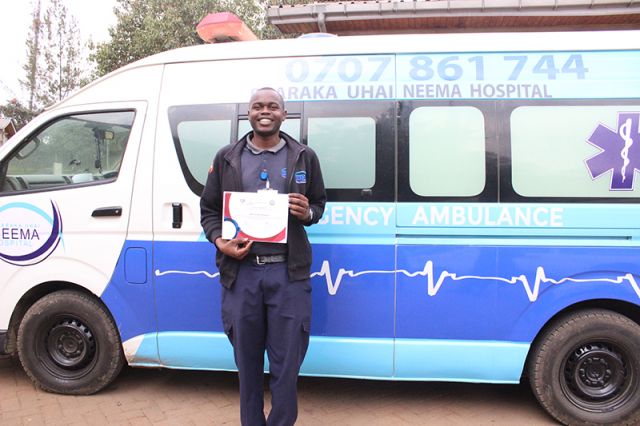
Ruaraka Uhai Neema Hospital, run by the NGO World Friends, has been recognized as the...
SOLIDARITY
by redazione

The goal was not only to offer solidarity but also to raise awareness among the people of the Malindi...
EDITORIAL
by Freddie del Curatolo

Those living in Kenya find it hard even to imagine a society that stops having children. Here, newborns...

