
EDITORIAL
16-10-2026 by Freddie del Curatolo
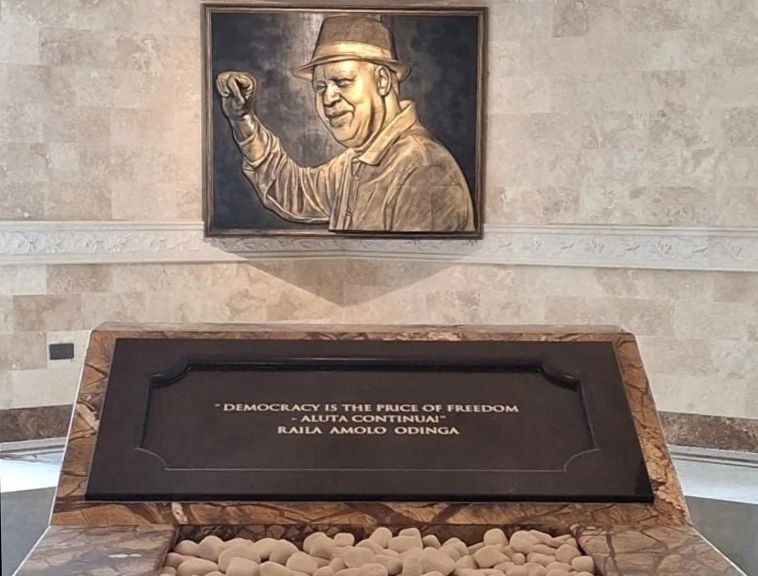
The first question an opposition movement asks itself after the passing of its historic leader is who can replace him. The second, far more uncomfortable question is whether that opposition still has a reason to exist. In Kenya, one year after Raila Odinga’s death, the two questions overlap dangerously. For while the contenders for succession are jockeying for position, his Orange Democratic Movement has yet to decide whether to remain within the orbit of William Ruto’s government or return to being its main adversary by joining a coalition that struggles almost as much as its Italian counterpart to present a united front—not least because in Kenya, in addition to endemic differences, lobbies, and struggles for personal leadership, there is also the never-dormant ethnic issue.
And a political party divided over its own direction can hardly agree on who should lead it. Odinga left on October 15, 2025, taking with him a voice capable of setting the streets ablaze and, a few days later, of sitting down at a table with those who had ordered the dispersal of those very crowds. He, raised on socialist ideals—so much so that he named one of his sons Fidel—became Kenya’s wealthiest and most influential (political) loser, and grew old as “Baba” to the poor, who saw in him the hope for change. A year after his death at age 80, Kenya has many would-be Railas, but still no one who can truly afford to be one.
The problem isn’t finding an heir, but finding someone who won’t be immediately challenged by the other heirs.
Raila Odinga had turned this contradiction into a political specialty. For decades, he had been the man capable of giving shape to protest, a name to discontent, and an electoral perspective to a constellation of interests that, without him, would likely have waged war against one another on their own.
He was the agitator and the peacemaker, the rebel and the negotiator—the leader who knew how to bring people into the streets and, once he had brought them there, could convince them to wait. He had weathered arrests, detentions, electoral defeats, unlikely alliances, and reconciliations that only African politics, with its elastic memory, can make presentable.
His masterpiece was not merely winning votes. It was holding together people who, in his absence, would have struggled even to share the parking lot of the hotel where press conferences were held.
As The Standard writes in an editorial published on the first anniversary of his death, is there anyone who can fill the shoes of a leader who was both an opponent and a mediator? Because the problem is that those shoes weren’t left by the front door, waiting for a successor. They have become the prize in a contest over the future of Kenyan politics as a whole. With participants so different yet, at heart, so similar—like masks at a carnival.
Kalonzo Musyoka, the heir who has been waiting his whole life
Kalonzo Musyoka could claim a sort of seniority. He was an ally of Raila, his coalition partner; vice president under Mwai Kibaki; and the protagonist of a career built on patience, negotiation, and the ability to weather the changing political winds.
He has experience, a political organization, and an electoral base—especially in the Ukambani region, where he hails from. He speaks the language of alliances and knows that, in Kenya, no one gets very far on their own.
But this is precisely where his problem lies. Kalonzo has been a potential presidential candidate for years—a man who always seems on the verge of reaching the decisive moment. His candidacy, however, must grapple with a question that haunts every one of his ambitions: Will he be able to transform his reputation as a reliable politician into a force capable of mobilizing the country? Above all, if we back him, can we be sure he won’t switch sides at the last minute?
Raila’s succession cannot be resolved by a handover among veterans. It’s not enough to have stood by his side, shared a coalition, or patiently waited for one’s turn. Charisma isn’t passed down based on seniority, like a civil servant’s pension.
Kalonzo could become the compromise candidate of a grand coalition. But he would first have to convince his potential allies that his candidacy isn’t simply another turn in the rotation of presidential hopefuls.
Edwin Sifuna, the voice from the present
The rising newcomer is Edwin Sifuna, 44, a senator from Nairobi, a figure who has taken on increasing prominence in the debate over Raila’s political legacy.
Sifuna belongs to a different generation; he speaks more directly and taps into a current of discontent that runs particularly deep among urban youth. His strength is also his unconventionality: he does not seem interested in treating the opposition as a club of former ministers who meet to decide who should speak first.
His rise has reignited the rivalry with Kalonzo and other opposition leaders, even giving rise to the possibility of a joint candidacy or a shared ticket. But even in this case, the issue is not merely who has more energy or who can speak more effectively to Gen Z. It is who can transform the often vocal but scattered support into a national organization.
Kenya cannot be governed solely through viral videos, sharp statements, and speeches met with applause in Nairobi’s public squares. It requires regional alliances, local structures, resources, credible candidates, and an electoral machine capable of reaching every last polling station.
Sifuna could represent a break with the past. But a break with the past, on its own, is not yet a government platform. And above all, it is not a magic formula for convincing other aspiring leaders to give up their ambitions.
Gachagua, Matiang’i, and the others: the opposition as a waiting room
The problem, for those who envision a united opposition, is that the waiting room is crowded.
There are the Kikuyu, with their resources from that goldmine of votes and money that is the Mount Kenya region—
Rigathi Gachagua built his opposition to Ruto after breaking with the president who had chosen him as vice president. He wields political clout in his region and can tap into the discontent of those who feel betrayed by the current government. But his political trajectory and his voter base do not necessarily align with those of Raila’s old opposition.
Fred Matiang’i, former Minister of the Interior and Education under Uhuru Kenyatta—who serves as his shadow advisor—brings with him the profile of a career bureaucrat and an image of administrative steadfastness. However, he will have to demonstrate that he possesses an independent popular base, not just an institutional resume.
Martha Karua, who suffered a major defeat in the previous elections as Odinga’s designated running mate, and Eugene Wamalwa represent other components of the reformist tradition and the anti-Ruto alliances. The politician-activists Okiya Omtatah and Boniface Mwangi, on the other hand, embody a more radical demand for public accountability, rights, and renewal—one that does not necessarily align with the traditional coalition politics—but they may be able to mobilize a small number of votes that would be useful, at most, in a potential runoff.
And then there is Uhuru Kenyatta, the former president and a figure who, even without necessarily returning to the electoral scene himself (and he will not), retains influence in negotiations and in shaping the political balance of power. After having been Odinga’s rival, he supported him against Ruto in the last election, and recently reiterated that those elections were won by the current president through fraud. Will he be able to unite the fragmented opposition?
These are different stories, interests, and constituencies. Not all of these leaders need to run for president, but each can claim a role in shaping the force that will challenge the current administration.
This is the point: Raila was able to make ambitions that would otherwise have been competing ones complementary, at least for a certain period. Today, there is no universally recognized arbiter. And without an arbiter, any negotiation risks turning into a game in which everyone wants to be captain and no one is willing to sit on the bench.
The ODM: A House Without Its Political Owner
The succession, however, is not just about the Kenyan presidency. It also concerns the fate of the Orange Democratic Movement, the party that Raila had shaped around his own personality.
The appointment of Raila’s brother, Oburu Oginga, as party leader has ensured formal continuity but has not resolved the political problem. In fact, different positions coexist within the ODM: those who want to maintain the collaboration with Ruto’s government—a collaboration established by Baba himself—those who fear the party will lose its identity, and those calling for a return to a more clearly defined opposition.
Winnie Odinga has raised questions about the legitimacy of the decisions made after her father’s death and has called for a broader internal debate. Edwin Sifuna, James Orengo, and Babu Owino have expressed reservations about the party’s excessive closeness to the government and have left. Oburu, for his part, has defended the need to keep the relationship with the ruling coalition open.
This is no minor issue. For years, Raila was able to negotiate with those in power without completely losing his identity as an opposition figure—at least in the eyes of a significant portion of his supporters. His history granted him a political autonomy that no other ODM leader can take for granted.
Without that personal legitimacy, collaboration with Ruto risks appearing to some voters as a surrender of the political struggle that gave rise to the party. But a return to the opposition, for other leaders, could mean giving up positions, influence, and access to decision-making centers.
In other words, not everyone has the same interest in carrying on Raila’s legacy. Some want to capitalize on his popularity. Others would prefer to maintain the party’s alliances with the government. Still others would like to hold onto both—a feat in which the late leader had demonstrated a talent that is difficult to replicate.
William Ruto, the unwitting beneficiary?
In this situation, William Ruto does not need to devise new strategies to weaken his opponents. It would be enough for him to simply watch their negotiations unfold.
The president must contend with his own challenges, economic discontent, and the 2027 election. A united opposition could focus the debate on the cost of living, the management of public resources, unfulfilled promises, and the government’s accountability. A fragmented opposition, on the other hand, would risk turning the campaign into a contest between personalities, regions, and old grudges.
Kenyan political history offers an eloquent precedent. In 1997, the opposition went to the polls divided among several candidates, facilitating the reelection of Daniel arap Moi. In 2002, by contrast, the coalition that supported Mwai Kibaki managed to turn unity into a political turning point and bring an end to Moi’s 24-year rule.
Of course, 2027 will not be a repeat of 1997 or 2002. The country has changed; the influence of young people is different; and politics now operates through social networks, new forms of mobilization, and less predictable alliances. But one lesson remains: the number of candidates does not equate to the strength of the opposition. And the sum of individual ambitions does not automatically produce a majority.
Raila’s successor may not be a “Baba”
Perhaps, then, the initial question is misguided. Who will inherit Odinga’s legacy? No one—at least not in its entirety.
One leader may inherit the party; another, the language of protest; yet another, the ability to negotiate. A fourth may tap into the youth’s demand for renewal. But the combination of these qualities—forged over decades of struggles and contradictions—cannot be transferred like a deed of ownership.
The opposition might even discover that the best way to survive after Raila is to stop looking for a replacement. Not a new lone leader, but a coalition capable of recognizing a common candidate, establishing shared rules, and accepting that no one can have it all.
This would be a novelty for a political landscape often organized around charismatic figures, dynasties, personal loyalties, and deals among leaders. And it would require a rare virtue: giving something up today to have a chance tomorrow.
If, on the other hand, every aspiring leader claims to be the new Baba, the risk will be ending up with many little Railas, each convinced they can mobilize the country, and none willing to acknowledge the others’ right to do so.
In that case, William Ruto won’t have to worry about who has inherited his old rival’s shoes. He’ll simply need to count how many are wearing them and how many, instead of walking in the same direction, are already stepping on each other’s toes.
Because Raila Odinga, for better or worse, had made himself a unifying figure for an opposition rife with differences. His successor, if one ever emerges, will have to demonstrate something more difficult than simply speaking like him.
He will have to convince others to follow him, even when he isn’t the one speaking.


POLITICS
by Freddie del Curatolo

For almost thirty years, the opposition in Kenya had but one face: that of Raila Odinga. Following his passing, many...
BREAKING NEWS
by Freddie del Curatolo

Former Prime Minister and opposition leader Raila Odinga, known throughout Kenya...
POLITICS
by Freddie del Curatolo

To understand just how much Kenyan politics has changed, one need only look at the current situation...
NEWS
by redazione

According to the first official agency IPSOS surveys regarding the upcoming presidential elections in Kenya, which will be held on August 8, 2017, the incumbent President Uhuru Kenyatta would lead over rival Raila Odinga as many as 14 percentage points....
POLITICS
by redazione

With twenty days to go before the vote in Kenya, presidential contenders Raila Odinga and William Ruto are...
NEWS
by redazione

For the first time since the beginning of the election campaign in Kenya, opposition candidate Raila Odinga surpassed outgoing President Uhuru Kenyatta in the polls of Infotrak.
This is the polling polling company right in Kenyatta, the same as last...

Fifty days to go before Kenya's national elections, and the head-to-head contest between the two...
NEWS
by redazione

It was a quiet, tense evening as Kenya arrived at the announcement of its new president, the fifth...
KENYA NEWS
by Freddie del Curatolo

He has been one of the leaders of the protests in recent years and is the leading activist of Kenya’s...
KENYA NEWS
by redazione

With the signing of a ten-point memorandum of understanding between Kenyan President William Ruto...
POLITICS
by Freddie del Curatolo

"Let's support the grand old man now and help him lead the country in the best interest of all and...
STORIES
by redazione

From Cairo to Cape Town by bicycle, to raise funds and pay scholarships to the 100 most deserving pupils...
LATEST NEWS
by redazione

This could be the latest attempt by the NASA opposition alliance to postpone national elections in Kenya, set for August 8th, and it failed.
The faction headed by Raila Odinga, who has been gaining approval over the past few weeks...


